

Chinese investors have been moving in to build industrial factories in Thailand, exploiting "loopholes" in the permit and document inspection processes that leave local residents to suffer, risking pollution and chemical problems.
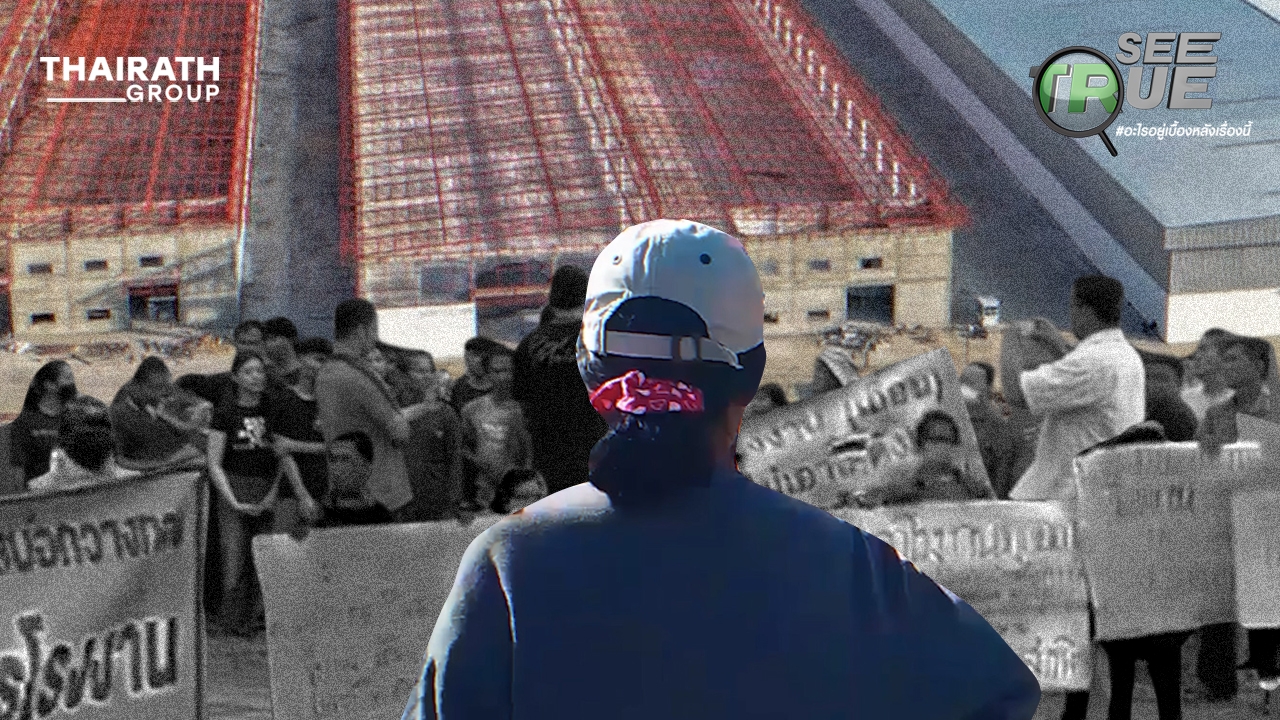
In Village No. 4, Bo Kwang Thong Subdistrict, Bo Thong District, Chonburi Province, questions are being raised as a group of Chinese investors have been constructing a large industrial factory over an area exceeding 70 rai continuously for more than 1 year and 4 months. Rumors suggest some government officials might be involved in the process, while local residents protest, worried about the dangers of pollution and chemicals once the factory is completed.
The SEE TRUE team conducted an on-site investigation to uncover the truth behind this issue and found that the factory owner is a foreigner who has now appointed his child as a director. According to locals, the factory claims to produce vinyl tiles and cardboard boxes, but residents worry that rubber molding processes are involved, which could cause odors, wastewater, and groundwater contamination.

The biggest concern among residents is the water problem. One local who has lived in the area for over 20 years revealed that water shortages never occurred before. Since the factory started drilling groundwater wells, water has become scarce, causing residents to have no water for bathing for two days, forcing them to seek help from the municipality. Additionally, locals discovered that the factory owner previously built a facility in Ban Bueng District and secretly conducted lead molding, which led to complaints. They fear similar incidents could happen again in Bo Kwang Thong.
Despite repeated protests against the construction, work has continued without any mediation from the factory. Conflicts have occurred, such as Myanmar workers being mobilized to destroy residents' signs, and groups of men dressed in black falsely claiming to be central government officials or soldiers confronting locals. This has divided the community into two factions: one benefiting and one losing out.

Furthermore, residents disclosed that some village leaders offered to pay each person 3,000 baht to accept the factory, with 1,000 baht paid upfront and 2,000 baht promised if the factory construction was completed. There is photographic evidence to confirm this. Intimidation has also been reported, including near-nightly gunfire forcing the municipality to order a construction halt. Locals have clear video evidence, but after 1.4 years, no action has been taken and no one punished.
When questioned, the industrial authorities said that the mayor has the power to manage the situation, but residents suspect the mayor might be complicit or that officials are involved—especially regarding the issuance of Section 39 permits allowing construction without community consent, which the factory owner himself revealed.
“Section 39 issuance requires posting signs around the construction site. Residents caught this and filed complaints. The mayor then ordered the factory to stop. The mayor should carefully verify the documents before signing, but he approved them immediately.”

To clarify these suspicions, the SEE TRUE team traveled to interview the Mayor of Bo Kwang Thong Subdistrict, who explained that the problem arose because the factory owner bought land without consulting or informing anyone about the plans. The factory never sought advice and construction was already underway before anyone realized. He ordered a suspension before his term ended, but the factory has continued building for over a year.
The mayor emphasized his support for the residents and said that allied officials have been insulted and attacked by the investors. Halting the construction must follow proper procedures. He has coordinated with the provincial governor but progress takes time because the investors challenge the law and ignore community concerns.

At the factory site, the team met only a security guard who claimed he could not contact anyone and had no authority to enter inside. Eventually, the team managed to contact the owner, who stated she consulted officials before building because the area is zoned yellow. She said Chonburi has 400–500 factories, and if they had violated regulations, the factory would have been shut down.
Regarding the suspension order and why construction continues, she believes the municipality unlawfully revoked the permit. She still holds a valid permit because the court has not ruled yet and has paid all fees. She says the municipality should have thoroughly checked documents before issuing permits and insists her actions are not related to money but to legal rights. She is ready to fight in court and accept the court’s judgment.
“Our permit is legally valid. We have paid all fees. The municipality revoked it claiming incomplete documents, but they should have verified everything before issuing the permit. Many suspect we paid money to do this, but I affirm it has nothing to do with money, only the law. We have filed a lawsuit against the municipality. When the court decides, we will comply. Everyone is under the law equally.”

What we see today may not only be an issue of foreign-invested factories, but also exposes the "loopholes" in some permit and inspection procedures, where documents become crucial yet ambiguous. The question is not only about the operators but whether government procedures are sufficiently rigorous. A minor error in documentation can start much larger problems. Without clear answers, innocent residents around this area may continue to suffer.
Follow #ExclusiveSharpNews, the sharp news variety show, which investigates and verifies every issue on-site, revealing all truths every Saturday at 6 p.m. on Thairath TV, Channel 32.