

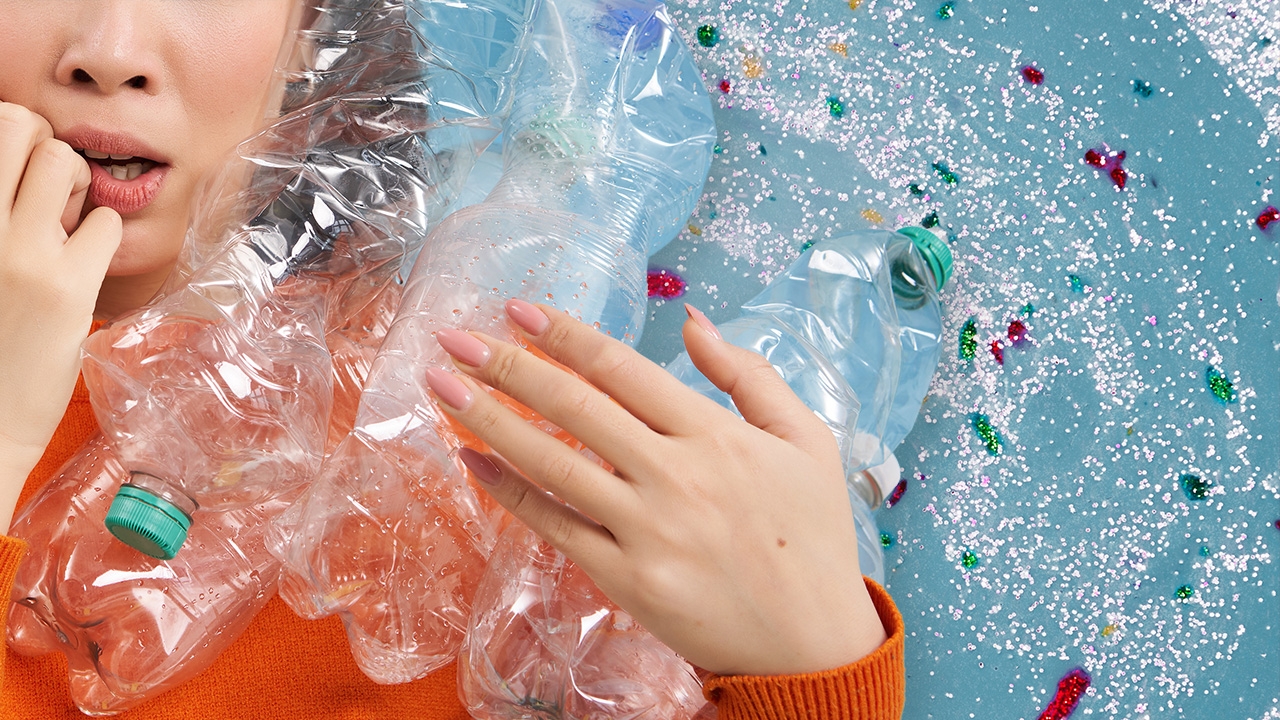
The silent threat of microplastics: Research finds over 80% of people in Thailand's Bang Pakong river basin have microplastic accumulation in their bodies, raising concerns over increased cancer risks and reflecting Thailand's waste management problems.
The Thai Health Promotion Foundation (ThaiHealth), together with the Thai Association of Environmental Higher Education Institutions (TAEHEI) and a network of researchers, conducted fieldwork to collect samples and study microplastics in the bodies of Thai residents living in the Bang Pakong river basin, discovering that up to 80% have microplastic contamination.

Microplastics are small plastic fragments less than 5 millimeters in size that result from the breakdown or fragmentation of larger plastic waste such as water bottles and tire debris, or are manufactured intentionally at small sizes for specific uses, like beads in facial cleansing foam.
The danger of these microplastics lies in their entry into the food chain: animals ingest them and accumulate them in their bodies, and when humans consume these animals, the microplastics enter our bodies. Continuous accumulation of plastic particles and toxic chemicals in the human body may accelerate chronic health problems.
However, there are currently no established safety standards for microplastic levels considered safe for human health. Current approaches focus on minimizing exposure to microplastics as much as possible.
The research team collected urine and feces samples from residents in communities in the Bang Pakong river basin. Samples were taken from 40 individuals—10 from each of 4 subdistricts—aged 31 and older. Researchers also interviewed participants about their consumption habits and daily plastic use. The samples were analyzed qualitatively and quantitatively, including counting and characterizing the microplastics found in urine and feces.
The Bang Pakong basin was chosen because it is a strategic area with notably high contamination levels, especially near the river mouth where density is significantly greater than upstream. This area transports over 1,300 tons of plastic waste annually into the sea.

The study found that 95% of participants consumed food at risk of microplastic contamination, and 100% used plastic bottles. Participants also used other plastic packaging such as plates, cutlery, cups, and food bags. Factors influencing food purchases included price, convenience, and food quality rather than packaging type.
Analysis of bodily waste from participants showed microplastic contamination in over 80%, mostly from plastics commonly used in daily life as follows:
- Microplastics detected in 34 out of 40 samples (85.0%)
- Between 1 and 8 particles per 100 milliliters of sample
- An average of 3.24 particles per 100 milliliters
- Most common microplastic type was polyester (PES) at 32%, followed by polyacrylic acid (PAA) at 21%, and polypropylene (PP) and polyethylene (PE) each at 19%.
- Microplastics found in 35 out of 40 samples (87.5%)
- Between 1 and 11 particles per 20 grams of sample
- An average of 3.6 particles per 20 grams
- Polyester (PES) was the most prevalent at 63%, followed by polypropylene (PP) at 14% and MAH Copolymer at 12%.

Regarding polyester (PES): the primary source is PET water bottles and plastic bottled water, polypropylene (PP): originates from plastic bottle caps, polyethylene (PE): comes from food packaging, bottles, bags, and beverage cartons, MAH Copolymer: used to bond plastics, with unclear exact sources, and polyacrylic acid (PAA): derived from rinse-off personal care and facial products.
Associate Professor Dr. Uma Langkulsen from the Faculty of Public Health at Thammasat University revealed that most detected plastics are from the fragmentation of single-use plastics (PP, PE, PET), as well as hazardous types like PVC, PU, and PS. This indicates that microplastic intake occurs daily, and with no clear safety standards, there is concern about increased risks of cancer and neurological development issues.
Data from the study shows contamination sources are directly linked to daily behaviors, especially bottled drinking water in cups, which contained the highest microplastic levels at 382 particles per liter, and PET bottles at 331 particles per liter. Microplastics were also found in Thai mackerel, averaging 78 particles per fish, as well as in ice, table salt, and economically important aquatic animals near the Bang Pakong river mouth, including shrimp, blood cockles, and seabass.
Meanwhile, Associate Professor Dr. Ratcha Chainsana, research project leader at Kasetsart University, stated that the team used a 50-micrometer mesh for detection, which identifies 42 times more microplastics than the standard 350-micrometer mesh, indicating contamination in Thailand’s ecosystem is more severe than previously estimated. Seasonal variations were found, with microplastic density in water increasing during the rainy season, while some aquatic species like mangrove crabs showed peak contamination during the dry season.
This research also highlights structural problems in waste management deeply rooted in Thai society. Dr. Wijarn Simachaya, director of the Thai Environmental Institute Foundation, pointed out that Thailand produces 27.2 million tons of solid waste annually—about 1.2 kilograms per person per day—but lacks strict waste sorting at the source. Consequently, plastic waste escapes into waterways, breaks down into microplastics, and eventually re-enters the human food chain.

Assistant Professor Dr. Satree Thai Poommai, a researcher at Kasetsart University, disclosed that research found a knowledge gap among the public: despite massive daily plastic use, most people have limited understanding of microplastics, cannot clearly identify their sources, and are unaware of the silent dangers embedded in consumption habits, which represent a significant long-term risk.
This lax plastic management has triggered a severe and widespread chain reaction. The crisis not only degrades aquatic ecosystems but also directly impacts food security and community economies.
When economically important aquatic species are contaminated with microplastics, consumer confidence is shaken, affecting the livelihoods of local fishers. Moreover, from a public health perspective, continuous accumulation of plastic particles and toxic chemicals in humans can accelerate chronic health conditions, inevitably leading to reduced workforce productivity and soaring national healthcare costs.
Meanwhile, Dr. Nopparat Sai-nuam, Deputy Manager of ThaiHealth, stated that ThaiHealth prioritizes disease prevention and aims to translate research highlighting structural problems and serious impacts into actionable national policy proposals. The goal is to establish health risk surveillance systems and improve systematic plastic waste management to protect the Thai population from this invisible threat before the situation worsens beyond repair.
