

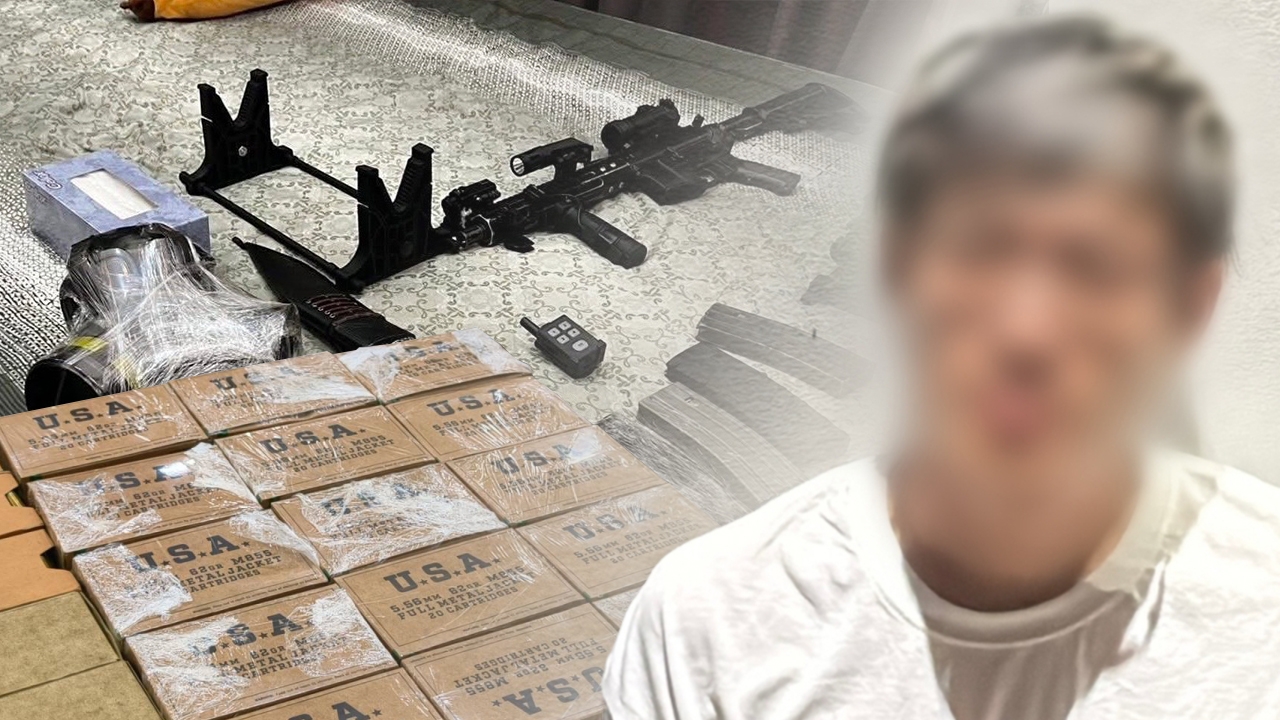
Tracing "Ming Chen Sun" reveals police firearms and government ammunition, exposing vulnerabilities linked to influential individuals. Firearm experts highlight a black market trade in military weapons in Thailand and suggest that welfare police guns are often transferred unofficially, generating significant profits.
Following the arrest of Chinese national "Ming Chen Sun" found in possession of numerous military weapons and ammunition traced to the Ordnance Department, Thai officials had previously denied such claims. Although he was said to be a gun collector, the case raises many suspicions, especially as the firearms included police guns originally purchased and later resold. This reflects weaknesses in agency management, prompting public questions about the extent to which money can buy anything in Thailand.
An investigation revealed one firearm belonging to a police officer, purchased from the Metropolitan Police welfare program in 2002—a Glock 26 handgun used as a personal service weapon. This may signal an illicit trade in firearms disguised under the influence of powerful individuals.

The Thairath Online special report consulted "Montri Tanjaiso," a firearms expert, who analyzed that black market trading of military weapons does exist in Thailand. It could involve smuggling through border areas or government-issued weapons leaking from official channels, though the latter is relatively rare.

The police firearm in possession of the Chinese man was a welfare gun from 2002—a Glock 26 used as a personal service weapon. Montri explained that police welfare guns are typically transferred unofficially and bear rear markings, though such transfers are illegal and regulations are clearly stated on the firearm licenses.
Regarding pricing, unofficially transferred police guns are not cheaper than those sold at gun shops, but buyers favor them for the convenience of being able to test-fire the weapon beforehand, unlike standard commercial sales where this is not allowed.

Interestingly, the police firearm possessed by the Chinese man was transferred through multiple hands without proper documentation, so the registered owner remains the original police officer who purchased it.
In these cases, a welfare gun can be transferred to another person after five years of ownership, but here the transfer was unofficial, and the buyer had not properly applied for the necessary documents.
The unofficial transfer of firearms is quite common, with many trusting subsequent holders. Although firearm purchase permits (Type 3) and possession licenses (Type 4) are required, many recipients never officially transfer ownership, possibly because selling yields more profit or they cannot obtain the proper permits.
Typically, both firearms and ammunition have serial codes indicating their originating units, allowing verification. The main concern is smuggled weapons, which Thai law penalizes possession of without authorization—fines of 20,000 baht and imprisonment of six months. Strict enforcement could effectively address this issue.
