

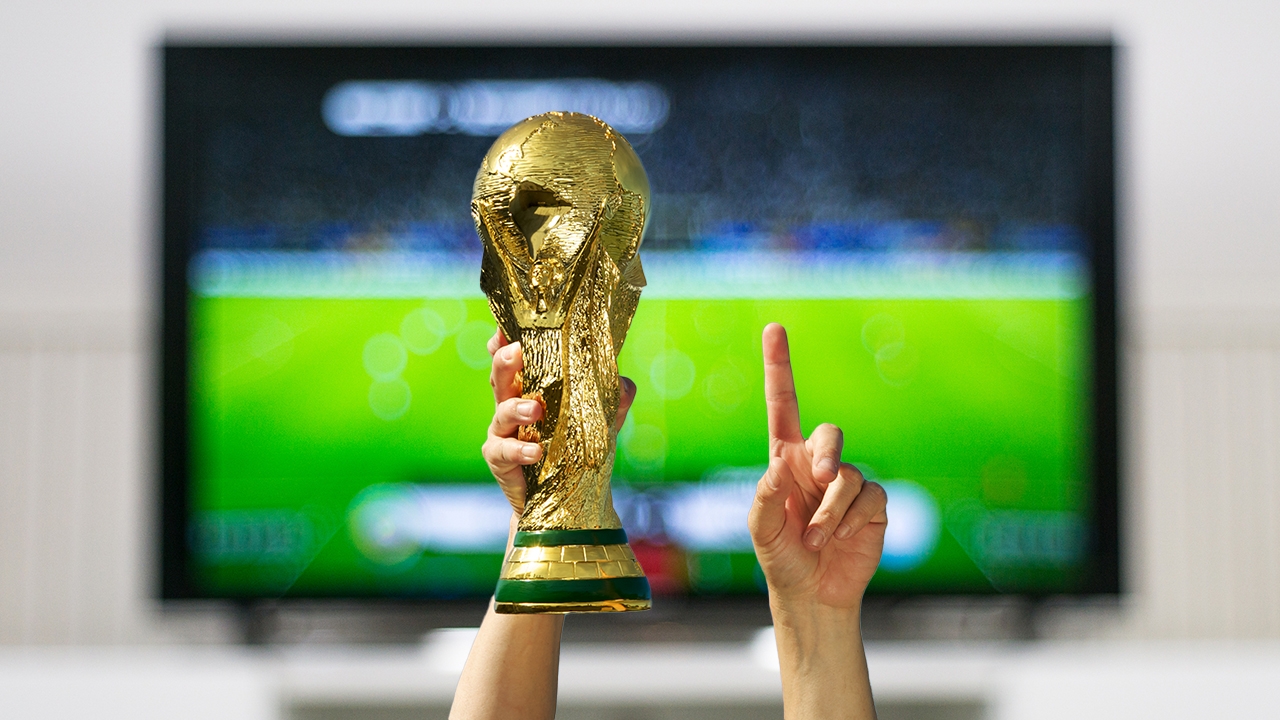
The 2026 World Cup broadcast rights may be valuable but could come at the cost of "blackouts" on some viewing channels. A former NBTC official said that if state funds are used to purchase the rights, broadcasts should be free on all systems. He advised negotiating to lower the price rather than announcing a 1.3 billion baht purchase. The solution might involve using the "Sports Fund" with private sector participation.
The 2026 World Cup, hosted jointly by the United States, Canada, and Mexico, will run from 11 June to 19 July 2026. However, Thailand's broadcast rights have not yet been finalized, even though the Prime Minister has assured that Thai people will definitely watch the World Cup, with the rights expected to cost about 1.3 billion baht.
Recently, the Cabinet approved roles for seven agencies to jointly handle preparations to ensure the World Cup broadcasts occur on time. Meanwhile, some citizens view the huge broadcast budget as potentially not cost-effective. Similarly, private companies find it difficult to secure advertising budgets in the current economic climate.

Thairath Online’s special news team asked Dr. Prawit Leesatapornwongsa, former chairman of the NBTC Consumer Protection Subcommittee, who analyzed that after the decision to remove the World Cup from the Must-Have list, it will resemble tournaments like the Euros, African Nations Cup, or Copa America, where the market competes on its own. Viewers wanting to watch must buy the rights. If NBTC buys the World Cup rights, questions will arise why it wouldn't buy other rights as well.
Previously, we insisted broadcasts be available on all platforms, but the government agency then granted exclusive rights to one private company, blocking others from broadcasting. That lesson remains unaddressed for those harmed. If the government is serious this time, broadcasts must be accessible to all Thai viewers via every NBTC-licensed platform—IPTV, satellite TV, black and red dishes, or terrestrial antennas. If some cannot watch, the 1.3 billion baht budget will not be worthwhile. The private sector also sees the investment as currently unprofitable.

If the private sector deems it unprofitable, the government should consider what returns this investment brings to the country. The problem now is uncertainty whether the 1.3 billion baht is FIFA’s offered price or a self-set figure. FIFA usually prices countries differently, but by announcing 1.3 billion baht, FIFA will not sell for less. We cannot negotiate because we announced our budget upfront. Some countries opt not to broadcast if the price is too high until a reduction is offered. By revealing the budget first, we disadvantage ourselves in negotiations. The government should initially negotiate for a lower price before disclosing figures.
"Actually, the budget should not be announced. The policy should simply state the desire to broadcast, then allow negotiators to seek the lowest FIFA price. Also, the World Cup is not a basic sports program but a sports promotion. The government should use funds from the National Sports Development Fund if it deems it beneficial, not NBTC’s budget, since NBTC no longer oversees this matter. Doing otherwise risks destroying the market mechanism."

Those buying World Cup rights must negotiate with FIFA whether to purchase single-event (Pay-per-view) rights or a large package. Currently, FIFA separates satellite TV rights into Satellite TV, Internet TV, and Terrestrial TV. If we don’t buy all, other platforms cannot broadcast. Also, if satellite signals spill over beyond borders, like C-Band black dishes without encryption, viewers lose access. We must first decide the target audience and then negotiate, rather than announcing budgets prematurely.
Previously, issues arose because private companies were reluctant to invest, but when asked to invest 100 million baht, they demanded exclusive satellite rights, blocking others from viewing. The World Cup is arguably more attractive than the Euros. Why did one private company dare pay 600 million baht for the Euros but no company steps up for the World Cup? This raises questions about whether there will be answers amid ongoing uncertainty, even as the 2026 World Cup draws near.