

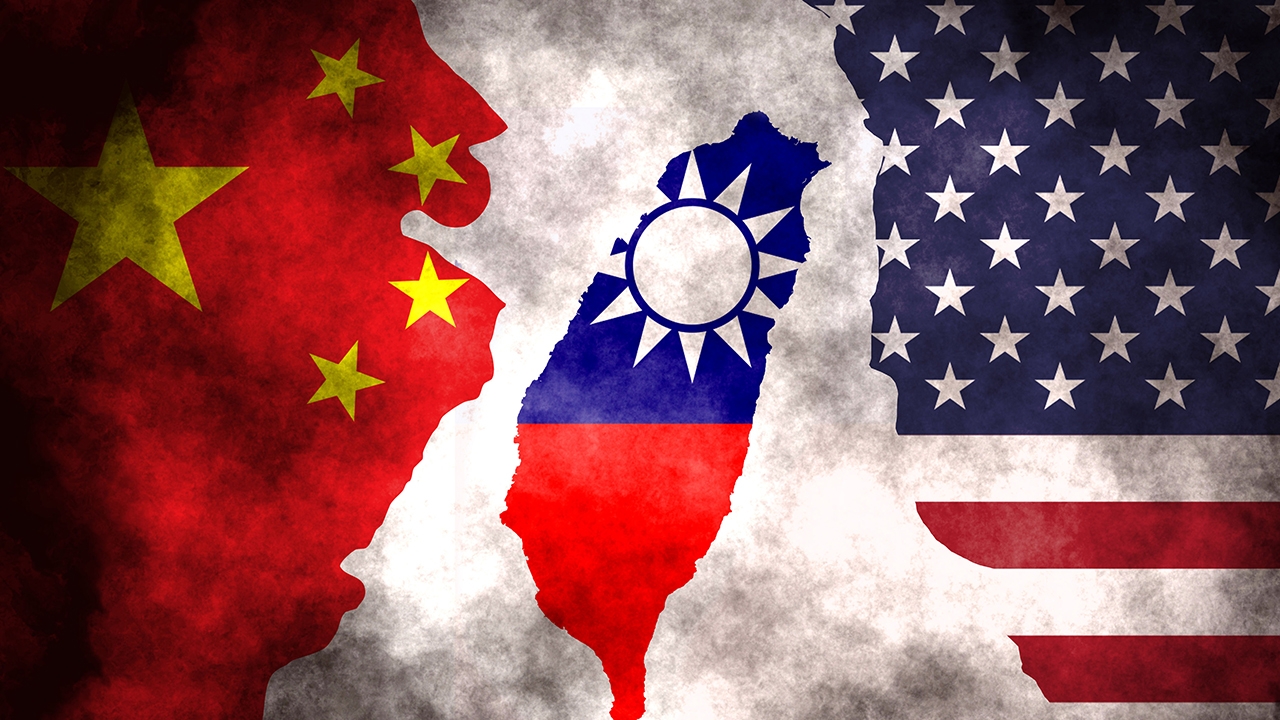
China and the U.S. show shifting stances on the Taiwan conflict. Experts predict the U.S. may reduce arms shipments to Taiwan in hopes of strengthening relations with China, viewing Thailand's position as potentially advantageous.
President Donald Trump's recent two-day visit to China and talks with President Xi Jinping ended amid questions about the two superpowers' stances toward Taiwan. During the meetings, China clearly expressed its opposition to U.S. arms sales to Taiwan to preserve relations, while the U.S., historically a supporter of Taiwan, may be reconsidering its position.
Associate Professor Dr. Dulyapak Preecharatch, a faculty member in Southeast Asian Studies at Thammasat University's Faculty of Liberal Arts, commented that the U.S. needs to support Taiwan because Taiwan's political system includes parties that oppose backing from the U.S. Thus, some political factions in Taiwan are willing to compromise with China. This weakens Taiwan's identity as a staunch opponent of China aligned fully with the U.S.
Donald Trump remains concerned about not wanting to allocate massive budgets to assist allies or countries located far away. He seeks to assess the cost-benefit balance—determining what return or compensation the country might provide the U.S.

The U.S. will maintain strategic relations with Taiwan but likely will not fully support Taiwan in a direct conflict with China. Additionally, not all political groups in Taiwan agree on becoming adversaries of mainland China by siding with Donald Trump.
Therefore, the relationship among mainland China, Taiwan, and the U.S. may soften in the future. Although conflicts will persist, their intensity could lessen because some Taiwanese political groups seek dialogue with mainland China, and the U.S. is reluctant to spend large budgets on Taiwan.
China sells weapons to other countries and may supply some military equipment to Russia or Iran, which the U.S. cannot prevent. However, this situation involves negotiations and requests, and U.S. warnings serve to make China exercise restraint.
China signaling to the U.S. about its opposition to arms sales to Taiwan also causes the U.S. to hesitate. The U.S. might still sell arms to Taiwan but will likely consider timing carefully to avoid offending China.
The issue of arms sales is flexible and can adapt to circumstances and interests. One country can request another not to sell weapons to a third territory, but it cannot enforce such a ban.
The U.S. and Taiwan assess the level of threat from China. If China continues military exercises and naval blockades around Taiwan as before—tightening but not attacking—Taiwan will seek U.S. military aid. The U.S. fears that if China blockades Taiwan's strait, it could control the East China Sea and parts of the South China Sea, putting the U.S. fleet at a disadvantage in future competition.

Regarding China's blockade of Taiwan, Thailand maintains its longstanding One-China policy, not recognizing Taiwan as an independent state and accepting Taiwan as part of China's sovereignty. Nonetheless, Thailand sustains other non-political relations with Taiwan.
Thailand should adopt a strategy based on three Cs.
The first C stands for Crossroad, meaning Thailand is a meeting point where major powers must engage with us.
The second C is Connector, indicating Thailand is ready to link and coordinate ASEAN with major powers for dialogue.
The third C is Conductor, where Thailand can create platforms for major powers to discuss and resolve contentious issues.