

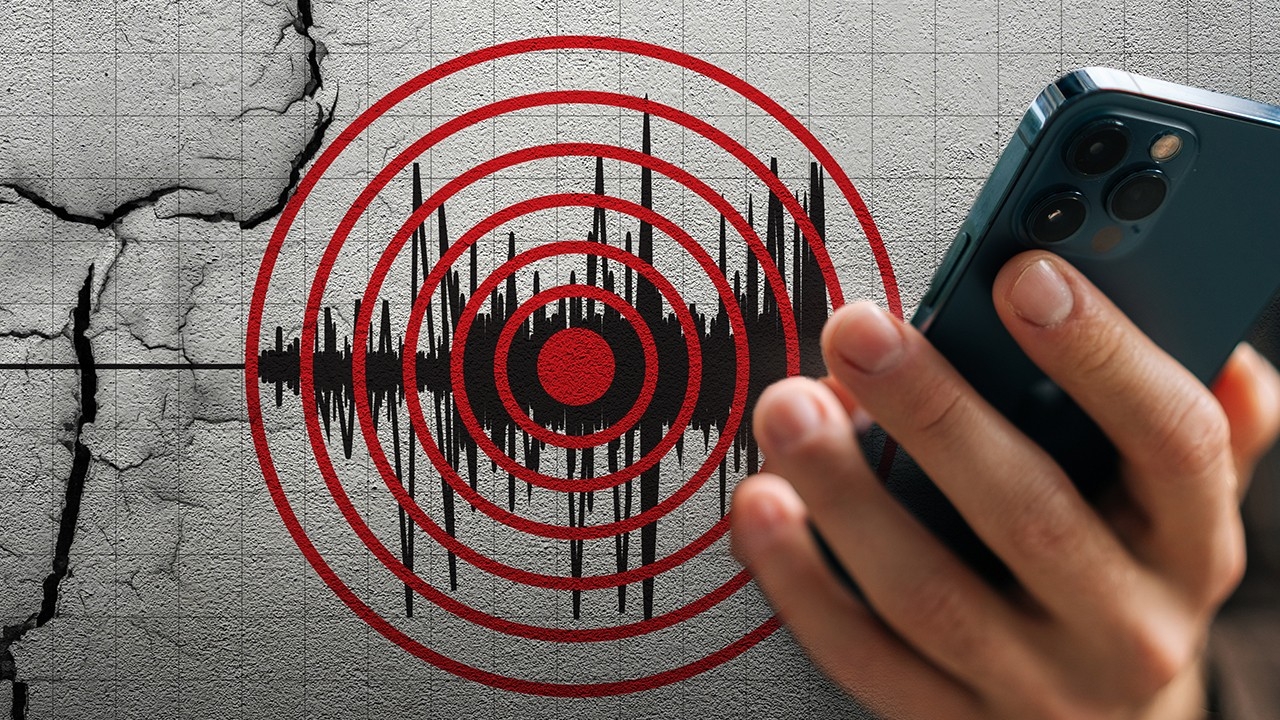
The Meteorological Department clarifies the Myanmar earthquake event, noting that buildings taller than 15 stories in Bangkok experienced tremors. Aftershocks are expected to decrease in strength and will not affect Thailand. The department points out that the cell broadcast system did not issue warnings due to specific causes.
A report from the Meteorological Department today (18 May 2026) states a magnitude 5.3 earthquake occurred near Myanmar's southern coast, 23 kilometers from the "Sagaing Fault." There are no reports of impact. Learn about the most powerful sleeping giant in ASEAN.
The Earthquake Surveillance Division of the Meteorological Department (TMD) reported a new earthquake event near the southern coast of Myanmar. Although no damage has been reported, the epicenter is only a few dozen kilometers from one of the region's most dangerous faults. The event occurred on 18 May 2026 at 09:05 GMT+7, with a magnitude of 5.3 and a depth of 10 kilometers. Notably, the epicenter lies approximately 23 kilometers from the Sagaing Fault zone.
The latest situation reports that people in the affected area have felt the tremors, but so far no damage has been reported.

Mr. Nattawut Dandi, Deputy Director-General of the Meteorological Department, acting as the department's spokesperson, told Thairath Online's special news team that the magnitude 5.3 earthquake near Myanmar's southern coast, 23 kilometers from the Sagaing Fault, though causing no reported impact, may have caused concern among residents in high-rise buildings in Bangkok. He added that aftershocks may follow but will decrease in intensity. This earthquake is considered moderate at magnitude 5.3 according to scientific scales. Aftershocks are expected to reduce by about 1 to 1.2 magnitude units, likely around 3.8 to 4.0, which will not cause effects or significant shaking in Thailand.
The tremors from the magnitude 5.3 earthquake this morning reached Bangkok because the city is built on soft soil. Buildings taller than 15 stories may feel the shaking on higher floors, but there is no damage because the quake is not large. This is very different from the previous 8.3 magnitude case, which was much stronger.

Although the magnitude 5.3 earthquake near Myanmar's southern coast, 23 kilometers from the Sagaing Fault, will not cause damage in Thailand, Mr. Nattawut noted that since this earthquake is aligned with the Sagaing Fault, unlike the previous event which occurred further north and involved a fault movement about 1,200 kilometers long releasing significant energy, this time the event is about 500-600 kilometers south of the previous epicenter, so the energy released is much less and the magnitude is significantly smaller.
The Sagaing Fault stretches several thousand kilometers. When it moved in the last event, it released energy along the entire fault line. Areas of weakness adjust by moving to balance out energy. After this recent movement, the fault is expected to remain stable for about 100 years before another large event occurs.
Earthquakes remain unpredictable, but the department is working to develop an Early Warning system with a budget request for 2027. If approved, it will provide Bangkok residents with 1-2 minutes' advance notice by using the speed of seismic waves reaching monitoring stations to alert before the strongest shaking arrives, similar to systems used in Japan.
Currently, the department only has a "detection" system but no "early warning" system. The fastest warning achievable domestically is about 4 minutes, and 6-8 minutes for events outside the country, depending on wave speeds reaching the Chiang Rai station network. Data from 4-5 stations must be collected before central processing and human verification.
The department encourages the public to be "aware but not alarmed." Fault movements are positive as they release accumulated energy. If the fault remained stuck, it would be more dangerous due to unknown timing of future shifts. These recent magnitude 5 events help to relieve stress, delaying large earthquakes for several decades, while smaller quakes of magnitude 1-4 occur more frequently.