

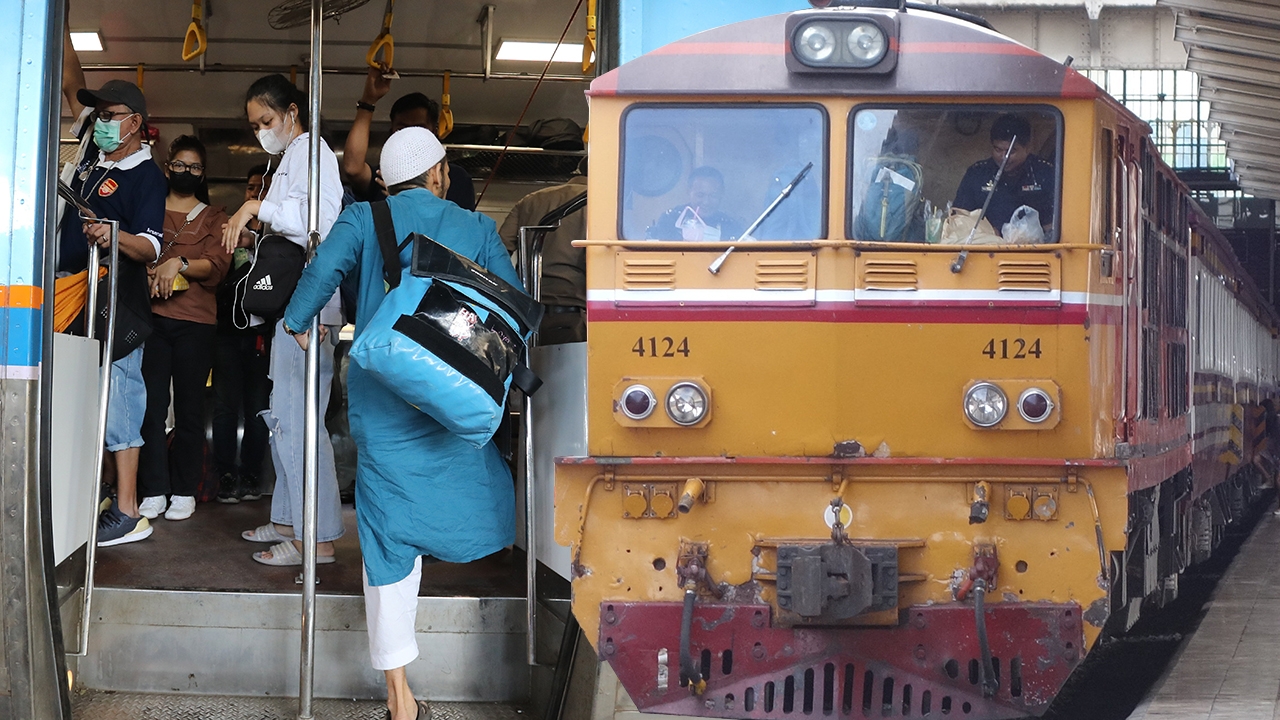
Plans to end train services in inner Bangkok raise fears of abandoning operators and passengers who would face higher costs. Railway workers say this approach shifts the burden as a band-aid fix instead of addressing rail-road crossings.
After a train collided with a bus at the rail-road crossing at Asoke-Makkasan, causing eight deaths, it was found that the train driver tested positive for drugs and was charged with negligence, along with the signal operator. The bus driver and conductor are still hospitalized. This incident has prompted government agencies to seek solutions, especially for rail-road crossings.

On the evening of 18 May 2026, Deputy Prime Minister and Minister of Transport Pipat Ratchakitprakarn said the ministry has tasked the State Railway of Thailand (SRT) to study within three months the feasibility of reducing or canceling train routes entering inner Bangkok that cross roads at grade, especially on the eastern, southern, and western lines, which have about 27 crossings. The initial idea is to have eastern line trains terminate at Lat Krabang station and southern line trains at Taling Chan, then connect passengers via BMTA buses, the Red Line electric train, or the Airport Rail Link.
This study has sparked public criticism because the trains running within the city have many passengers during peak hours, and the change could increase travel costs. Additionally, freight trains no longer entering inner city areas would increase costs for operators.

Thairath Online's special news team asked Sarawut Saranwong, Chairman of the State Enterprise Railway Workers' Union, who said, “We disagree with canceling train services in inner Bangkok, especially commuter trains that bring people to work at stations such as Asoke, Phaya Thai, Yommarat, and Hua Lamphong. Cancelling these services would negatively affect people’s travel.”
Although there is a policy for compensating electric train fares, in reality, it creates extra steps. Instead of a direct ride into the city, people must get off at Lat Krabang or Taling Chan and transfer to electric trains, which are crowded during rush hours and require waiting, thus affecting travel time.
Freight trains usually run at night, not during the day. Canceling trains entering the city would cause management issues for operators, such as transporting goods to ports or from Bang Sue to river stations, impacting operators. This is a band-aid solution because rail systems worldwide are best for transporting large numbers of people into cities. Electric trains alone are insufficient and costly.
Regarding compensation funds expected to be studied as a replacement for trains entering inner Bangkok, these come from taxpayers' money, which could be used elsewhere but are instead used for a band-aid fix. Using BMTA buses instead would worsen traffic congestion and pollution, which the union opposes.
On average, about 40-42 commuter trains run daily into the city (round trips), along with approximately 52 ordinary or long-distance trains from other provinces.

When asked if the study to stop trains entering inner Bangkok is based on the Land Bridge concept, Sarawut said this policy dates back to when Sak Siam Chidchob was Minister of Transport, who canceled Hua Lamphong station and had trains stop at suburban points like Taling Chan, Hua Mak, Lat Krabang, or Phachi, requiring passengers to transfer to electric trains. He said this does not solve the problem nor promote safe public rail transport.
Ending trains entering inner Bangkok would increase travel costs for the public. For example, a train from Rangsit to Bangkok costs only 6 baht, and from Hua Mak about 6-12 baht per trip. If passengers must transfer to buses or electric trains, expenses clearly rise. It also wastes time due to multiple transfers instead of seamless transport.

Currently, freight trains run from 10 p.m. to 4 a.m. to reduce traffic impacts. In the future, reducing trains entering the city might require building connecting routes called “Chord Lines,” such as from Phachi to the southern line via Suphanburi-Nakhon Pathom, or from Phachi to the eastern line, which already exist. However, to transport large numbers of people into the city, rail systems remain essential.