

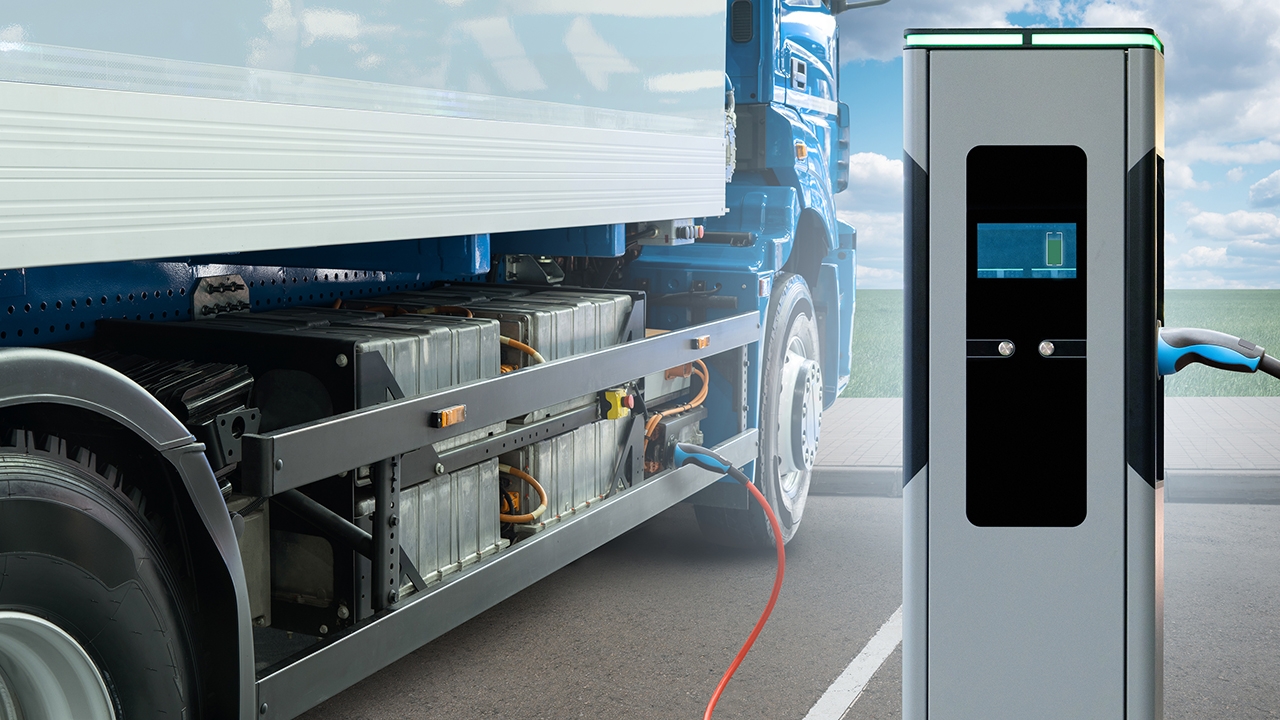
Electric vehicles in Thailand are growing in the wrong direction, revealing why vehicles in the transport system still fail to meet clean energy requirements. Electric trucks are expensive and overweight, making transport uneconomical. There is hope to unlock pollution reduction.
The overall presence of electric vehicles (EVs) on Thailand's roads is growing rapidly. However, behind these rising numbers lies a question: are we growing in the right direction? Private cars are not the main source of greenhouse gas emissions; rather, motorcycles, trucks, and public vehicles are the primary polluters and have yet to transition. This article delves into the contradictions within Thailand’s EV ecosystem and asks whether we are truly on the right path to achieve Net Zero targets.

Dr. Natthaporn Buayem, a TDRI academic expert on batteries and EVs, stated that Thailand aims for Net Zero Carbon Neutrality by 2050. According to graphs on Thailand’s greenhouse gas emissions, in 2019 energy and transport sectors accounted for 69.96% of emissions, and in 2020, 67%. Simply put, about 70% of emissions come from energy and transport sectors.
Breaking down sectors, the energy sector emits the most greenhouse gases at 36.63%, mainly from coal use, followed by transport at 29.5%. To reduce emissions in transport, combustion engine vehicles must be replaced with lower emission vehicles, known as Zero Emission Vehicles or Low Emission Vehicles—namely electric vehicles (EVs). These are classified into three main types: BEV, PHEV, and HEV. In 2024 (according to IEA data), there are over 70 million EVs worldwide, with 20% of global vehicle sales being electric.
Looking at Thailand’s statistics, based on data from the Department of Land Transport, initially only hybrid vehicles were present. However, after free trade agreements (FTA) reduced import taxes on EVs from some countries, electric vehicle prices in Thailand became competitive with hybrids. While hybrids remain, the proportion of electric vehicles has grown.
Comparing 2020 figures of newly registered vehicles, including those under the Motor Vehicle Act and Transport Act, EVs accounted for less than 1.5%. By 2025, this proportion has increased to 12.56%, which is a positive development.

Thailand’s current EV growth is highest among private cars (category R.Y.1), but electric motorcycles remain minimal. Annual motorcycle registrations are about 1.5 to 2 million, yet electric motorcycles make up less than 1.5% of these. Electric trucks and buses are still rarely seen.
The country’s goal is to use electric vehicles to reduce greenhouse gas emissions effectively. However, sectors with high fuel use and long distances—such as trucks, buses, and motorcycles—have yet to adopt EVs. This raises the question: are we growing in the sectors that actually need to solve the problem? Otherwise, achieving carbon neutrality or Net Zero goals will not be possible.
Dr. Natthaporn explained the reasons why electric motorcycles have not grown in Thailand:
1. Motorcycle users may generally have lower incomes and limited budgets, making the initial cost of switching a barrier.
2. Electric motorcycles have limited driving range compared to gasoline motorcycles.
3. Charging points for electric motorcycles are insufficient and not widespread; having to recharge at home can be time-consuming.
4. Electric motorcycles offer an advantage to Thai manufacturers, as 50% of the market is served by local producers. Chinese electric motorcycles are mostly "Low Speed" models designed for slow riding, whereas Thailand’s market demands "High Speed" motorcycles. Chinese manufacturers cannot meet this demand well, allowing Thai companies to dominate the electric motorcycle market.
Therefore, since Thailand cannot compete with China in electric cars, it should focus on electric motorcycles.

1. Currently, electric trucks start at prices about 2 million baht higher than diesel trucks, and their driving range is shorter.
2. Electric trucks must carry the weight of large batteries, making them 1 to 2 tons heavier than empty diesel trucks.
"Truck weight regulations limit how heavy a truck can be. This means the payload capacity is reduced by about 2 tons," he explained.
3. Charging stations for trucks are not available. Trucks cannot use car charging points due to their larger size, turning radius, and battery dimensions.
4. There are no supportive policies yet for electric trucks. According to the Truck Operators Association, daily diesel consumption by trucks is about 40-50 million liters.
Therefore, this sector should be actively promoted and developed further.