

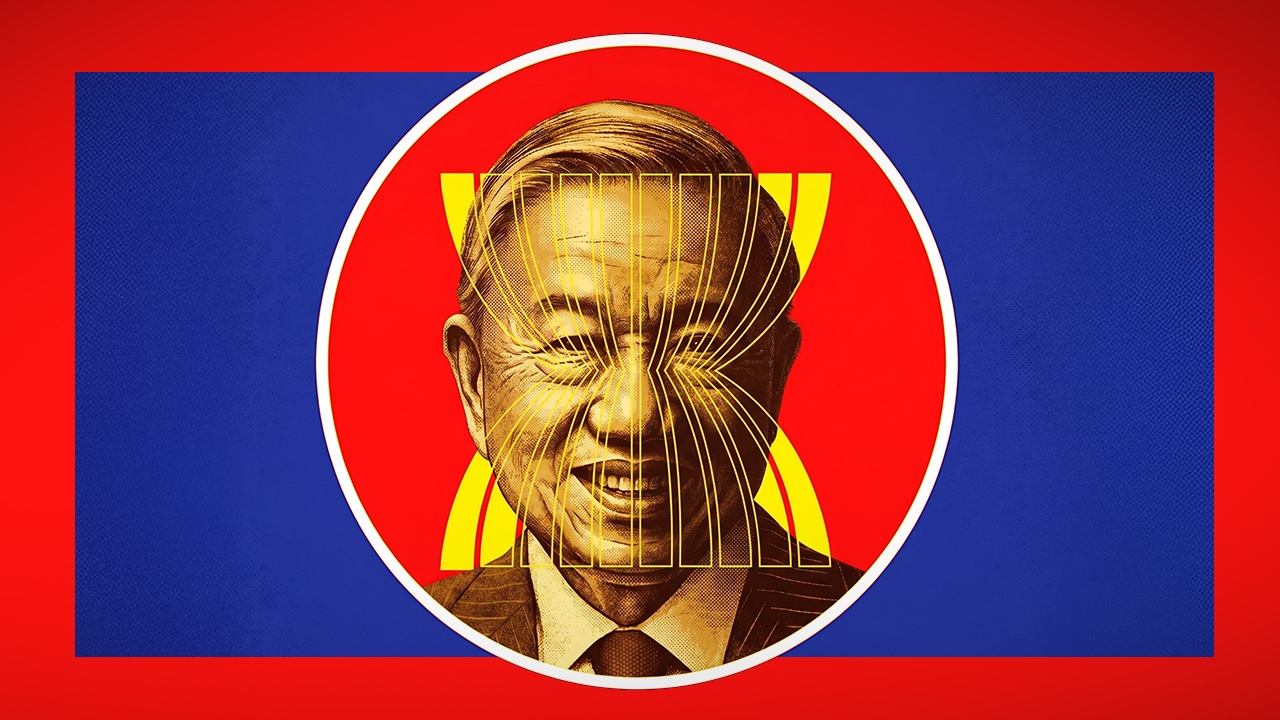
What is Vietnam thinking? Reading Hanoi's strategy through President To Lam's ASEAN visits, starting in Thailand and concluding in the Philippines, as Vietnam advances its role as a key regional player shaping new directions and order in Southeast Asia.
President To Lam's visit to Thailand To Lam Vietnam's President and General Secretary of the Communist Party, from 27-29 May, was widely regarded as a highly successful visit before he proceeded to present his vision at the Shangri-La Dialogue in Singapore, signaling to the world that Vietnam is now ready to help shape the region’s future amid the complex geopolitical turbulence caused by conflicts, confrontations, disasters, and wars.

To Lam took the leadership of Vietnam from Nguyen Phu Trong in 2024 during a time of rapid and intense geopolitical shifts. China’s political, security, economic, and strategic influence has visibly increased, while the United States, fearing a decline in its power and influence, seeks to fully compete with China.
Within ASEAN, some member states such as Myanmar remain mired in civil war, trapped with no clear exit. Thailand, once a regional model and star, is now struggling with internal political problems, economic downturns, and conflicts with neighboring Cambodia, including military clashes along the border that remain unresolved. Meanwhile, ASEAN as a regional organization faces serious questions about its effectiveness and unity. To Lam’s choice of Thailand as the first stop on his ASEAN tour, ending in the Philippines which holds the ASEAN chairmanship this year, sent a strong message to the Thai people and leaders that the rising Asian star will not abandon a country facing difficulties like Thailand. The 50th anniversary celebration of Thai–Vietnamese diplomatic relations under the concept "Growing Together" reflects this sentiment well.
In fact, Thailand and Vietnam elevated their diplomatic ties to a comprehensive strategic partnership last year. Before To Lam's arrival in Bangkok, the Thai Cabinet approved a five-year action plan (2026-2031) to implement this partnership, covering three main pillars:
Partnership for sustainable peace, partnership for sustainable growth, and partnership for a sustainable future. During his visit to Thailand, both sides signed agreements for cooperation in multiple areas, including developing an aircraft maintenance center and academic collaboration. They emphasized concrete cooperation in political-security and economic sectors, addressing key challenges both countries currently face.
In security and political cooperation,

the two countries agreed to elevate military and defense collaboration, combat transnational crimes—especially online scams—and prevent illegal fishing. They also agreed to prohibit any use of each other's territory for political movements and to seriously implement the ASEAN framework treaty on extradition. On the economic front, both nations agreed to deepen cooperation to manage global economic volatility and uncertainty, prioritizing private sector collaboration. Thai Prime Minister Anutin Charnvirakul stated both sides aim to reach an annual trade value of 25 billion USD soon, currently at about 24 billion USD, adding, "This goal is within reach, and we intend to increase trade volume further."
From Vietnam’s perspective, President To Lam viewed the visit to Thailand as significant not only because it coincided with the 50th anniversary of diplomatic relations—reflecting mutual trust and confidence as ASEAN members—but also because strong Thai-Vietnamese ties play a vital role in maintaining ASEAN's unity and centrality. To achieve Vietnam's modern goals, To Lam emphasized to Thai leaders and citizens that both sides agree to promote peaceful resolution of issues based on international law, especially the 1982 United Nations Convention on the Law of the Sea (UNCLOS), praising Thailand and Cambodia for implementing ceasefire agreements and preparing to resume negotiations.
To Lam expanded on this broader perspective in his speech at the
Shangri-La Dialogue,

identifying three major global crises: a crisis of international order, a development crisis, and a crisis of trust among states. This view reflects Vietnam’s understanding of security as extending beyond military aspects to include economic security, technological change, and upholding rules that maintain stable and predictable international relations. According to To Lam, the crisis of international order arises when established rules governing international relations are selectively applied or interpreted to serve specific interests. Many countries still reference international law and multilateral principles but practically engage in illegitimate military force, economic pressure, sanctions, or disruptive tactics to coerce rivals.
This leads smaller and medium-sized states to face pressure to take sides amid great power competition. Maritime zones, trade routes, digital systems, and infrastructure that once connected the world increasingly become strategic competition arenas. The second crisis is the development crisis.
To Lam sees globalization, trade, investment, and technology transfer as key drivers that helped many developing countries grow economically and improve quality of life from the late 20th to early 21st century. However, these forces now face pressures from global economic slowdown, rising public debt, climate change, and intensifying technological and supply chain competition. From Vietnam’s viewpoint, limited development opportunities weaken economies, which can lead to social, political, and strategic instability.
The final crisis is the crisis of trust among states. To Lam considers this possibly the most dangerous crisis. Countries increasingly view each other's actions with suspicion; measures one side claims are self-defense may be seen as provocations by others. Conflicting interests risk escalating to confrontations, and minor incidents can quickly trigger crises without communication channels and conflict management mechanisms. For Vietnam, building trust does not mean ending competition but ensuring competition occurs under agreed and predictable rules.
Based on this analysis, Vietnam prioritizes preventive diplomacy, negotiation, mediation, compromise, and international confidence-building measures rather than political polarization or military confrontation. To Lam’s proposal is not to pick sides in great power competition but to establish mechanisms and institutions that reduce risks and prevent conflicts from escalating into crises. This is not the first time a Vietnamese leader spoke at the Shangri-La Dialogue. Nguyen Tan Dung did so as Prime Minister in 2013, addressing strategic trust. However, To Lam’s statements have attracted significant attention, reflecting Vietnam’s growing confidence as a regional actor.

Historically, Vietnam's foreign and security policy focused on protecting sovereignty and addressing immediate challenges. Now, Hanoi appears intent on playing a greater role in shaping the region's strategic environment independently.
Another clear point is support for ASEAN’s leading role. However, To Lam’s concept of ASEAN Centrality goes beyond maintaining ASEAN as a forum for dialogue. It means empowering ASEAN to prevent conflicts, reduce tensions, and maintain regional stability amid intensifying disputes among ASEAN members and great powers.
Nonetheless, To Lam believes any efforts to reduce conflict and maintain regional stability—such as U.S. and China involvement in resolving Thai-Cambodian issues and Myanmar’s civil war—should be transparent, lawful, mutually supportive, and must not weaken ASEAN. However, ASEAN centrality will not happen automatically. Although To Lam did not strongly criticize ASEAN, his diplomatic language differed from other leaders by implying that if ASEAN continues to talk more than act, issue statements without taking effective measures, and build consensus without solving crises, then the concept of ASEAN Centrality

may lose its meaning.
Ultimately, To Lam’s visit to Thailand and his speech demonstrate Vietnam’s attempt to propose approaches to address a region facing great power competition and internal ASEAN conflicts, such as Myanmar’s civil war, the South China Sea disputes involving Vietnam, and tensions among member states like the Thai-Cambodian border issues. The value of these proposals may not depend on how much other countries agree but on whether they can be translated into mechanisms and practices aligned with reality, and how much Vietnam is willing to invest politically and diplomatically to advance this vision.