

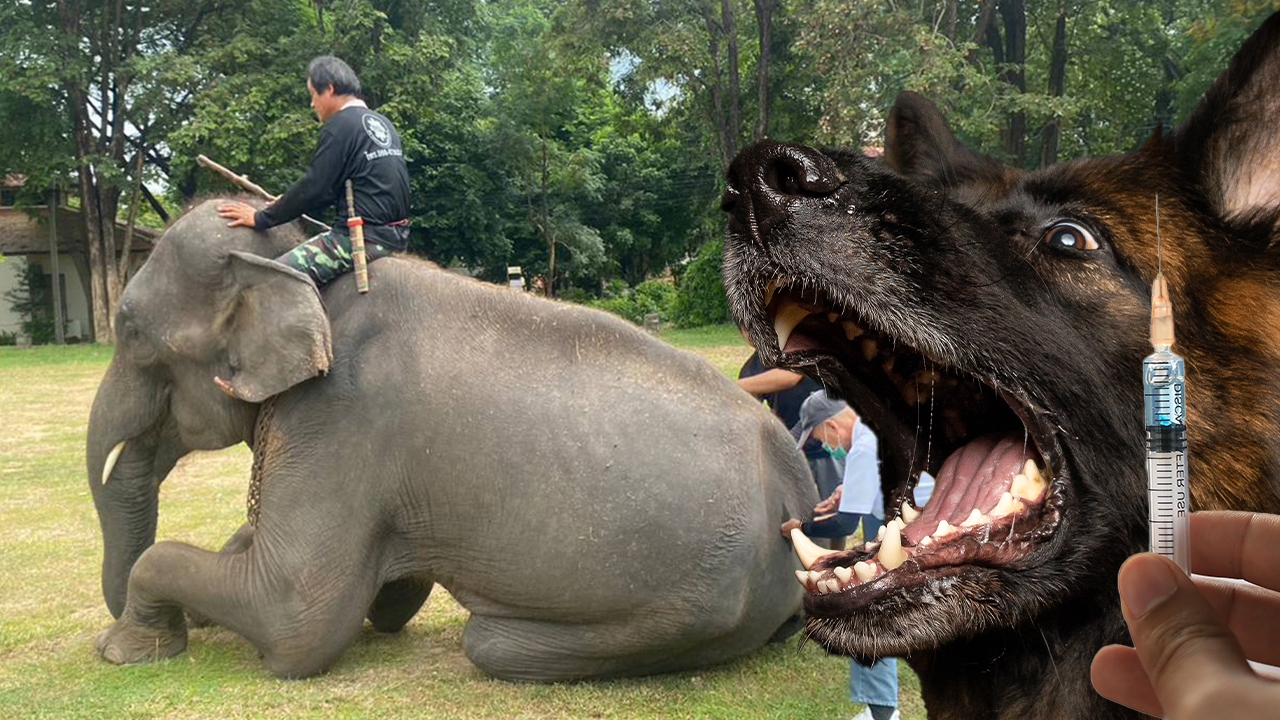
Dr. Alongkorn warns of a severe rabies outbreak, noting that domestic elephants are at risk of infection and providing proper prevention guidelines.
On 11 June 2026 GMT+7, Dr. Alongkorn Mahanop, a board member of the Thai Society for the Prevention of Cruelty to Animals (TSPCA), warned that rabies is currently spreading with several fatalities reported. Rabies is caused by a virus that can infect all mammals, including humans. There is currently no cure. Infected humans or animals typically die within 7 to 10 days, though in some cases symptoms can last up to one year.

1. The furious type (about 90% of cases): Animals exhibit stiffness, neck rigidity, jaw paralysis, and keep their mouths open continuously with excessive salivation. They cannot eat or drink, have wide-open eyes, run straight into obstacles, and their tails hang down. Most die within 7 to 10 days. This form is commonly seen in dogs.
2. The dumb type (about 10% of cases): Animals become lethargic, hide in dark corners such as under tables, beds, behind wardrobes, or refrigerators, and refuse food and water. Their eyes are wide open, and if approached, they may bite or scratch. Most die within 7 to 10 days. This form is commonly seen in cats.
If people encounter animals suspected of having rabies—such as dogs with stiff necks, open mouths, drooling, glaring eyes, and charging straight to attack—the recommended survival method is to run quickly about 20 meters, then abruptly make a right-angle turn. Rabid dogs cannot bite immediately. Shout for help or climb to a higher place.
Anyone bitten by an animal suspected of rabies should immediately clean the wound with clean water and soap, then apply alcohol, iodine tincture, povidone-iodine, Betadine, or an antiseptic thoroughly. Then, seek medical attention at a hospital immediately. Do not slap, hit, or squeeze the wound to make it bleed.

Vaccinate your pets against rabies annually. Keep pets indoors and prevent them from interacting with stray dogs or cats. If your pet is bitten by a stray animal, take it to a veterinarian immediately for rabies vaccination.
Domesticated elephants can contract rabies, usually from bites by stray dogs or other infected animals on the trunk or the back of both hind legs. Elephant caretakers often neglect immediate wound care. As mammals, elephants can become infected and die from rabies. Symptoms typically appear after about 25 days, and the elephant eventually dies. Signs include stiff neck, drooping trunk, wide-open eyes, difficulty walking, drooping tail, slow ear flapping, jaw paralysis, inability to use the trunk to suck water or chew food, leading to death.

1. Do not bring elephants into areas with many stray dogs, such as near garbage dumps, abandoned villages, or deserted condominiums.
2. If an elephant is bitten by an animal suspected of having rabies, immediately notify a veterinarian and provide first aid by washing the wound with clean water and soap, then applying iodine tincture, povidone-iodine, Betadine, or an antiseptic thoroughly. Then, consult the veterinarian regarding wound care, which may include rabies vaccination.

In past cases where elephants bitten by stray dogs on the trunk tip or hind legs survived rabies, they were given four doses of rabies vaccine—up to 16 times the normal dose—depending on the veterinarian’s assessment and treatment approach.