

The Seub Nakhasathien Foundation revealed four main concerns regarding the reduction of overlapping areas in Thap Lan Forest, worried about future land speculation by investors and monitoring impacts on wildlife and ecosystem degradation, and provided four concerns.
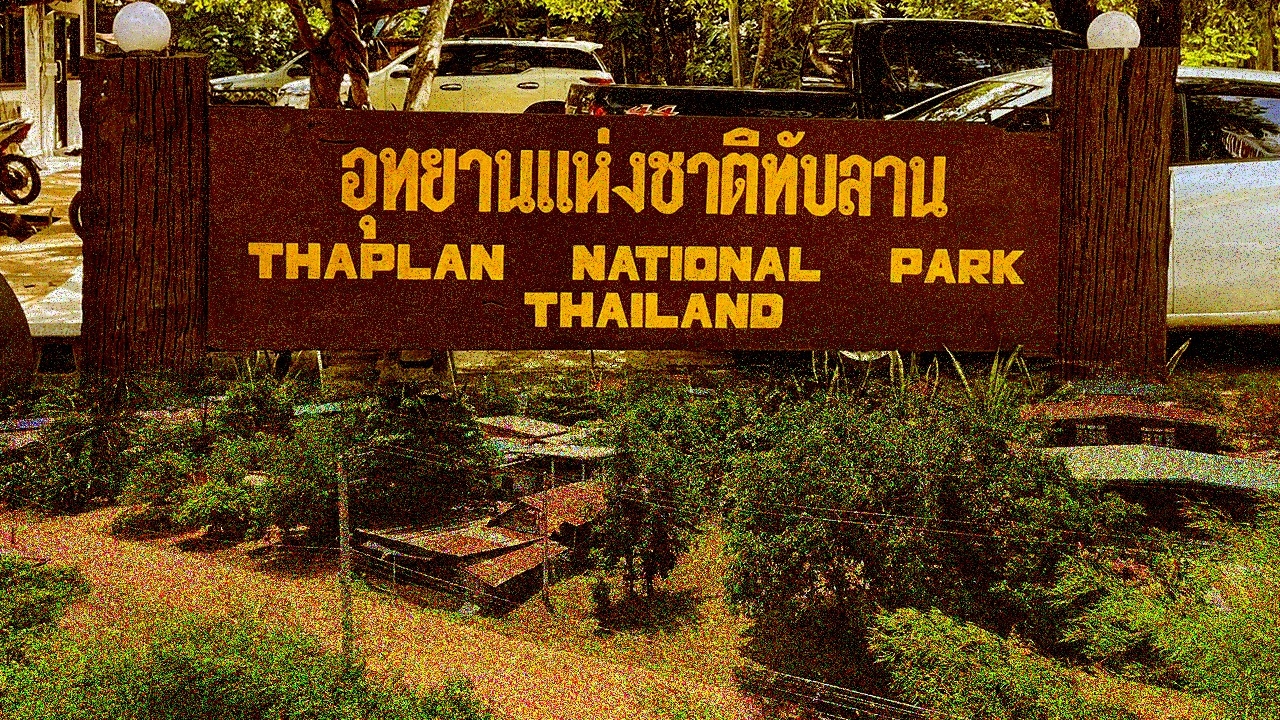
The long-standing land use conflict between the state and local people along the boundary of Thap Lan National Park, spanning Nakhon Ratchasima and Prachinburi provinces for over 60 years, has reached a critical turning point. On 15 June 2026, the National Park Committee approved the revocation of Thap Lan National Park boundaries.
Thairath Online's special team interviewed Mr. Panudet Kerdmali, Chairman of the Seub Nakhasathien Foundation, on this issue. He said that after the National Park Committee under the Ministry of Natural Resources and Environment completed its meeting, the Director-General of the Department of National Parks, Wildlife and Plant Conservation, acting as secretary, will compile the conclusions into a document to submit to the ministry, which will forward it to the Cabinet for approval to proceed with the revocation. Although separating affected groups and addressing each group is positive, the foundation has four main concerns.

First, the areas revoked from the National Park boundaries fall mainly into five groups, covering about 150,000 rai, divided into two groups under the Agricultural Land Reform Office (ALRO).
Group 1 consists of overlapping areas within Thap Lan National Park covering approximately 53,416.47 rai.
Group 2 is the Thai Samakkhi model village project area, about 8,328 rai, designated under the 1977 Cabinet resolution. This is considered "ALRO expansion" land — an extension from the original ALRO area. However, ALRO's office has not yet clearly mapped the plots or obtained forest department approval for revocation, leaving this area officially part of the park without clear ALRO status. This group is the main concern due to numerous plots involved in legal cases.

Group 3 covers the security project areas (PMP and KCK) based on the 1992 Cabinet resolution, totaling about 87,500 rai. It is recommended to revoke the national park status here and hand over to ALRO as consolidated plots.
Group 4 includes areas outside ALRO and security projects, about 109,000 rai. The committee resolved to survey these land plots under Section 64 of the National Park Act 2019. This group contains areas with encroachment cases, with over 500 legal cases currently in court processes.
Group 5 comprises state property, specifically a military training ground before national park designation, covering 6,621 rai. The approach is to revoke national park status in accordance with its use as military state property.
"Our concern is that these revoked areas must have mechanisms to verify the qualifications of beneficiaries under ALRO. We have observed that in many areas, ALRO lands have experienced encroachment, unauthorized expansion, rights usurpation, and activities that violate ALRO criteria. We urge responsible agencies to rigorously and transparently verify and validate these claims going forward."

Second, many of these areas have ongoing legal cases, initiated by forest officials under the National Park Act. Some cases are with prosecutors or in various court levels, raising concerns that revocation might affect these cases. It depends on the courts' discretion whether to continue or dismiss cases, potentially transferring legal responsibility to new agencies.
This means that if courts decide to proceed with prosecution and allow ALRO to file complaints, it could result in implicit amnesty for those currently facing charges. The rigor and procedures under ALRO may not be as strict as those under the National Park Act.
Third, there are concerns about wildlife living in areas shared between communities and conservation zones. Most are lowland areas where various wildlife species have begun entering and conflicting with communities. Such conflicts are expected to intensify, requiring clear measures to prevent and mitigate human-wildlife coexistence issues.
"Currently, hundreds of elephants forage on local crops in these areas. If the land condition changes with development projects and human activities differing from strict national park oversight, since ALRO's conservation approach may differ, we worry this could increase human-wildlife conflicts and impacts."

Fourth, Thap Lan National Park is part of a UNESCO World Heritage site along with Khao Yai, Ta Phraya, Pang Sida National Parks, and Dong Yai Wildlife Sanctuary, collectively known as the "Dong Phayayen-Khao Yai Forest Complex."
Revoking parts of this area could undermine its value as a habitat for rare wildlife. Thus, scientific studies must confirm that revocation will not harm the World Heritage site. Currently, there is no clear academic evidence, which risks criticism from the World Heritage Committee or future demands for Thailand to rectify issues.
Additionally, the wildlife corridor, with nearly 1.5 billion baht invested in wildlife overpasses and underpasses (three locations), is now used by animals such as over 24 tigers, and more than 30 including Dong Yai forest. They are approaching Khao Yai. The Thai Samakkhi village area overlaps this corridor. Human activities there could disrupt these corridors. Also, projects like a new dam by the Royal Irrigation Department and the future M61 motorway construction could worsen impacts on the area.
This situation could set a precedent for other communities in conservation areas to request revocation and come under different laws, even though Section 64 of the National Park Act seeks to address community issues within forests. However, this has not been fully implemented with clear legal guarantees for communities to reside legally. Communities worry that switching to other laws might clarify their land tenure better, a concern the Department of National Parks should carefully consider.
