

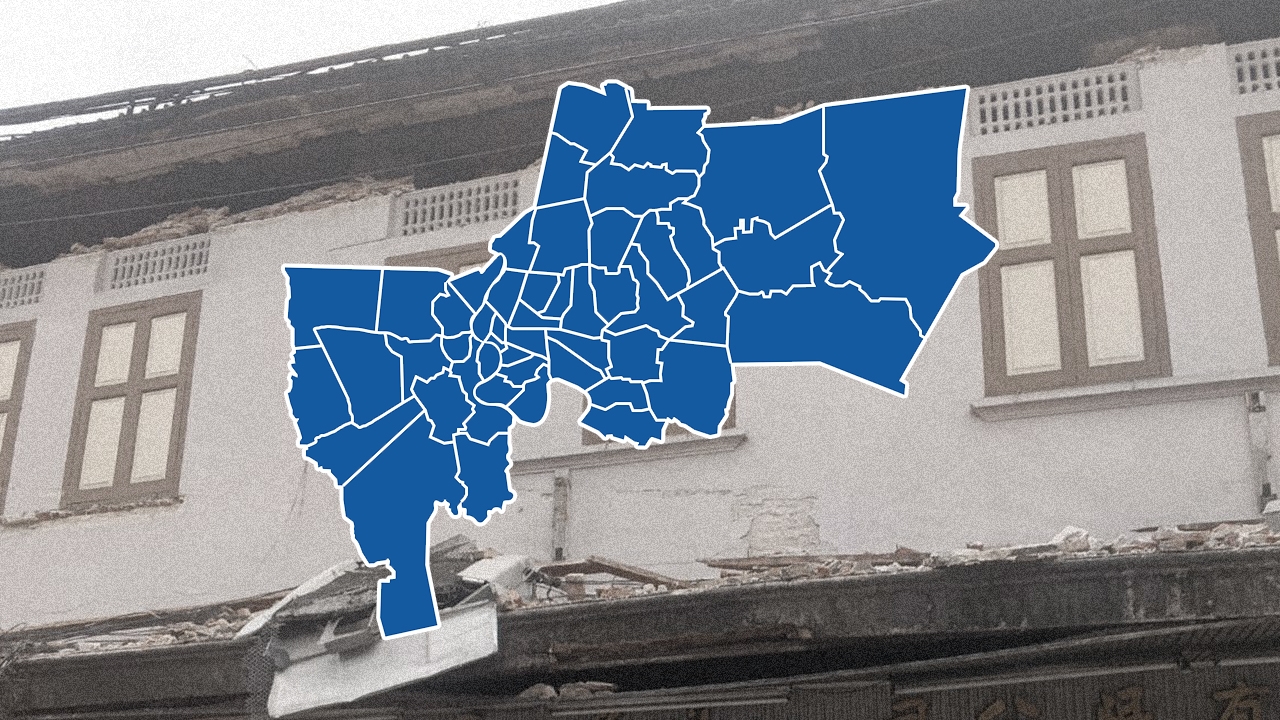
On 20 June 2026 at 16:52, Hotline 199 received a distress call reporting a structural collapse near Wat Traimit Withayaram Worawihan on Charoen Krung Road, Talat Noi Subdistrict, Sampanthawong District. Fire and rescue teams from Suan Mali station promptly rushed to investigate.
By 16:57, officials arrived at the scene and found that a concrete slab from the second-floor awning of a building had collapsed and subsided. The impact immediately caused the death of one male victim at the scene. Rescue personnel and volunteers urgently used cutting and heavy equipment to lift the concrete slab off the victim's body.

This incident not only brought sorrow but also reignited concern among Bangkok residents about the safety of "old buildings in Bangkok," which continue to deteriorate over time.
Why do "concrete awnings" on old buildings frequently collapse? A deep dive into structural causes.
Expert engineers often identify three main factors behind awning or balcony subsidence in old buildings:
Structural fatigue and steel corrosion: Most old shophouses feature cantilevered awnings extending from the main building without supporting columns. Over time, rainwater and humidity penetrate the concrete, causing internal reinforcing steel to rust, expand, and crack the concrete, ultimately weakening its hold.
Improper extensions: Many owners modify awnings to hold water tanks, air conditioner compressors, or add walls. Excessive weight (overload) leads to structural failure.
Lack of maintenance: Numerous old commercial buildings are abandoned or lack proper engineering inspections for cracks and damage.

Looking back at the city's expansion history, most early reinforced concrete shophouses in Bangkok were built between 1957 and 1977 (B.E. 2500 - 2520), meaning these buildings are now on average 40 to 60 years old.
A concern during that era was that building regulations were less strict than today, and concrete mixing technologies and load calculations had not yet met international standards, making these structures highly vulnerable as they reach the end of their service life.
Check risk locations! Which old building areas in Bangkok require close monitoring for collapse?
Areas with dense concentrations of buildings over 40 years old, mostly in old city zones and traditional commercial districts, include:
District / Risk Area | Typical building characteristics |
Sampanthawong District (Yaowarat, Charoen Krung, Talat Noi) | Dense clusters of old commercial shophouses with accumulated extensions |
Phra Nakhon District (Khao San, Sao Chingcha, Grand Palace) | Some heritage buildings and old shophouses lacking restoration |
Pom Prap Sattru Phai District (Bobae, Plabplachai) | Busy commercial areas with heavy use and overloading of building spaces |
Inner city communities (Bang Rak, Yannawa, Pratunam) | Shophouses along main roads built alongside early road developments |

If you live in or pass through old building areas, watch for these dangerous signs:
Structural cracks, especially shark-mouth shaped cracks near the base of awnings or beams.
Spalling concrete exposing steel reinforcement; if the exposed steel is rust-colored brown, report immediately to experts.
Continuous water stains or leaks, indicating concrete is absorbing moisture and deteriorating.
Abnormal building tilt; doors or windows begin to open or close with difficulty due to structural subsidence.
Today's incident on Charoen Krung Road serves as an important warning that government agencies and building owners must collaborate to reform safety systems for old buildings in Bangkok before further tragedies occur.
