

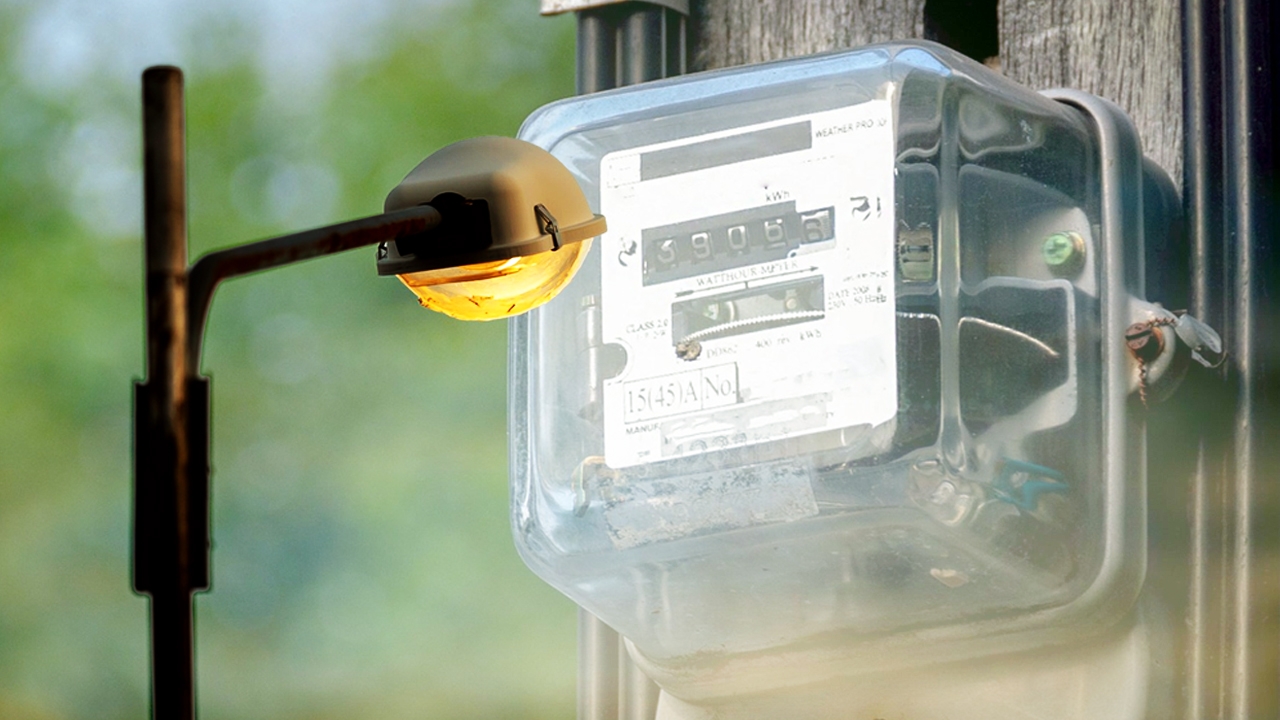
Public lighting electricity charges conceal a hidden burden in bills, tracing from the 1987 resolution to costs consumers must bear. Revealing statistics on which provinces use the most public lighting electricity, with the top five ranked.
There is no such thing as free electricity: uncovering the secret of public lighting electricity charges hidden in everyone's bills from the 1987 resolution to the massive hidden annual costs rising sharply, along with statistics on provinces with the highest unauthorized public electricity use and issues of illegal tapping.
After the topic of "public lighting electricity charges" sparked social debate over why citizens must share the cost of street lighting through monthly bills, today we delve into two related and interesting aspects: statistics of public lighting electricity use in Thailand and unauthorized public electricity use.

According to 2023 provincial electricity consumption data from the Ministry of Energy's Office of the Permanent Secretary, electricity use is categorized into 12 types per province: residential, small business, medium business, large business, special business, backup power, interruptible power, public lighting, government/state enterprises, water pumping, temporary power, and EV charging stations. Bangkok ranks highest in public lighting electricity usage at 342.1 million units per year.
The top five provinces using the most public lighting electricity in 2023 are:
1. Bangkok
2. Chonburi
3. Nakhon Pathom
4. Nakhon Ratchasima
5. Udon Thani
It is evident that electricity consumption depends not only on the province's size but importantly on its economic scale, as all top five are major provincial cities with higher economic activity than others.

Unauthorized public electricity use, such as using public lighting electricity for private purposes or connecting it illegally to buildings without permission, is a real and easily done issue. For example, in 2025, authorities busted a Bitcoin mining operation illegally tapping public electricity (read more at… https://www.thairath.co.th/news/crime/2940735).
When unauthorized public electricity use occurs in an area, consumption spikes. If it exceeds the 10% quota, local governments may have to cover the extra cost themselves, or worse, the excess cost is averaged into the overall electricity units billed to consumers in the area, making residents unknowingly bear higher expenses.
Recently (23 June 2026), Energy Minister Aeknath Promphan prepared to propose to the Cabinet solutions addressing the hidden burden of public lighting electricity charges that citizens unknowingly bear.
Minister Aeknath explained the root cause stems from the 1987 National Energy Policy Council resolution, which exempted electricity charges for roads and public lighting to local authorities like Bangkok Metropolitan Administration or Department of Highways. At the time, area owners aimed to distribute safety responsibilities, so public lighting electricity was exempted within a quota not exceeding 10% of total electricity sold.

However, because it was considered "free," many areas lacked awareness of energy conservation and used large amounts of electricity, believing they stayed within the 10% quota. They did not realize consumers ultimately bear these costs. This caused local public lighting electricity expenses to rise yearly. According to the Electricity Authority's assessment, in 2015 the burden increased by about 0.04 baht per unit per household.
In 2019, the burden rose to about 0.07 baht per unit per household.
By 2026, it is projected to increase to about 0.10 baht per unit per household.
Therefore, it is time for the government to reform the electricity billing structure to be transparent, auditable, and adjusted to current nationwide conditions that differ from the past. Every baht paid monthly by citizens should be for actual electricity consumed, not for bearing costs arising from outdated systems.