

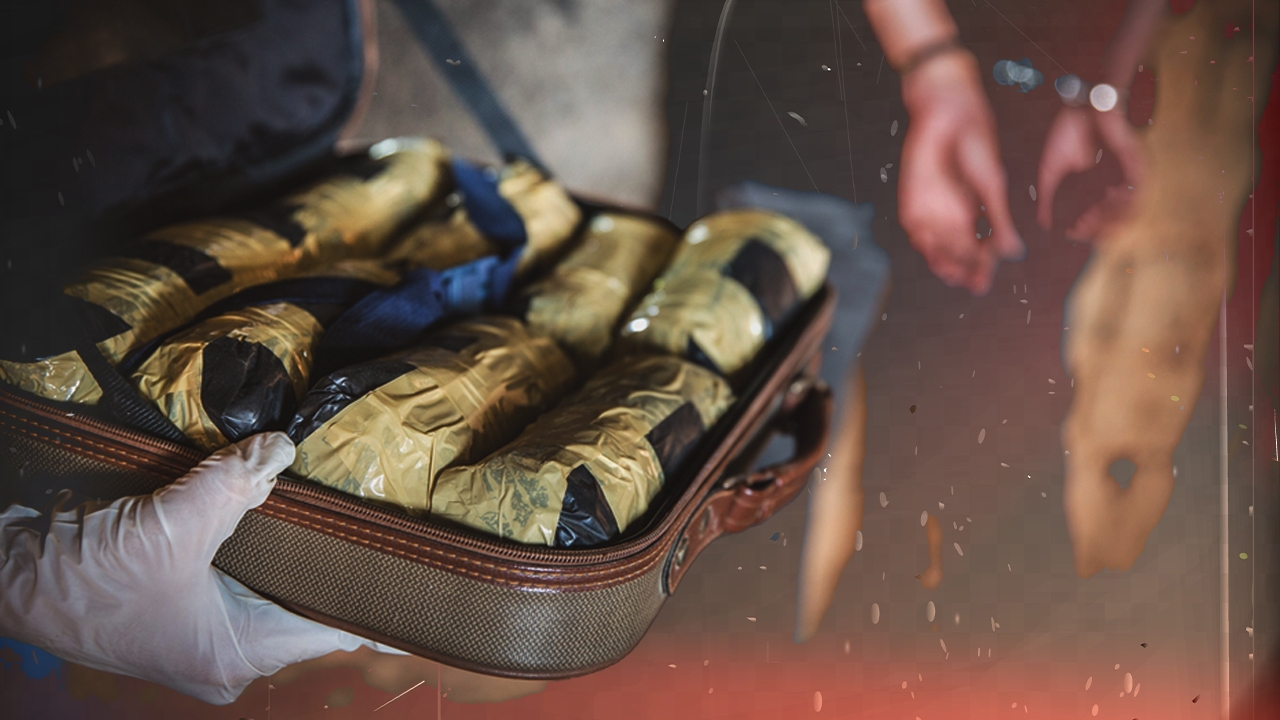
Thailand has inevitably become a key strategic point in the global drug trafficking route due to its geography next to major production areas and its modern logistics networks. The recent case of a Thai female flight attendant arrested at Melbourne Airport, Australia, with heroin hidden in an "elephant-patterned cloth bag" further reflects the transnational drug trafficking strategy of using "insiders" or "unwitting victims" as carriers.
Drug trafficking networks use Thailand as a transit point and distribution hub to send drugs to high-value black markets such as Australia, Taiwan, Japan, Europe, and the United States. The main drugs are divided into two types.
Ice (crystal meth) and yaba (methamphetamine precursors) are transported in large quantities, flooding into northern and northeastern Thailand before being forwarded to the south for shipment by boat or packed in containers mixed with agricultural products or electronics at Laem Chabang port.
Heroin, an opium-derived drug, remains in high demand in Australia and Taiwan because it commands much higher prices than in Thailand. Traffickers often conceal it in international parcels or hire couriers (mules) to travel by plane.

Nearly all heroin originates from the Golden Triangle area, where Thailand, Myanmar, and Laos meet. Currently, the main production area is Shan State, Myanmar, where armed ethnic groups and influential factions control the territory and chemical processing factories.
The United Wa State Army (UWSA) has the highest capacity to produce and control precursor chemicals in the area.
The Kokang group and small ethnic armed forces, including local militias embedded along the Myanmar-China and Myanmar-Thailand borders.
To enter Thailand, traffickers transport pressed heroin bricks (often stamped with a double lion stepping on a globe) across the Mekong River or by foot through natural routes in Chiang Rai, Chiang Mai, and Mae Hong Son provinces, with recent increases via northeastern routes such as Nakhon Phanom and Mukdahan to avoid strict inspections in the north.
A case that shocked the aviation industry occurred in late June 2026 when a 26-year-old Thai female flight attendant was arrested by the Australian Border Force (ABF) with over 1 kilogram of heroin worth about 500,000 Australian dollars (approximately 11-12 million baht) in the Australian black market.

Investigations by the Office of the Narcotics Control Board (ONCB) revealed the flight attendant was a victim of the trafficking network through a Facebook group for carrying goods. An avatar account named “Rose” contacted her to carry goods claimed to be "OTOP products" to customers in Australia, offering only 8,800 baht as payment. Burdened with debts (student loans and car installments), she believed and accepted the job.
1. Delivery: Two days before the flight (22 June 2026), traffickers used a rider delivery service to send a brown box to the flight attendant at her condominium.
2. Concealment: Upon opening the box, she found 12 drawstring elephant-patterned cloth bags, a popular Thai souvenir. The drugs were cleverly hidden within the bags' structure, lining, or bottom, undetectable to the naked eye. The flight attendant packed all the elephant bags into her personal luggage in preparation for the flight.
3. Destination in Melbourne: Upon arrival at Melbourne Airport on 25 June 2026, Australian immigration officers, using high-risk screening systems, randomly inspected and X-rayed the elephant-patterned cloth bags, detecting dense opiate substances, leading to her arrest.
This case illustrates that transnational drug trafficking networks no longer rely solely on traditional criminals for transport but employ "cyber tactics" by creating fake online identities to recruit ordinary people or airline staff who have special travel privileges (though currently screened as strictly as regular passengers) as tools. They exploit financial hardship and use local products like the "elephant bag" as a front, serving as a major warning for the cross-border carrying business today.