

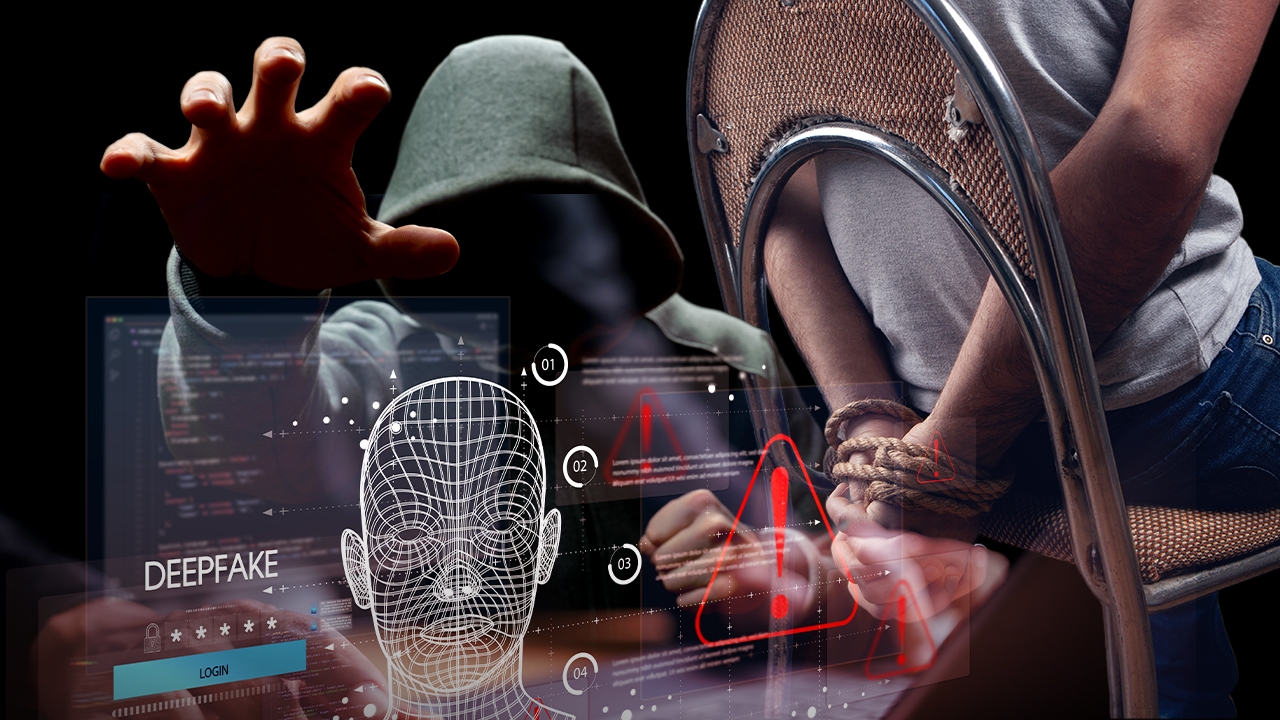
Why does “virtual kidnapping” keep happening repeatedly? An in-depth look at the psychological mechanisms when love is weaponized. Scammers use AI to fake appearances and voices, controlling victims to send threatening ransom clips. Experts reveal prevention methods.
“Virtual Kidnapping” Remains a persistent issue despite warnings from the Cyber Police Command and even the FBI. Scammers use psychological manipulation; for example, a Chinese female student bought “a knife, rope, and body paint” to stage a kidnapping and torture scenario to extort 12.5 million baht ransom from her own father. Police found her alone in a hotel in Samut Prakan. Similar virtual ransom cases have occurred with university students near Rangsit, raising questions about why these incidents keep recurring.
Virtual kidnapping or Virtual Kidnapping is a new scam tactic used by call center gangs and scammers who psychologically threaten and control victims online. They force victims to confine themselves in hotels and stage videos showing supposed kidnapping and torture to extort ransom from parents or guardians, though no such incident actually occurred.
Assistant Professor Dr. Thanandsak Bawornnantakul, former lecturer and criminologist at Mahidol University, said virtual kidnapping scams are not new but have become a global phenomenon. Reports have emerged from places like Hong Kong, Mexico City, Vietnam, and other Latin American countries. Mexico is a hub for virtual kidnappings, with criminal gangs targeting both locals and foreigners. In Asia, the focus is on students and young people living far from home.
Various terms describe virtual kidnapping or ransom scams, such as Online kidnapping, Cyber kidnapping, or Digital kidnapping. These technology-based threats have existed for some time. Between 2013 and 2015, similar phenomena appeared in Mexico and have since expanded.
The FBI and Interpol have long tracked these crimes because a key feature is that often there is no physical crime scene, no missing person to search for, and no actual hostage. This complexity makes investigations increasingly difficult.

1. Perpetrators operate as organized crime groups, though not large international organizations like the Yakuza. These sizable gangs form through cooperation and dissolve after receiving payment, making them hard to track. They often regroup after some time to strike again.
2. The crimes are transnational; call centers are usually in different countries than the victims. This complicates coordination, tracing, and prompt law enforcement action, often requiring international cooperation, while threats demand quick ransom payment.
3. Ransom amounts are generally moderate—often around a few hundred thousand to one or two million baht—amounts most people can gather quickly.
4. Elderly victims are particularly targeted. These scams are increasingly prevalent and malicious, focusing on grandparents or parents who lack modern technology knowledge, exploiting data scammers have collected.
5. Victims often have personalities that prefer isolation, lacking close friends or social groups, so when the incident occurs, they cannot seek immediate help from neighbors or friends.
These scams manipulate emotions by exploiting fear, urgency, and familial love to pressure victims. They take advantage of victims' emotional vulnerability, instilling intense fear through sophisticated psychological manipulation.
This fear drives victims to spend all their savings, transfer large sums to criminals, and act impulsively, often bypassing crucial verification steps despite numerous warnings from authorities about virtual kidnapping scams.
Typically, scammers begin by identifying elderly individuals with children or grandchildren. They gather information from public records, social media platforms, or commercial data brokers. Even seemingly harmless Facebook posts can reveal critical details about family relationships, names, schools, and travel plans. Once targets are identified, scammers initiate fraudulent calls.
Historically, scammers pretended to be grandchildren and spoke vaguely, saying things like “Grandma, I have a problem,” relying on the victim guessing which grandchild was calling.
Recent data shows virtual kidnapping scams have surged significantly in recent years, evolving alongside technological advancements. The scams have become more sophisticated with criminals using AI to replicate the voices of loved ones, making deception more credible and harder to detect.
Scammers source video or audio clips of the person from social media, then use AI to generate any desired speech. They use tactics like phone number spoofing to appear local or familiar, luring victims into traps.
The FBI found scammers increasingly use media “proof” that the victim is “still alive,” such as photos, audio clips, and videos allegedly showing the person in danger. AI-generated voices precisely mimic loved ones. Fabricated photos or videos serve as “evidence” of kidnapping, often including family-specific details to enhance credibility. The main goal is to impair victims’ critical thinking and prevent verification of claims.

The resulting impact includes severe financial losses. Some lose hundreds of thousands or even tens of thousands in a single incident. For retirees relying on fixed incomes, such losses can deplete emergency funds or lifelong savings.
There can also be long-lasting emotional effects. The FBI notes scams targeting the elderly cause some of the most profound emotional harm, eroding feelings of safety, decision-making, and trust in the surrounding world.
For elderly people living on fixed incomes, these losses can be devastating. Many feel too ashamed to report the crime, so the actual damage is likely much greater.
1. Think carefully and remember: if you do not have protective measures when sharing information, limit what you post on social media. Avoid unnecessary posts or sharing personal details, especially travel plans, family information, and audio files.
2. Learn how to activate message filters on your phone to block scam calls and texts. Use these features effectively. Buying expensive phones is not worthwhile if you do not use their protective functions.
3. Communicate with family about using strong passwords, such as two-factor authentication for online accounts. Set family code words known only to trusted relatives for emergencies. Verification questions like pet names or colors can serve as initial checks. Always verify facts by contacting the alleged victim or other family members directly.
4. Never transfer money, gift cards, or bank funds immediately after a phone call.
5. Memorize and share the Cyber Crime Investigation Bureau hotline number, 1441, with friends and family so you can quickly respond if incidents occur.
The rise of virtual kidnapping scams underscores the urgent need for vigilance, education, and community support, especially for older family members who have limited access to, understanding of, and knowledge about technology.
Promoting scam prevention, awareness, fact-checking, and utilizing available resources can protect ourselves and our families from emotionally damaging crimes. One phone call can lead to financial loss. The most important lesson is to pause, verify facts, and not let panic drive financial decisions for ourselves and loved ones.