

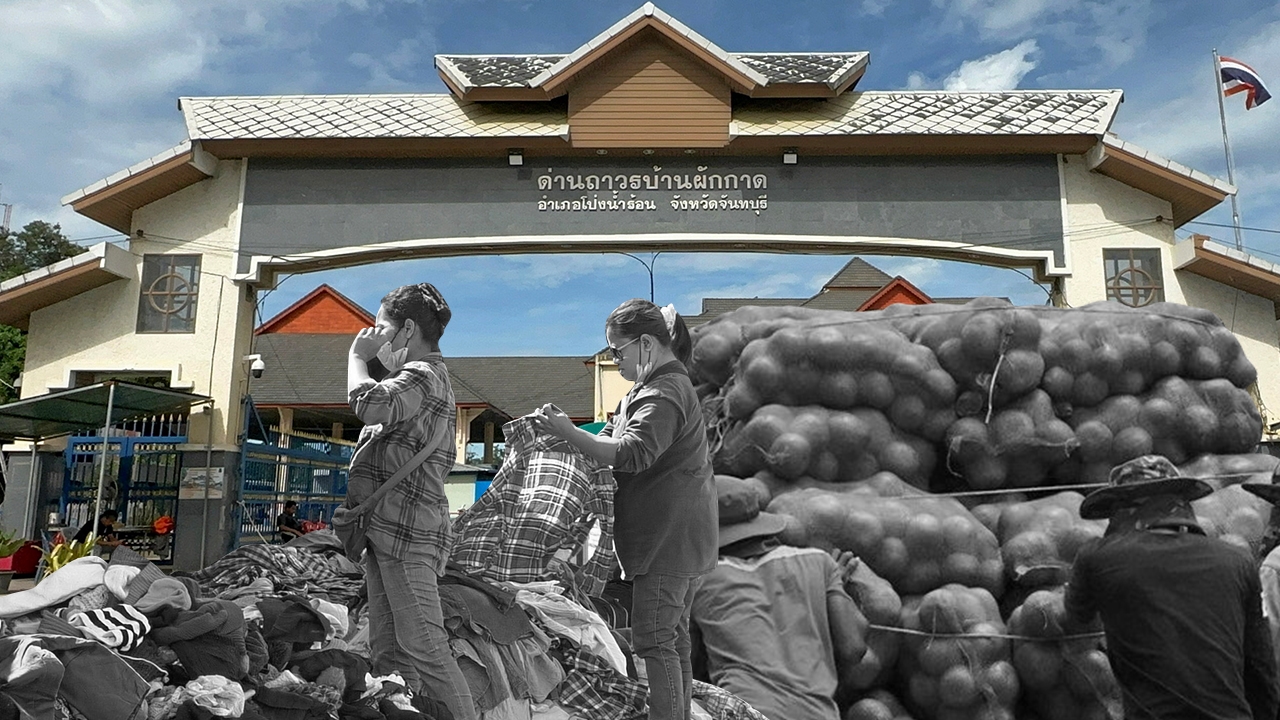
The one-year anniversary of the Thai-Cambodian conflict marks a border closure that has devastated cross-border trade worth hundreds of billions of baht, leaving the value at zero as Vietnamese and Chinese products take over the market formerly held by Thai goods.
Today (24 Jul 2026) marks one year since the events of 24 July 2025, which triggered the latest round of Thai-Cambodian tensions, including military clashes and BM-21 rocket strikes at the PTT gas station in Ban Phue, Sisaket province, causing significant casualties.
This conflict has not only affected the lives and property of residents and officials but also severely impacted the border economy, which is worth hundreds of billions of baht and is a vital source of livelihood for local communities.

On 19–20 July, the House Legal Affairs Committee, led by Mr. Rangsiman Rome, chairman of the committee, conducted a field study on the legal, judicial, and civil rights impacts of the Thai-Cambodian border conflict. Representatives from the private sector and government agencies presented economic effects since the conflict began in mid-2025, highlighting key issues as follows.
Ms. Jaruwan Meyakorn, Customs Officer at Aranyaprathet Customs House, disclosed key figures related to the incident as follows:
- Before the conflict (2024), Sa Kaeo's border trade averaged 10 billion baht per month.
- When problems arose (2025), border crossings were closed from July onward, reducing total trade value for the year to 90.1 billion baht. Thailand maintained a trade surplus with exports of over 60 billion baht, mainly vehicles and consumer goods, while imports totaled 23.5 billion baht.
- Currently (2026), cross-border trade between Thailand and Cambodia has dropped to zero baht.
Data from the Cambodian Customs and Excise Department indicates that the largest share of Cambodia's imported goods market is held by China, with a 40%–48% market share.
Second and third largest shares belong to Vietnam and Thailand, respectively. Vietnam focuses on exporting agricultural products, processed foods, construction materials, and textile raw materials, while Thailand is known for consumer goods, beverages, refined oils, and automotive products.
The concern is that Thai consumer goods, despite their popularity and value, are currently being barred from import. It is expected that China and Vietnam will eventually capture this entire market segment.

Representatives of exporters to Cambodia informed the committee that exporters now must route goods through Laos border crossings before entering Cambodia, increasing transportation costs by 100,000 to 150,000 baht per trip. Since the conflict began, their business sales have dropped to only 20–30% of previous levels.
Moreover, in mid-June 2026, Prime Minister Hun Sen reiterated the ban on land imports from Thailand and via Laos, resulting in exporters earning zero revenue and facing difficulties repaying principal and interest on bank loans.
"Border entrepreneurs don’t know where to turn. Opening new markets is not feasible since those areas are already controlled by existing traders," a consumer goods exporter told the committee.

Meanwhile, Rungnapa Taichiang, Secretary-General of the Sa Kaeo Tourism Industry Council, reported severe impacts on tourism and hotels over the past year. Sa Kaeo, once a bustling border economic hub attracting many visitors, now sees no tourists and lost revenues, while operators still bear unchanged costs.
Rungnapa added that if the government does not provide relief policies, at minimum, it should waive expenses such as employers’ social security contributions and land rents, most of which belong to the railway authority and remain high.
Furthermore, Sa Kaeo’s budget for economic stimulus activities has been cut entirely due to government concerns over potential renewed conflict.
"How can Sa Kaeo’s economy continue when the border is closed, the domestic economy is stalled, and the government ignores the hardships of border entrepreneurs?"
Mr. Surasak Chingnaworn, Member of Parliament for Sa Kaeo from the Kla Party, observed that the local economy is not only declining but nearly stagnant. For over 20 years, Sa Kaeo benefited from trade with Cambodia and had agricultural labor shortages filled by Cambodian workers supporting economic growth. Surasak believes that unless Thai and Cambodian leaders resume border trade negotiations, reopening the crossings is impossible.

Mr. Nattawut Wangphanawong, President of the Association for Developing Foreign Labor Importers’ Potential, reported Cambodian labor statistics from 2024: 44,771 seasonal workers traveled back and forth, and 564,357 workers under the MOU system, all of whom will see their work permits expire by 2026.
He proposed that the government consider "extending work permits" for Cambodian workers currently residing and working in Thailand to help sustain businesses and ease burdens on Thai entrepreneurs who rely on this labor force.
Mr. Rangsiman Rome, chairman of the House Legal Affairs Committee, noted that the border issues have escalated beyond border closures to include trade discrimination and ethnic animosity.
He emphasized that the government and political sectors must consider helping border businesses through debt moratoriums, tax exemptions, and economic recovery measures for border residents. Without such support within the next 1-2 years, local businesses will gradually vanish, leading to long-term economic stagnation as enterprises withdraw from the area.