

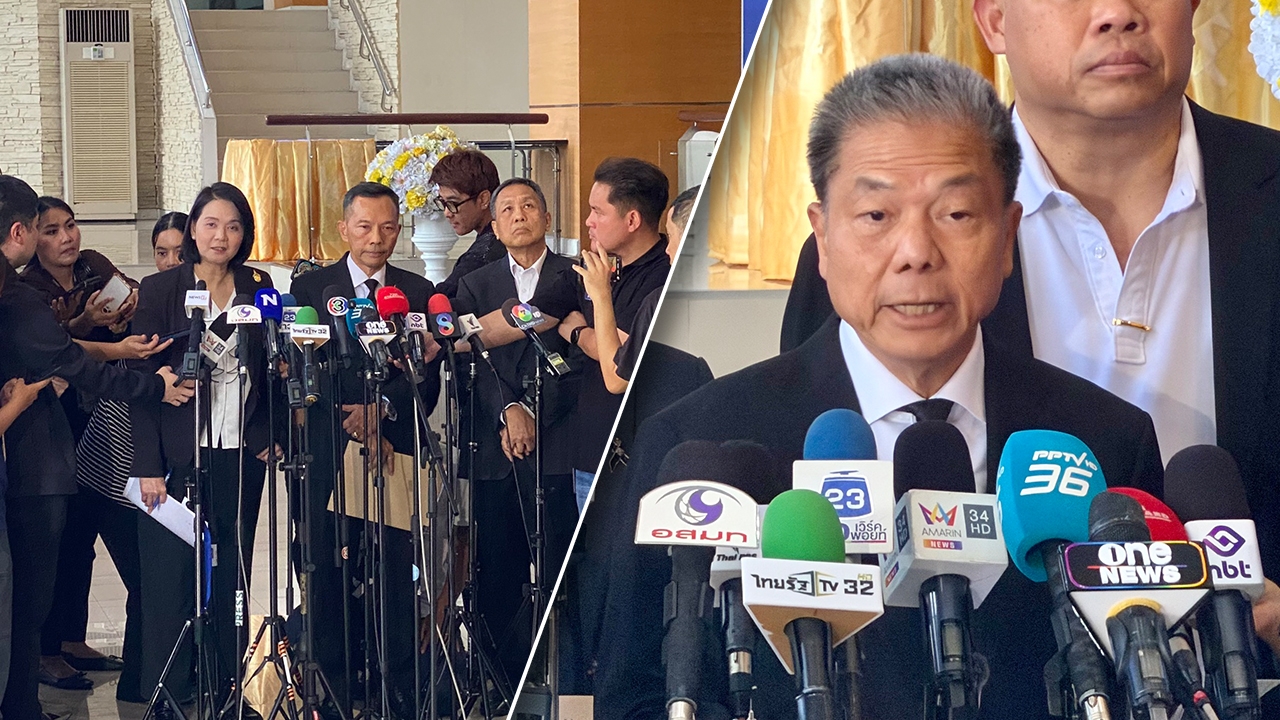
The NBTC meeting collapsed! Three commissioners walked out, resulting in a lack of quorum amid disagreements about the chairman's status. Professor Dr. Soranan Boonyai Chair of the NBTC emphasized continuing to hold meetings, with the next scheduled on 5 August, asserting that he remains in office until a royal decree is issued.
Regarding the case today (27 July 2026) at 08:30, representatives of the Digital Television Association (Thailand) led by Mr. Chakrit Direkwattanachai, Vice President of the Digital Television Association (Thailand), and Mr. Adisak Limprungphatthana, the association's advisor, submitted a letter to Professor Dr. Soranan Boonyai Chair of the National Broadcasting and Telecommunications Commission (NBTC) and all seven NBTC commissioners before the NBTC meeting scheduled for 09:30, expressing concerns about the status and duties of the NBTC chairman following the selection committee's resolution on 17 July. Mr. Ratchatapong Pintuseni, acting director of the Corporate Communications Division at the NBTC Office, received the letter.
Before the meeting, NBTC staff presented flowers to encourage Professor Dr. Soranan Boonyai, NBTC Chair, who briefly told reporters, “I still have good morale.” He then entered the meeting room with the NBTC commissioners.

The meeting began with six commissioners present, while Associate Professor Dr. Sompop Phurivirayapong, NBTC commissioner for telecommunications affairs, informed he would be absent and did not attend today’s meeting.
During the agenda discussion, a tense debate arose over the NBTC chairman’s status after the selection committee’s qualification decision. Three commissioners submitted leave requests and left the meeting room, causing a lack of quorum and forcing the meeting to be suspended.
Later, Professor Dr. Pirongrong Ramasoot, NBTC commissioner for television affairs, clarified that the three commissioners did not “walk out.” Instead, they had submitted leave requests before the meeting, intending to participate and review the agenda but sought to discuss legal issues concerning the chairman’s status beforehand. As they were not given the opportunity to do so, they decided to proceed with their leave requests. They believed attending the meeting amid unresolved doubts about the chairman’s status could legally jeopardize the decisions and impact all commissioners, licensees, consumers, and the public.
She emphasized that the Digital Television Association had also submitted a letter this morning seeking clarity on the same issue, worried that if decisions were made prematurely, legal challenges could undermine their validity.

The issue remains resolvable by jointly discussing solutions for the organization and seeking intervention from the acting authority under the NBTC Act—the Prime Minister—to find a way forward. This is crucial as NBTC decisions affect the public and many sectors broadly. She reaffirmed that submitting leave requests was not opposition or a walkout but a precaution to avoid potential legal risks to future NBTC resolutions.
Professor Dr. Soranan Boonyai, NBTC Chair, spoke to the media, stating that while he was explaining the legal status to the meeting, three commissioners left, causing a lack of quorum and forcing the meeting to be postponed and closed. However, the next meeting was scheduled for 5 and 6 August within the original timeframe.

Regarding the right to hold the NBTC chair position, he insisted that despite the selection committee’s resolution declaring he relinquished the position, “I do not agree with that decision and have continuously contested the selection committee’s authority.” He is currently exercising his right to file a lawsuit with the administrative court within the 90-day period. Thus, this matter is not yet definitively settled. According to Section 20, paragraph two of the Frequency Allocation Organization Act, the NBTC is an independent constitutional body, and appointments or dismissals require a royal decree and publication in the Royal Gazette.
“As long as there is no royal decree, I still have the duty to perform. Nothing supersedes the royal decree; a court ruling does not override it.”
He acknowledged concerns but noted that all work carries risks. He was selected to exercise discretion and act in the nation’s interest. Canceling meetings would cause severe damage because there are over 20 urgent agenda items, especially regarding digital TV and satellite operations. He declined further comment on income issues mentioned by the parliamentary side.