

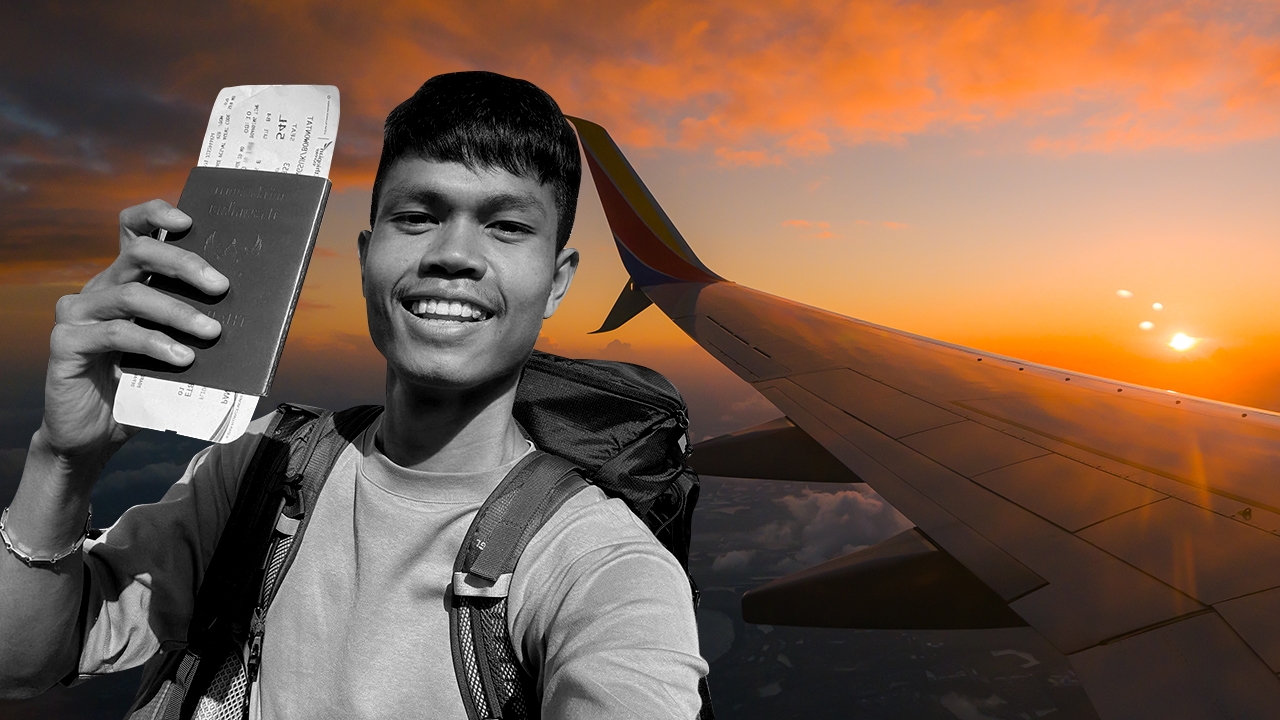
Conditions for repatriating "Halun Solo" who died in Georgia: the process of bringing the body back to Thailand—including flights and forensic procedures—could take up to a month, with estimated costs around 200,000-250,000 baht.
In the case of the disappearance of "Halun Solo," a famous travel YouTuber who traveled to Georgia on 13 July and lost contact with his family for several days, the family posted appeals to find him. Sadly, his body was found at a hotel, with the exact cause of death still unknown and under investigation by local authorities.
However, the process of repatriating Halun Solo's body to Thailand amid ongoing investigations into his cause of death remains a matter of public interest.
The Thairath Online special news team contacted Mr. Wiroj Suriyaseni, second-generation heir and chairman of Surya Funeral Company Limited (Surya Coffins), which handles repatriation of deceased Thais from abroad to their hometowns. He provided information on the complex steps and costs involved in coordinating the return of a deceased person from Georgia to Thailand.

Mr. Wiroj shared his experience stating that repatriation from Georgia requires contact through the Royal Thai Embassy in Ankara, Turkey. Currently, they are checking with the Thai embassy in Georgia to confirm if they have been informed. Normally, the embassy manages the process and contracts a local funeral service in Georgia to handle initial arrangements before sending the body back. A team then awaits the body at the airport in Thailand.
Since the cause of death is still unclear, an investigation must first determine whether it was murder or suicide. Authorities and forensic doctors need to complete their case report and all formal procedures before the body can be sent back to Thailand.

Regarding deaths abroad with questionable circumstances, Mr. Wiroj explained that this is reportedly the "first case" in Georgia, and no coordination has yet been received; they are still awaiting procedural progress. Other countries like Jordan or Egypt have had similar cases from Europe or the Middle East.
Regarding expenses for repatriating the body to Thailand, the estimated cost is about 200,000-250,000 baht. It depends on whether Halun had purchased insurance. If insurance was bought, they must check if it covers repatriation services. If so, the insurance company would cover all related costs.

In the program "Hone Krasae," Mr. Adisorn Phiphatworapong, Deputy Secretary-General for Legal and Inspection of the Office of Insurance Commission (OIC), revealed that upon checking, "Halun Solo" had one travel and accident insurance policy.
The coverage includes accidents and homicide but excludes death from pre-existing medical conditions. The policy's insured amount is up to 5 million baht.
Mr. Wiroj noted that compared to other countries, repatriation from Georgia is more difficult because Georgia lacks daily direct flights to Thailand, often only one flight per week, causing scheduling delays.
After the autopsy process completes, paperwork must be finalized and the next available flight awaited. This leads to longer waiting times than in other countries. Countries with regular flights, such as the US, Europe, or parts of Asia, generally take about three days. In Georgia's case, the process may take 20 days or even up to a month.

In closing, Mr. Wiroj advised those who love traveling abroad that places we consider safe may not be safe everywhere, as every place has good and bad people mixed together. Travelers should always exercise caution.
He also recommended purchasing travel insurance covering illness and death, as in the event of unforeseen incidents, insurance will cover all costs and relieve the burden on families. Repatriation costs in some countries can be very high.