

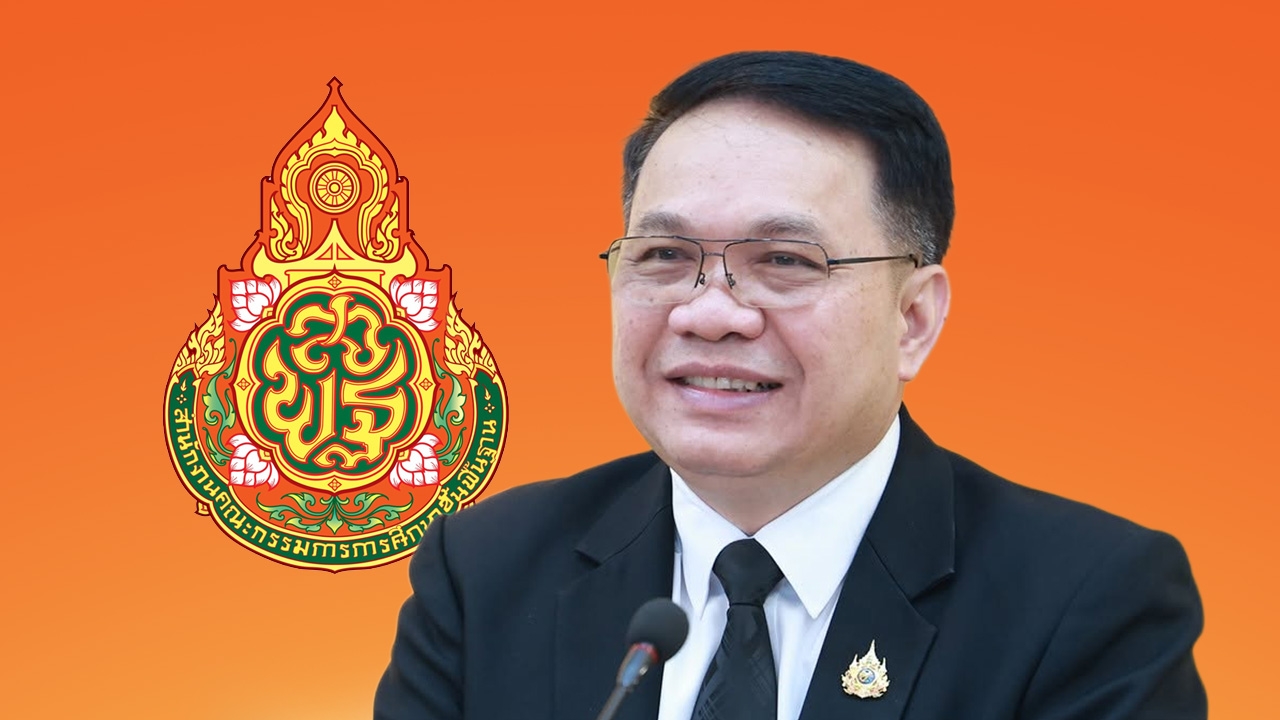
The Secretary-General of OBEC explained that the transfer of 40 Education Area Directors complies with appropriate regulations, assuring that the board carefully reviewed the cases. He confirmed the transfers will not affect career progression and expressed readiness to listen to differing opinions.
After Thairath Online's special reporting team presented complaints regarding the Office of the Basic Education Commission’s (OBEC) transfer and appointment orders for 40 Education Area Directors effective from 27 July 2026, transferring them to new educational area offices, complainants stated the transfers were sudden and unexpected. They claimed these moves occurred before the usual annual transfer season in October without consulting their willingness, leaving them little time to manage personal affairs and potentially impacting their career advancement.
On 31 July 2026, Thairath Online's special reporting team met with Mr. Pichet Phophakdi, Secretary-General of OBEC, at the Ministry of Education. He explained that personnel transfers within the Ministry of Education vary. For example, teachers or school administrators must apply for transfers, but for high-level executives like Education Area Directors, there is no formal rule requiring transfer requests, though they may express willingness. He confirmed that the personnel office was consulted to see who had expressed such intentions.

Regarding the question of whether Education Area Directors must be transferred during the October transfer season, the truth is that OBEC has no regulation limiting transfers to October. Transfers can be made at appropriate times; for instance, last year transfers occurred on 25 December 2025, chosen as a suitable moment.
The current transfers are due to three vacant Education Area Director positions. Normally, the Teacher Civil Service and Educational Personnel Commission (TCSC) board, which holds the highest authority for these transfers, approves movements following established criteria and procedures. A screening committee was established to ensure suitability. The board resolved to transfer 40 directors. Although some questioned why so many were moved, last year on 25 December 2025, 56 transfers occurred, all following proper procedures without personal bias or mistreatment.
When asked if the transfers were sudden, Mr. Pichet clarified that the process is not abrupt but follows formal steps. He noted that confidentiality is maintained during the screening to prevent information leaks. While some question the secrecy, he stressed that all transfers are confidential because the TCSC board must collectively review and approve them.
He confirmed that the TCSC board’s transfer decisions are free from personal issues and represent normal administrative moves.

Regarding concerns that cross-regional transfers might affect personal lives, Mr. Pichet explained that transfers are made based on suitability and not intended as punishment or harassment.
When asked if these transfers would impact the performance evaluations of the transferred directors, Mr. Pichet said they are reviewing how many of the 40 directors are currently in evaluation periods and will consider the TCSC's evaluation criteria. He is open to dialogue with directors who have concerns.
He emphasized that these transfers aim to benefit government service and are not acts of harassment. In the upcoming October transfer season, five Education Area Director positions will be vacant due to retirement. When vacancies arise, existing directors typically have priority to choose transfers, followed by new appointees.
For the 40 transferred directors, regulations allow them to request reimbursement for moving expenses and housing rental costs.
He wished to assure all Education Area Directors working for the public good that they still have opportunities for suitable transfers in the future, with no rights revoked. This round of transfers is made for appropriateness and government benefit.