

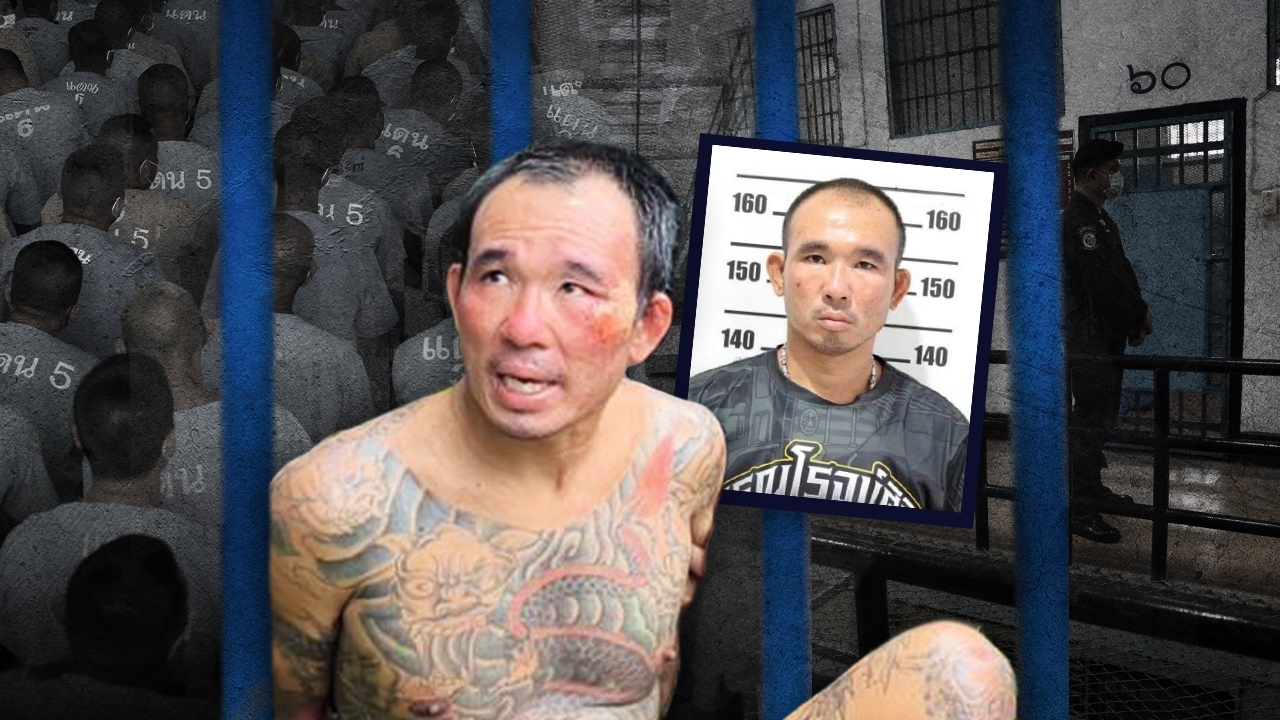
An examination of the mental health screening process for inmates before release reveals gaps and questions why the case of “Ai Pong” committing repeat offenses occurred.
Regarding the shocking case of “Pong”, who buried five victims alive, another issue that has raised public concern is how the Department of Corrections could release someone with such violent behavior who poses a danger to society. Is there a problem with the screening and risk assessment process for public safety after release?
However, the Department of Corrections has issued a statement clarifying that before Mr. Pong’s release, all risk assessments required by the Recidivism Prevention Measures Act (JSOC) were completed, and during his imprisonment he received no special benefits such as royal pardons, sentence suspension, or reduction. He was released upon completion of his court-ordered sentence.
Before the sentence ended, the Department conducted risk assessments as mandated by law. A prison committee including the prison commander, representatives from the probation office, provincial police, local administration, and public health or hospital representatives jointly considered recommending post-release monitoring measures (JSOC) under Section 22 of the 2022 Act on Preventing Recidivism in Sexual or Violent Crimes.
The committee then proposed prevention measures under Section 16 to the provincial prosecutor to petition the court for a post-release surveillance order under Section 24. Subsequently, Rayong Provincial Court held a hearing on 13 Jan 2026 and ordered a two-year post-release monitoring period.
Nevertheless, despite the release process following the law, this former inmate committing another offense after release suggests that the pre-release risk assessment may have been insufficiently effective.

Associate Professor Dr. Thanandsak Bowornnantakul, criminologist and former lecturer in criminology and justice at Mahidol University, commented that the Department of Corrections actually conducts assessments and screenings throughout the offender’s incarceration cycle: at intake, during imprisonment, and pre-release.
The initial or intake assessment occurs when a convict is admitted to prison. This involves verifying important documents and identity, such as warrants and ID cards, and fingerprint comparison for accurate identification. Health screenings are conducted to detect diseases and prevent outbreaks, assess physical condition, and record photos like pre-existing scars. Crucially, psychologists perform mental health evaluations to identify issues and advise on adapting to prison life.
However, in Thailand, this intake assessment is only preliminary. Detailed evaluations are avoided because identifying mental health problems would trigger complex processes involving finding treatment facilities, custody, and security measures. Therefore, the focus is on basic assessment to reduce stress and help inmates adapt, while monitoring for suicide risk.
Later, after some time in prison, a "mid-term" screening is conducted, which measures and evaluates the mental health of new inmates, long-term inmates, and those nearing release using 4–5 assessment tools:
1. PMHQ-Thai, which stands for Prisoner Mental Health Questionnaire - Thai, an assessment tool for monitoring mental health in Thai prisons by evaluating symptoms, feelings, and behaviors to gauge current mental health.
2. Screening tools for depression and suicide risk (2Q, 9Q, 8Q) are standard tools from the Department of Mental Health used to assess and screen for depression and suicide risk over the past two weeks, measuring feelings of sadness, hopelessness, lack of pleasure, and depression severity.
3. Psychosis screening test (Psycho test) which follows guidelines from the Department of Mental Health, evaluates initial symptoms by observing behaviors or asking about key symptoms such as paranoia, auditory hallucinations, unusual behaviors, aggression, agitation, or social withdrawal. A score of 1 or more indicates risk and the need for further clinical evaluation.
“This is where psychotic disorders can be distinguished if results are clear. However, studies find challenges and issues in inmate assessments, including shortage of trained personnel, heavy workloads limiting time and quality, use of biased tools, and most importantly, inmates’ mistrust of the system. Inmates often conceal symptoms or refuse cooperation fearing negative impacts on custody level, temporary release, or personal safety. Also, lack of resources for mental health treatment causes misclassification.”
4. Alcohol screening tools: AUDIT and AWS, where AUDIT (Alcohol Use Disorders Identification Test) developed by WHO, is a 10-question tool assessing drinking behavior risk levels, and AWS (Alcohol Withdrawal Scale) assesses severity of physical withdrawal symptoms. These focus on inmates with alcohol use issues.
5. Drug use screening tool V.2, is a tool from the Ministry of Public Health to classify substance users into users, abusers, or addicts for appropriate treatment referral. The Department of Corrections uses a modified version to screen all inmates, ensuring standardized assessment and providing treatment and rehabilitation for those affected by substance use.

The final screening and assessment stage involves risk evaluation under the 2022 Recidivism Prevention Measures Act (JSOC), analyzing and classifying serious offenders before release to identify those at high risk of reoffending, leading to court-ordered detention or monitoring to protect society. This includes criminal history, mental state, behavior during incarceration, and likelihood of repeat offenses, focusing on offenders convicted of sexual, violent, or shocking crimes.
Within these screening types, detailed clinical physical examinations are added, conducted by forensic psychiatrists or psychologists to assess mental status, risk levels, and treatment needs.
Initial brief screenings occur upon prison admission to detect psychiatric symptoms, severe depression, or immediate suicide risk, assess inmates’ understanding of legal processes and ability to assist their defense, evaluate insanity defenses regarding mental state at the time of offense, and assess ongoing risks to self or others and treatment suitability or hospital referral.
In foreign countries, key components include clinical diagnostic assessments to identify disorders like schizophrenia, severe depression, or bipolar disorder; cognitive testing for reasoning, intelligence, and reality perception; review of psychiatric treatment history, criminal behavior, and treatment responses; and malingering checks to detect inmates exaggerating or faking mental illness to avoid punishment or transfer.
“Overall, mental health screenings detect inmates with genuine psychiatric issues but only provide a general assessment of severity. If severe, clinical or forensic evaluations follow. The problem lies in diagnosing psychotic or psychopathic individuals, especially those with hidden or mild psychosis, because such individuals live seemingly normal lives and adapt well.”
In Pong’s case, initial intake screening did not reveal psychotic issues. During incarceration, multiple mental health assessments were conducted as described. If Pong had mild or hidden psychosis, he would not have been specially separated for further testing.
Research reports problems in assessments showing difficulty distinguishing inmates with overlapping psychiatric conditions such as substance withdrawal, depression, and anxiety, making clear diagnosis at intake challenging. Disorders like bipolar, borderline personality, and mild psychopathy are hard to detect clearly; results may be inconclusive.

These individuals may have psychotic symptoms but adapt and live normally in prison, sometimes committing incidents that remain manageable by prison staff, like the case of Somkid Phumpuang, a serial killer of six victims, who behaved well in prison and was not a focus. Similarly, Pong’s psychiatric evaluation likely could not definitively identify issues, allowing him to pass through intake and mid-term screening unnoticed, making these procedures more ceremonial than substantive.
At the final stage before release, although Pong qualified as a serious offender under the JSOC law requiring risk assessment and monitoring, Rayong Provincial Court ordered a two-year post-release monitoring after the hearing on 13 Jan 2026. The flaw likely lies in lax or insufficiently rigorous post-release surveillance. Pong’s case should serve as a lesson for responsible agencies to strictly enforce the new law’s monitoring and prevention measures more effectively.