

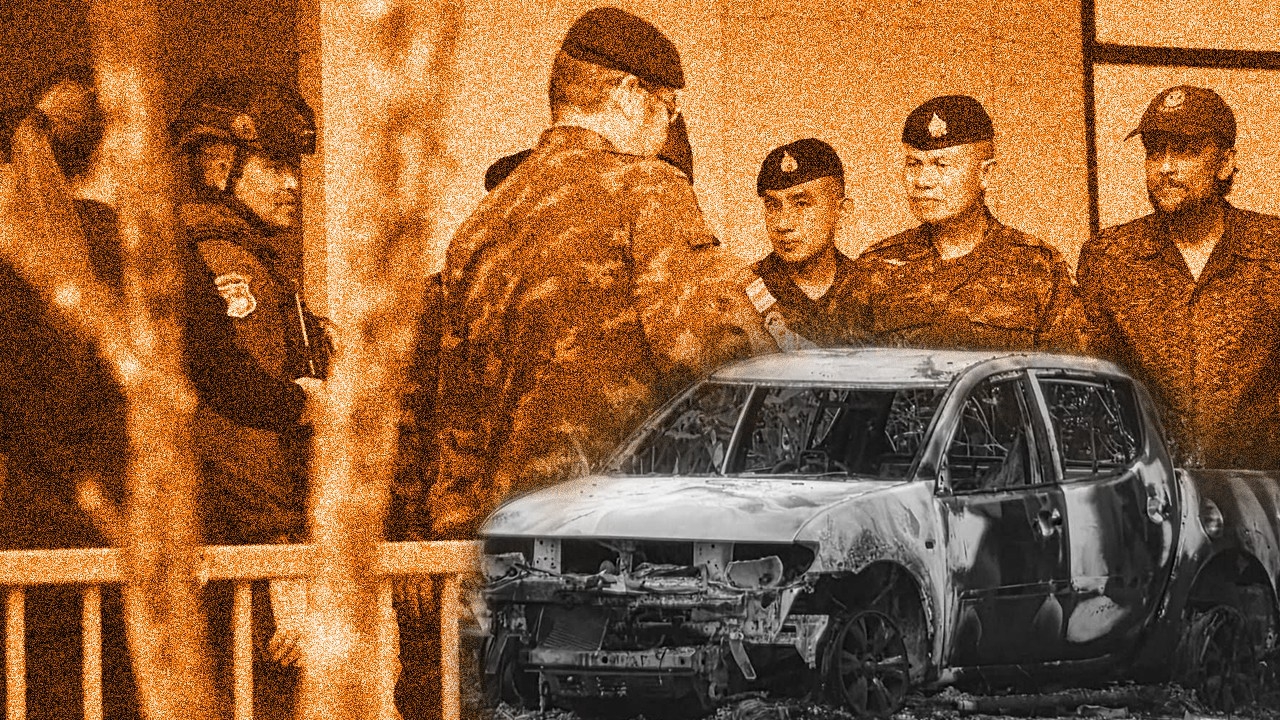
Checking the strength of the new generation BRN leaders intensifying unrest at 51 points in the south. Deep tactical insights show the Thai state unable to keep up. Security sources analyze warning signs of the new leadership's debut through their initial operations, decoding their target selection tactics and advising a review of troop reduction policies to prevent future vulnerabilities.
On the night of 22 Aug 2026, the three southern border provinces experienced multiple incidents: 22 in Narathiwat, 11 in Pattani, and 18 in Yala. Authorities raised security levels to the highest alert. The incidents resulted in injuries among civilians but no deaths were reported.

Previously, Thairath Online's special task team visited the three southern border provinces and spoke with former BRN leaders involved in the unrest. They confirmed that the new generation of BRN leaders intends to escalate violent unrest with the goal of separatism, distinct from before. Security sources analyzed the recent 51-point unrest as not mere provocation but as a "launch operation for new leaders" taking control of current combat structures.
Security sources in the area see this as the first order from the new BRN leadership. The simultaneous city disturbances represent their initial operational order to officially announce the new leaders' presence.
This reflects the 2004 historical precedent, comparing the current incidents to a past major launch event when 37 schools were burned simultaneously — a symbolic violent act to declare full assumption of leadership.
BRN's transition to new generations: current leaders and operatives are no longer older or infirm veterans but mainly youth aged about 18–24, characterized by boldness, impulsiveness, and readiness to act on objectives.

Sources assess this as a demonstration of capability to act everywhere simultaneously, such as burning electrical poles, bombing railway tracks, raiding convenience stores, burning subdistrict administrative offices, and burning tires on roads. The goal is to show their ability to attack economic and state infrastructure targets in all forms.
BRN's target shift: notably, this operation did not attack monks, temples, or schools, unlike past patterns. This is a key point for security agencies to analyze regarding the group's new strategic direction.
The unrest tactics focus more on publicity than on killing. No deaths were reported, indicating the main goal is not assassination but disruption and signaling that they continue to drive the conflict and reject state peace processes.

Analytical points. | Facts and local attitudes. |
Intelligence work. | The state still "lags behind" the insurgents' transition. Although the main organizational structure remains, the operatives are now entirely new younger generations. |
Troop reduction policy. | Reducing military forces and handing over areas to volunteer forces (OrSor), or preparing to repeal emergency or security laws, raises questions about their suitability for the real situation. |
Security gaps. | The sudden operations show that if the state withdraws or reduces protection at any point, insurgents are ready to infiltrate and act immediately at that spot. |
The signal sent by the over 51-point operation confirms that state peace talks or restoration strategies remain disconnected from reality on the ground. Under the leadership of "new leaders," insurgents intend to continue fueling conflict. The state must urgently improve intelligence to keep up with the new youth and reconsider troop reductions to avoid tactical gaps in the future.
