

Tracing foreigners using fake bachelor's degrees to apply for Thai citizenship in central Chiang Dao district, Chiang Mai province, revealing a fraudulent record-cleansing scheme and warning the government to stop passively accepting applications and to overhaul the civil registration system. This is an exclusive investigative report.
Yesterday (24 Aug 2026), the Chief District Officer of Chiang Dao, Chiang Mai, reported the arrest of a foreign woman who used a forged bachelor's degree to apply for Thai citizenship under Section 7/2. Behind this case lies a corruption network evolving from identity fraud to using counterfeit bachelor's degrees as a shortcut. Authorities are urging the Department of Provincial Administration to proactively reform the system, utilize research to clear backlog applications, stop passing responsibility, and overcome ethnic prejudices before Thailand's economy faces a shock.
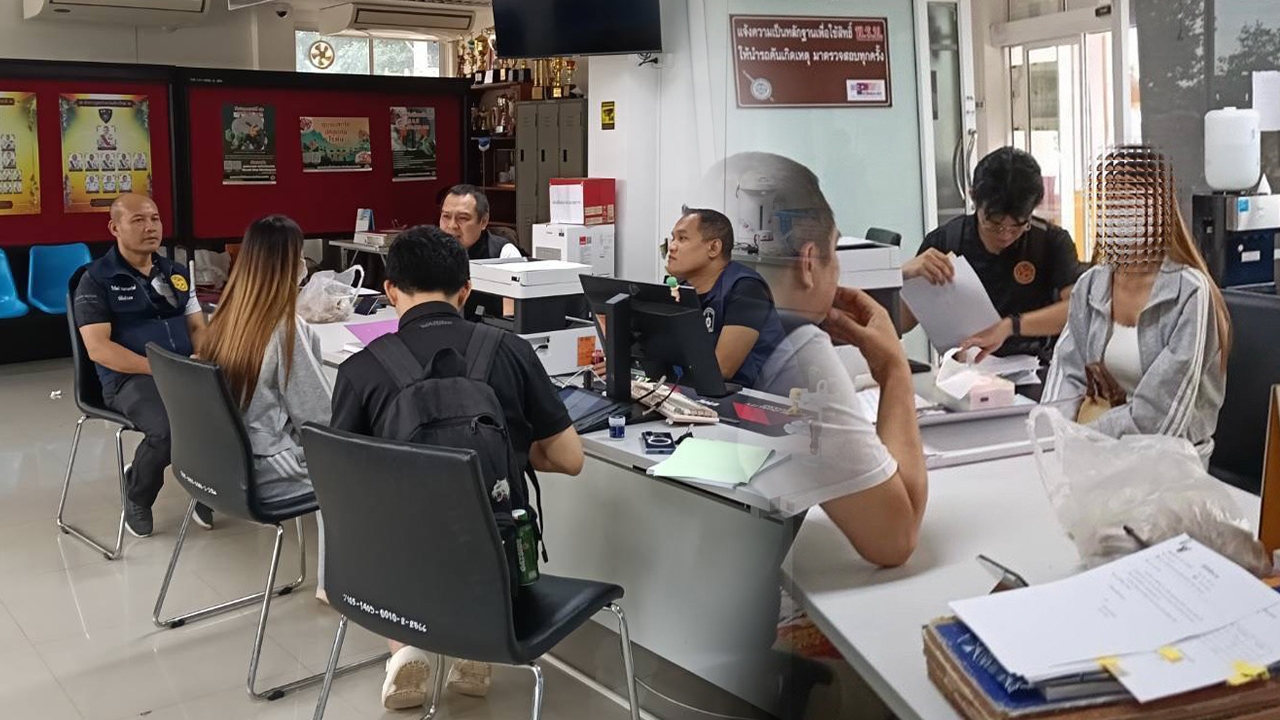
Under the directive of Mr. Panithan Kaewtip, Chief District Officer and Acting Head of Chiang Dao district, together with Mr. Weerawat Kijmanasap, Deputy District Officer of Registration and Identification, and Mr. Sarawut Kiti, officials presented evidence to Chiang Dao Police Station to file charges against a foreign woman for forging official documents.
The complaint was filed after investigation found that the suspect submitted a bachelor's degree from a certain university to support her citizenship application under Section 7/2, paragraph two. However, coordination with the university revealed all documents were forged. A special investigative team from Thairath Online also discovered that fake degrees are openly offered via social media channels including Twitter (X) and Facebook.

Thairath Online interviewed Mr. Santipong Moolfong, Director of the Network for Stateless Persons Foundation and Director of the Center for Child and Community Network Development. He explained that Thai citizenship by birth follows two main principles: the principle of bloodline, where if either parent is Thai, the child is automatically granted Thai citizenship at birth regardless of birthplace, whether in Thailand or abroad.
The second is the principle of territory: a child born in Thailand to foreign parents. The use of a bachelor's degree falls under this latter group, which has complex conditions as follows.
Group with registered records (registration numbers starting with 0 or 6).
If born in Thailand, with parents belonging to ethnic minorities or groups with registration records, and having lived harmoniously in Thailand for 15 years, one can apply for Thai citizenship under Section 7/2 immediately without needing a bachelor's degree.
For those born in Thailand with birth certificates but whose parents do not have registration records, they must graduate with a bachelor's degree in Thailand to support their citizenship application under Section 7/2.
However, those using a bachelor's degree do not qualify for the expedited five-day approval per the latest Cabinet resolution dated 29 Oct 2024 for the group of 480,000 people. Instead, they must apply under the normal Cabinet resolution from 7 Dec 2016, where the district chief can approve applicants under 18 years old, and the provincial governor approves those over 18.
Currently, higher education institutions in Thailand, including private and open universities, have increasingly opened their doors to various ethnic groups, such as the Tai Yai or Karen peoples.

Mr. Santipong noted that although the number of approvals through the bachelor's degree route remains small (hundreds to a few thousand), it is increasing as more foreign youth graduate from higher education. This has led to the evolution of corruption from false identity claims or altering birthplace records from abroad to Thailand, to the fraudulent use of counterfeit bachelor's degrees as a shortcut.
For example, among youth with registration code G (unregistered children) or those holding registration numbers starting with 00 inherited from parents, who in reality may not have been born in Thailand or whose births were unregistered, this scheme collects false evidence and has involved collusion with some registrars in issuing birth certificates. In some cases, initial records clearly state birth in Myanmar, but information in the system has been secretly altered to reflect birth in Thailand.
Once documents are held that prove birth in Thailand, counterfeit bachelor's degrees are used to apply for Thai citizenship under Section 7/2. This pattern is expected to rise significantly.
However, if the bachelor's degree is legitimate, the Thai government should retain these individuals, as it has invested heavily in their education from childhood to higher education, often amounting to hundreds of thousands of baht per person. These individuals represent quality human resources who can fill shortages in various professions.
Mr. Santipong suggested that the government must shift from passive reception to proactive strategic planning. Local mechanisms are not the final answer; even if local committees are established in every district, they cannot keep up with evolving corruption schemes, which always outpace bureaucratic systems.
He also stressed the need to utilize existing research and lessons learned, as many studies and problem analyses remain unused in strategy formulation. The government must listen openly to civil society networks of 48 organizations with direct field experience.
Additionally, backlog applications under the Cabinet resolution dated 29 Oct 2024, targeting 480,000 cases, have seen only 120,000 processed after one year, leaving over 360,000 still pending. The government's idea to remove cases if applicants fail to report is merely "kicking the ball out of the field," failing to solve the problem but rather cutting rights and hiding issues under the rug.
For applicants aged 60 and over, it is proposed to adjust procedures to allow simultaneous applications for permanent residence under Section 17 alongside citizenship conversion. This aims to prevent problems in the next five years, when hundreds of thousands may become eligible, potentially overwhelming the civil registration system.

Mr. Santipong concluded that socially and economically, viewing stateless groups with prejudice as resource competitors is a narrow perspective not reflecting structural realities. Thailand's current economy, especially the service and construction sectors, relies heavily on this labor force.
In the next 30 years, Thailand's population is projected to decline to half its current size. Efficient human resource management, openness to all sectors, and abandoning ethnic or nationalist biases are the only ways to help Thailand overcome demographic challenges and sustain economic growth.