

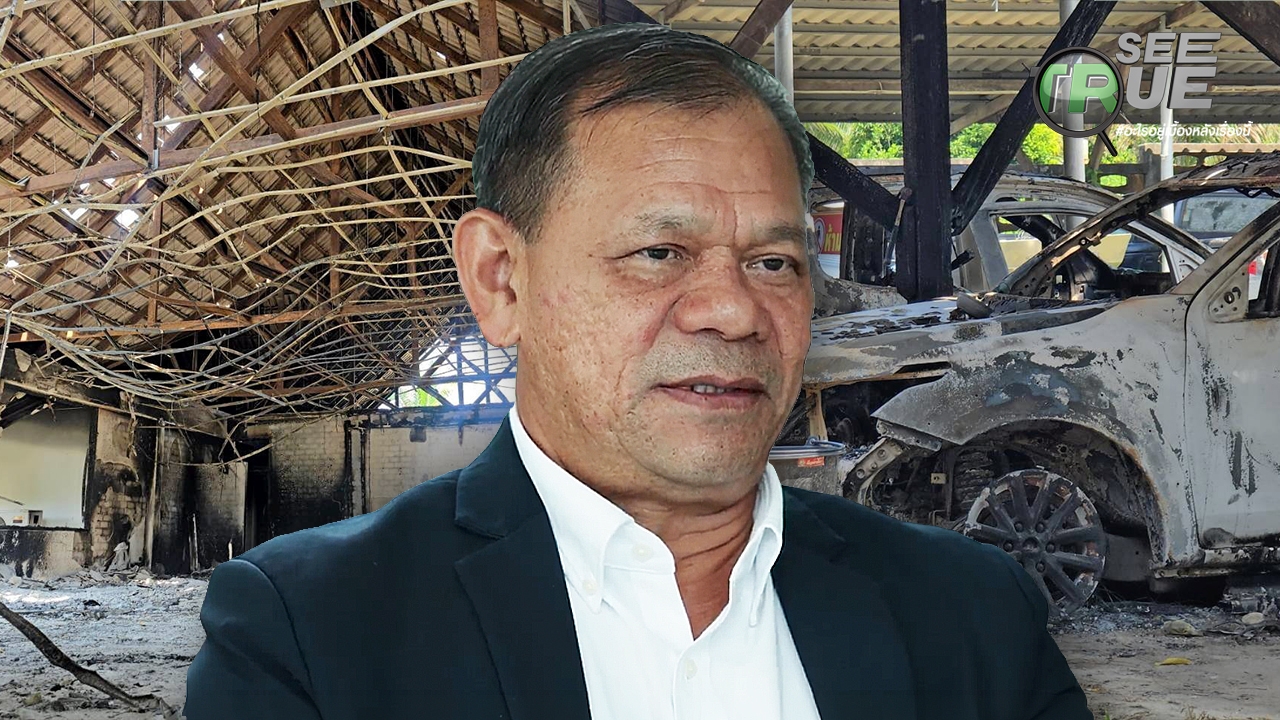
Approach to quelling unrest in the south: SEE TRUE news team speaks with a former SBPAC official who suggests addressing the problem by creating “warrior heroes” among the younger generation, shifting from violent acts to ideological battles on social media.
The ongoing unrest in the southern border provinces remains a major challenge for Thai society. Although decades have passed, the forms, tactics, and contexts of conflict have changed noticeably. Rear Admiral Somkiat Pholprayoon, former Secretary-General of the Southern Border Provinces Administrative Centre (SBPAC), shared his perspective on the BRN group's dynamics and offered structural suggestions for sustainable solutions.
Looking back at the BRN group's operations, their “political goals” remain unchanged, but what has clearly shifted is the “tactics used to achieve those goals.”

In the past, operations focused on attacking security forces to demonstrate that the area was an “armed conflict zone,” according to international standards. Currently, tactics have shifted towards civilian agencies, the economic sector, trade, and investment to create broader impacts, undermine confidence in daily life, and reduce the region's economic potential.
The perpetrators avoid directly targeting innocent civilians due to concerns about losing local support and allies within the three southern border provinces.
The cyclical violence and systematic violent incidents reflect a phased political signaling.
The first phase involved attacks on security checkpoints, resulting in five security personnel deaths.
The second phase expanded operations to cover the three southern border provinces and four districts of Songkhla province, with over 115 bombings and arson attacks aimed at demonstrating the capability and readiness to use violence against state and civilian targets.
The third phase involved public statements from BRN spokespeople openly declaring their political objectives.

The greatest current concern is not just weapons but the “digital battlefield.” Smartphones have become the main tool for spreading information and stirring nationalist or ethnic sentiments around the clock.
Moreover, a new value system glorifies “warrior heroes” among the youth. Previously, no funeral processions were held for perpetrators, but now they are honored, with arrests or confrontations with the state seen as acts of bravery. This has led to provocative, challenging behavior and open confrontations with authorities.
The area also faces “complicating factors” from illegal businesses, smuggling, and tax evasion, which mutually benefit each other. Protection money is paid to militant groups in exchange for conducting business, further complicating the problem's structure.
From the perspective of officials, despite effective intelligence gathering and information dissemination systems, a key weakness lies in the “information from local communities.” Safety constraints after incidents prevent authorities from entering areas immediately due to risks of ambushes or secondary explosions, allowing perpetrators to withdraw easily.

Regarding peace process advancement, a key recommendation is to open comprehensive dialogue tables, with Thai negotiators allowing participation from all dissenting groups.
Establish parallel public forums: dialogue alone is insufficient; “public consultation” processes in the region are necessary to hear all stakeholders' voices.
Resolving issues within the constitutional framework: if demands involve self-management in education, resources, or justice, solutions can be found by amending regulations or subsidiary laws under the existing constitution without requiring independence.
