

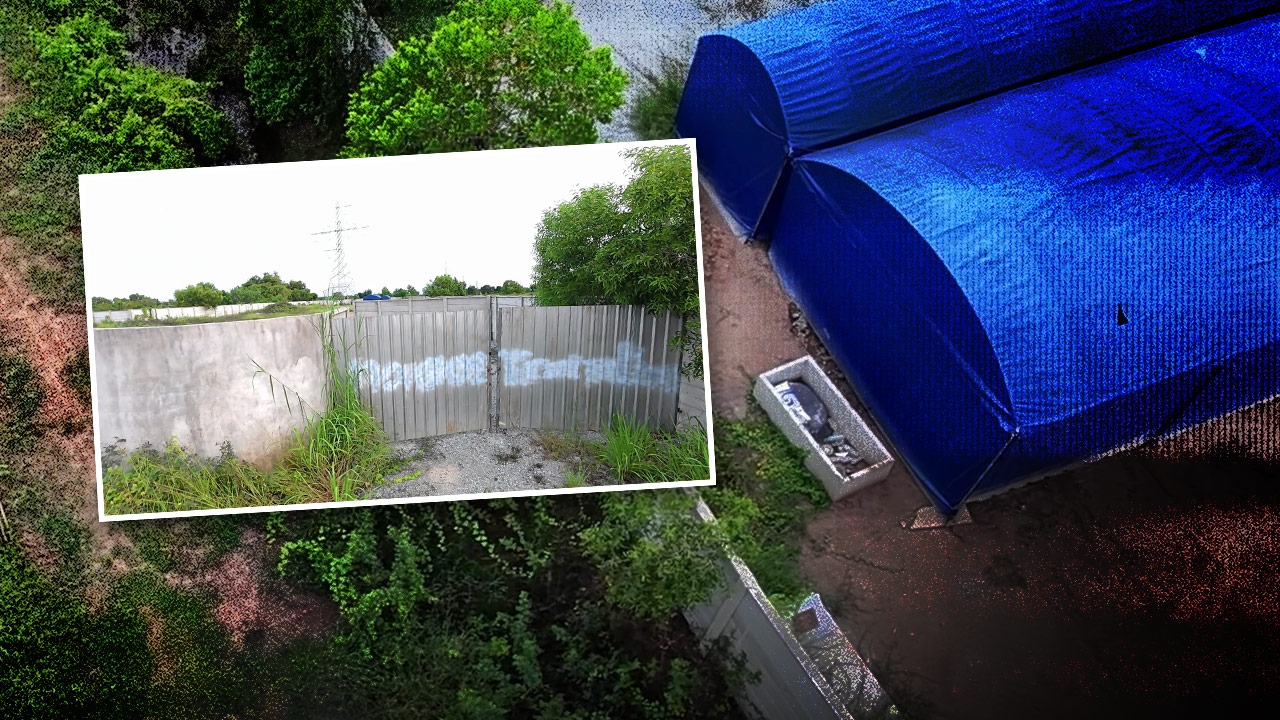
"Jewish Cemetery" in Thailand reveals the secret behind the use of "Western-style white coffins," opening the legal rules for the final home. Strict cemetery regulations require maintaining "distance" and conducting community referendums to proceed.
This issue has attracted Thai public attention following questions about the establishment of a new Jewish cemetery in Bang Khla District, Chachoengsao Province. Local residents report that the cemetery has existed for a long time, surrounded by high walls that prevent outsiders from observing inside. Local authorities stated that requests to establish the cemetery were previously denied, making the issue a recent topic on social media. On 4 Sep 2026 GMT+7, the Department of Provincial Administration clarified the licensing situation of cemeteries in Chachoengsao following reports of a foreign community setting up a cemetery named New Jewish Cemetery to accommodate over 1,200 graves. Consequently, the Bang Khla district chief ordered the non-renewal of the cemetery's license.
Establishing cemeteries is governed by the Cemetery Act of 1985 and the 2000 ministerial regulations, requiring permits and a minimum area of one rai. Regarding the Jewish cemetery issue, Thairath Online's special report interviewed Wiroj Suriyaseni, chairman of Suriya Funeral Co., Ltd. (Suriya Coffins Khlong Luang), who explained that Thai law recognizes only two funeral methods: burial or cremation. Cremations must occur at authorized religious sites or temples, while burials must be conducted only in cemeteries with legally issued establishment permits.

There are three essential steps that cannot be bypassed to legally establish a cemetery:
A public consultation must be conducted to obtain approval and acceptance from the local community and neighboring residents regarding the cemetery's construction.
The local government must be informed and approve the land use; the intent must be submitted to the local administrative organization.
An official establishment permit must be issued by government authorities only after successful public consultation and local government approval.
"If someone suddenly owns land and wants to build a cemetery without public consultation or local government permission, even on private land, it is illegal," Wiroj emphasized clearly.

Besides legal regulations, cemetery construction must strictly consider religious principles and public health standards.
Geographical principles and orientation: cemetery layouts, whether Chinese, Thai, or other religions, require expert assessment of direction, position, and feng shui considerations.
Public health control measures impose regulations on "setback distances" and "spacing" from communities and water sources to prevent hygiene issues.
Capacity for deceased bodies: license applications must clearly specify the number of burials and land area. Large commercial cemeteries typically require at least 200 rai to accommodate tens of thousands of bodies efficiently.

Wiroj recounted a real cautionary tale where a foreign client wanted to keep his deceased daughter's body at home, which he warned was seriously illegal under Thai law. The client then attempted to build a burial site inside a temple, investing over 3 million baht. However, the abbot had not notified or obtained approval from the temple committee, causing community conflicts. Ultimately, the expensive burial site was ordered demolished, and the body had to be moved to a legally authorized private cemetery.
Jewish rituals in Thailand: Why the use of Western-style white coffins?
The Jewish community residing in Thailand has unique funeral customs. Their religious ceremonies are somewhat middle ground but lean towards Christian practices, focusing primarily on burial.
Regarding Jewish coffins, Wiroj noted that Jews prefer Western-style hexagonal coffins with specific color requirements:
They must be "pure white" only. Jews emphasize and specifically choose coffins in pure white color.
They reject natural wood colors. Although the shop offers coffins in natural wood or other attractive colors, Jews do not select those options at all.
In recent years, many Israelis and Jews have moved to live and work in Thailand, particularly in tourist areas and economic cities like Pattaya and Nakhon Ratchasima, increasing the demand for Jewish cemetery spaces.
Where are Jewish deceased typically buried in Thailand? Wiroj explained that since there is no dedicated Jewish cemetery in Thailand, Jews bury their dead in authorized central cemeteries that accept bodies regardless of religion, including:
Private cemetery in Ban Bueng District, Chonburi Province: a legally established private cemetery with proper association and crematorium management systems.
Sam Phran cemetery in Nakhon Pathom Province: although primarily a Catholic cemetery, it functions as a central cemetery permitting Jewish burials and ceremonies jointly.
