

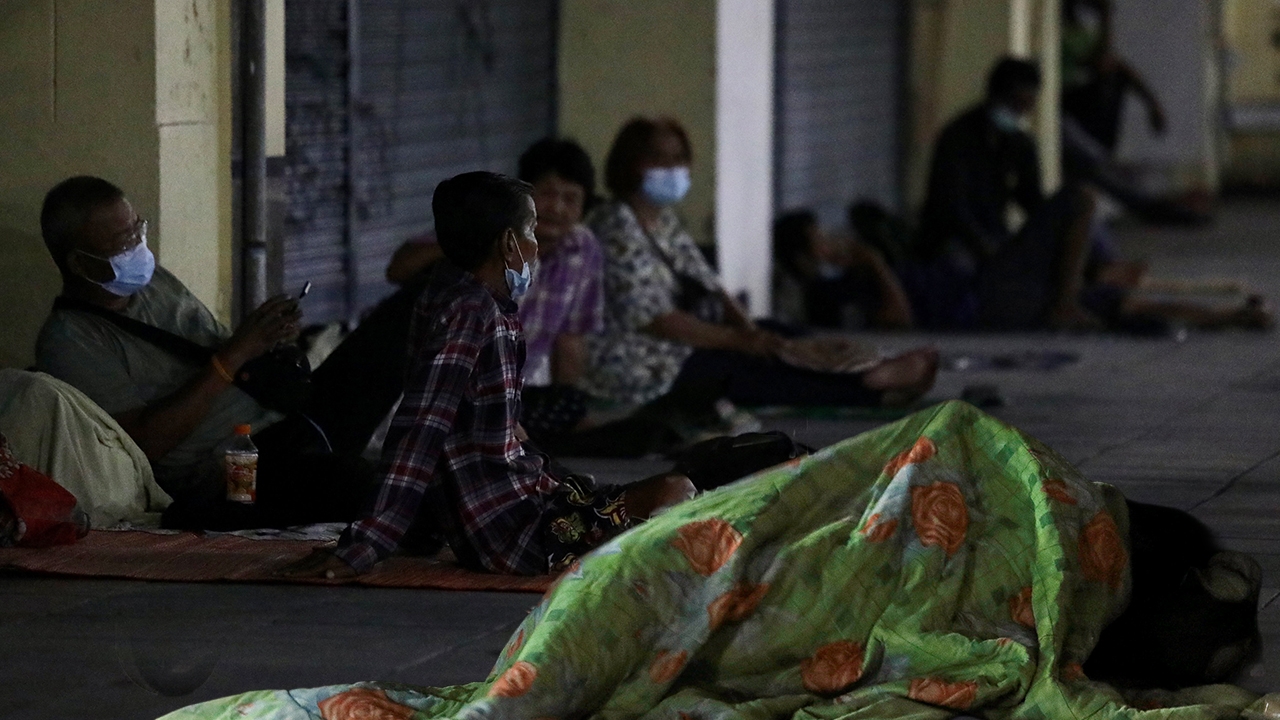
An in-depth forum reflects on Bangkok's experience using security forces to regulate the homeless, raising concerns about damaging dignity and trust. Civil society points out a 'wrong button' approach and suggests solutions to address overcrowding at Baan Imjai, direct employment, and subsidized affordable housing.
In early September, the Bangkok Metropolitan Administration (BMA), police, and government agencies conducted a regulation operation. "Homeless people" around Ratchadamnoen Road and nearby areas, inviting homeless individuals to enter assistance processes such as "Baan Imjai" shelter. This was viewed as coercive by many homeless people who feared uniformed personnel, perceiving the invitation as something they could not refuse.
Today (8 Sep 2026) The Faculty of Sociology and Anthropology at Thammasat University, together with Mirror Foundation, Housing Development Foundation (HDF), and Isara Foundation, jointly organized a forum entitled " Regulating the Homeless: Practices and Alternatives" at the Riverside Meeting Room, Faculty of Liberal Arts, Thammasat University, Tha Prachan campus, creating a space to exchange and examine the realities of homeless life amidst social discourse ranging from nuisance complaints to empathy for this vulnerable group.
Assoc. Prof. Dr. Boonlert Wisetpreecha, Dean of the Faculty of Sociology and Anthropology, opened the event emphasizing the key point that addressing homelessness requires "listening to the voices of homeless people." The real challenge is not choosing between "regulation" and "the rights of homeless people," but finding a way for both to proceed harmoniously.
He also warned that "trust" —a crucial asset built over more than 20 years by government and civil society—risks being destroyed by overly strict regulation processes.

Mr. Sanan Wangsaengbun, Deputy Governor of Bangkok, explained that BMA has never had a policy of forcibly sweeping or regulating homeless people violently; the main goal is "to regulate food distribution points" and maintain public order in communal spaces.
At the same time, BMA has improved "Baan Imjai" to function as a temporary shelter and initial screening point, though limited by staff numbers and budget. Cooperation with municipal officers and police aims to preserve peace in the area, with BMA stressing that officials are instructed to respect rights and human dignity at all times.
Ms. Thapanee Sirisomboon, Director of the Bangkok Center for Protection and Quality of Life, Ministry of Social Development and Human Security (MSDHS), said this operation is part of the “Upgrading Quality of Life in Rattanakosin Island” project. She avoided the term "regulation" due to its harsh connotations. This operation divides roles legally: BMA manages areas under the Cleanliness Act B.E. 2535 (1992), while MSDHS handles protection under the Homeless Persons Protection Act B.E. 2557 (2014), focusing on voluntary participation. Yet, joint fieldwork with municipal officers and police inadvertently created a harsher image than intended. Currently, about 30 homeless voluntarily enter Baan Imjai, and around 7 enter MSDHS shelters, mostly elderly and long-term patients.
Criticism of government for reinforcing images of sweeps and prejudice against the homeless

reflected that the presence of uniformed officers instills fear and damages longstanding trust. Government social media communications portraying negative images about food handouts and conflicts reinforce societal prejudice, stigmatizing homeless people as lazy, whereas the true problem lies in welfare system gaps and shelter regulations focusing more on control than understanding, representing a "substitution of thinking" from a government perspective misaligned with real-life crises. Psychiatric patient crisis overwhelms the system
revealed research data showing that 11 nationwide shelters for homeless persons are over capacity, with over 80% being psychiatric patients. This causes other residents, including elderly and disabled, to become de facto caregivers for psychiatric patients. There is also a lack of rehabilitation functions to reintegrate people into society and problems with inter-ministerial referrals, as specialized care facilities have long waiting lists. Consequently, these shelters become long-term refuges but fail to rehabilitate and reintegrate individuals.
Limitations of Baan Imjai include overcrowding, insufficient staff, and vocational training that is not practically used

There is also a staff shortage: only 20 staff members work, with 4 per shift, caring for over 200 users (about 100 inside the building and 100 in surrounding areas).
Moreover, government vocational training, such as beverage preparation, fails to meet needs since homeless people lack capital to open shops or market access. What homeless people really want is
"immediate income" to pay rent and stabilize their lives. Systemic solutions suggested: direct employment, affordable housing subsidies, and promotion of multidisciplinary teams (MDT)
proposed systemic solutions for BMA to conduct in-depth screening and shift from vocational training to "direct employment" to provide immediate income. He also suggested decentralizing small emergency shelters across areas rather than concentrating them, and expanding affordable housing subsidies based on the "Half-Half Rental Room" project. Additionally, he recommended promoting
multidisciplinary teams (MDT) to systematically manage cases within Baan Imjai, helping screen and refer cases according to diverse needs including welfare, mental health, and legal issues. This would involve cooperation among MSDHS, BMA, the Department of Mental Health, and partner networks to effectively address long-term problems. The forum concluded that this regulation effort is a lesson in
"pressing the wrong button," putting security forces first before establishing support systems. A sustainable solution is not temporary spatial regulation or shifting responsibility to a single agency, but building welfare systems and referral mechanisms that treat everyone equally, based on respect for human dignity and rehabilitation,
restoring "trust" so homeless individuals can truly stabilize and reintegrate into society.