

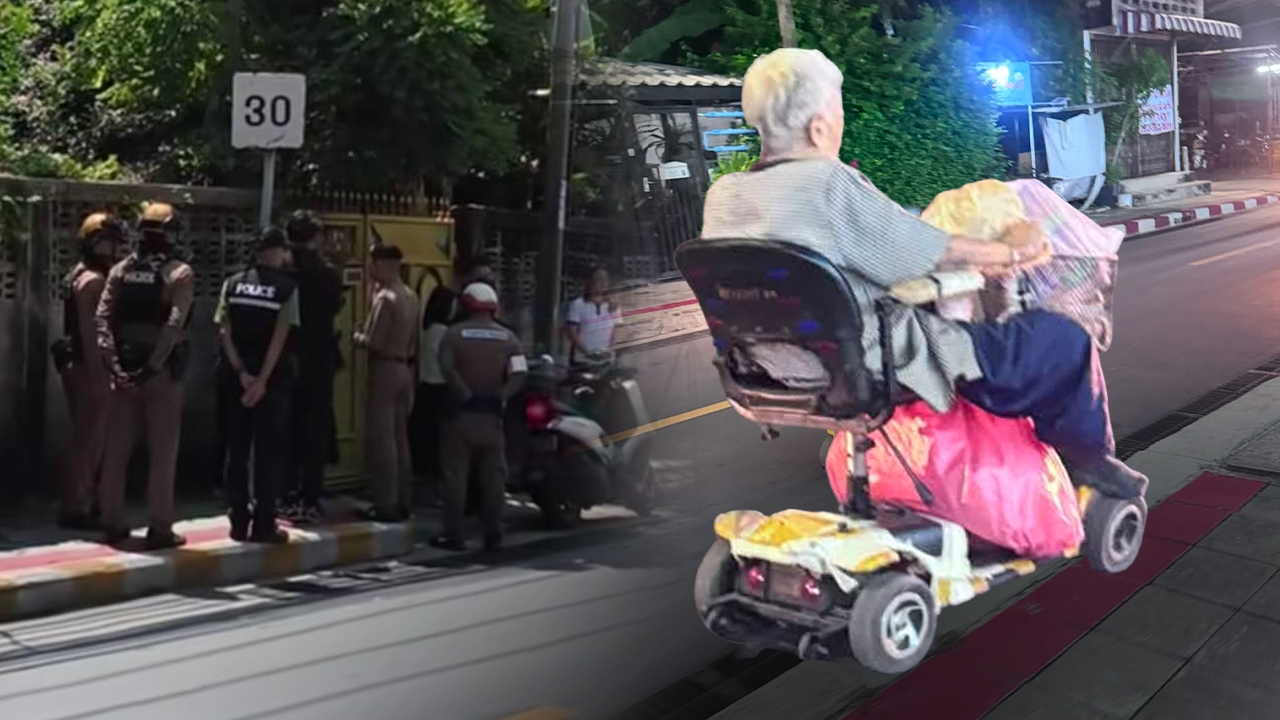
Police are preparing to fine an elderly woman in the Setthakit community, Bang Khae, who drives an electric tricycle, known locally as the 'inheritance-accelerating vehicle,' for obstructing traffic. They explained the reasons, warned that such vehicles should be driven only in closed areas, and scheduled a negotiation with relevant agencies on 22 September.
Regarding the issue of the 'electric tricycle,' which social media users call'inheritance-accelerating vehicle'Thairath's special news team has continuously monitored this topic across various platforms and found that most users of electric tricycles are elderly. However, they may lack knowledge of laws or public road use, potentially causing harm to themselves and others. Moreover, electric tricycles cannot be registered or insured, increasing risks if accidents occur and potentially endangering riders' lives.
Thairath's special news team contacted the Department of Land Transport for information, but the agency stated that electric tricycles or electric scooters are not classified as 'vehicles' or 'motorcycles' under the Motor Vehicle Act B.E. 2522 (1979). Therefore, they cannot be registered because they do not meet legal requirements for size, engine power, or equipment. As for violations, these fall under the Traffic Act, and further inquiries should be made to police officials.

On 16 September 2026, it was reported that Pol. Col. Lertsak Khiamsap, superintendent of Lak Song Metropolitan Police Station, along with relevant agencies, visited the area to talk and propose assistance to the elderly woman driving the electric tricycle in the Setthakit community, Bang Khae, Bangkok.
Thairath's special news team asked Pol. Col. Lertsak for information. He said the elderly woman lives alone in her home, is advanced in age, and disabled. Her children do not live with her, but neighbors sometimes help care for her. Driving the electric tricycle, which cannot be legally registered, outside designated areas is punishable by fine. It is believed she does not have a driver's license, as she has been seen driving against traffic. When her children tried to move in with her, she refused.
"She lives alone, is over 80 years old, and is a retired civil servant. Even if her children wanted to live with her, she wouldn't allow it,"
Pol. Col. Lertsak stated that although some may consider the road inside the community private, it is actually a public road. Regardless of the number of lanes, all violations carry fines because it is not a private village road. He wanted to inform the public that if relatives allow elderly family members to use such vehicles on public roads, it is illegal and could cause trouble for themselves and others if accidents occur. He urged people to provide more care and attention.
Pol. Col. Lertsak added that today the elderly woman was not ready to talk because she lives alone and has difficulty managing. She also suffers from hearing loss. Therefore, another meeting is scheduled for 22 September 2026.

Thairath's special news team contacted Mr. Thianchai Wongsuwan, director of Bang Khae district. He said the district's role is to provide assistance, but the elderly woman refuses aid or welfare support. She wants to drive as she pleases, so actions must comply with the law. After the electric tricycle issue gained public attention, she closed her house, refused visits, and stopped communicating with anyone.
Nevertheless, Thairath's special news team emphasizes safety and legal compliance. If use of an electric tricycle is necessary, it should be limited to closed communities, not driven on public roads, to prevent potential hazards. Protective gear such as helmets, seat belts, anti-tip wheels, armrests, side-support seats, and LED lights with warning sounds is recommended. Users should also study and strictly follow the law.
In the case of the elderly woman inthe Setthakit community, Bang Khae,who will have negotiations with police on 22 September, the news team will continue to follow up and report, aiming for a comprehensive resolution addressing both her welfare and lawful road use.
