

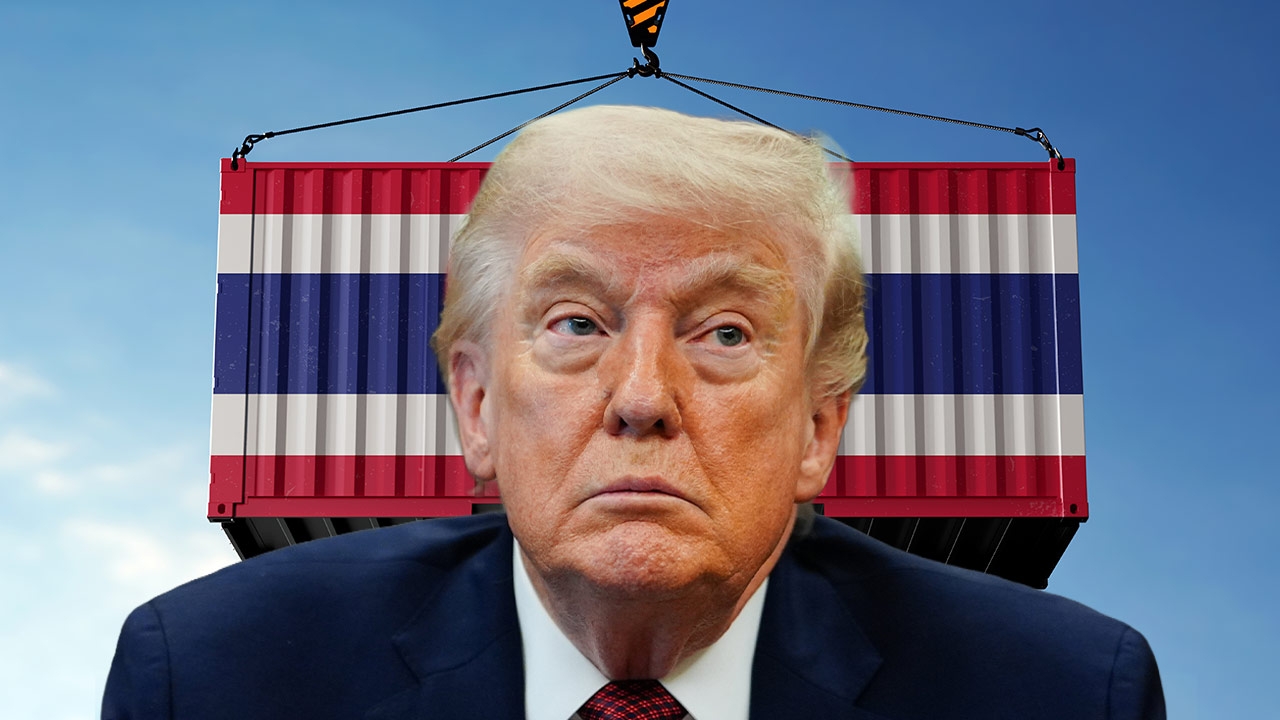
Exploring the impact if the U.S. prepares sanctions against Thailand after a former Deputy Finance Minister's name appeared on the list. Scholars assess the potential repercussions as a pretext for U.S. trade tariffs and stress the need for the Thai government to be clear for transparency purposes.
In the case of Mr. Woraphak Thanyawong, former Deputy Minister of Finance, whose name appeared in a letter from the chairman of the U.S. House of Representatives Committee proposing that the U.S. government consider sanctioning individuals possibly linked to scammer networks and human trafficking.
Mr. Woraphak clarified that he denies all allegations and affirms he has never been involved with, supported, or benefited from scammer groups, fraud operations, or illegal businesses.
He has formally coordinated with the U.S. Treasury Department’s Office of Foreign Assets Control (OFAC) by submitting evidence and facts for their review. He refrained from responding through the media, noting that some details are part of ongoing legal proceedings in Thai courts and chose not to disclose or respond publicly to avoid affecting the legal process.

There has been no verdict or sanctions imposed; this is merely a stage where the U.S. House Committee has submitted a letter requesting investigation. It is not the result of a concluded investigation or a determination of wrongdoing, nor has any sanction been applied.
Regarding these issues, many are concerned about the potential effects if the U.S. expands the matter from a personal issue to sanctions, especially concerning economics and international trade. The Thairath Online special news team consulted Associate Professor Dr. At Phisansawanich, an economics lecturer at Rangsit University, who analyzed that the Thai government has largely neglected this issue and has not promoted transparency since the first Anutin administration, which eventually prompted the U.S. to intervene.
He noted that while no charges have been filed yet, the situation already casts a negative image. It is Thailand’s responsibility to clarify this issue as it affects the country’s image in pursuing future economic growth targets of 3-5%, which is crucial for attracting clean foreign investment into Thailand.
From the U.S. perspective, this could lead to trade-related bans. The image of opacity creates a gray area, likely resulting in higher tariffs during deal negotiations. Currently, the Agreement on Reciprocal Trade (ART) deal is nearing completion, and it would be positive if this issue does not affect the deal.
However, future investments involving U.S. partners or oversight could make cooperation between Thailand and the U.S. more difficult across industries, as the U.S. may question whether transparency truly exists.
Thailand has a reputation for 'gray capital'—allowing foreign groups to settle without effective legal enforcement to remove them due to loopholes or gaps in the law, which contributes to a negative perception.

As a result, investors from other countries may be cautious about investing in Thailand due to concerns about lack of investment transparency.
During Donald Trump's administration, such issues were often used as pretexts. Counterfeit products remain under investigation, and if other countries copy and rebrand goods, questions may arise about the transparency of Thailand’s business operations in light of the current events.
The government should clearly demonstrate transparency with documentation, as policy-level declarations alone are insufficient. Anti-corruption policies are not enough, even if the government claims to conduct business transparently.
It is essential to provide necessary information to facilitate what the U.S. requires. Prompt action is needed to show the intent not to conceal facts and ideally to coordinate with the U.S. government.
In a worst-case scenario, the U.S. might use tariffs as leverage or, if not tariffs, negotiate business terms, putting Thailand at a disadvantage in future contract negotiations. Since Trump remains influential for another 2-3 years, this could complicate trade and investment dealings with Thailand.