

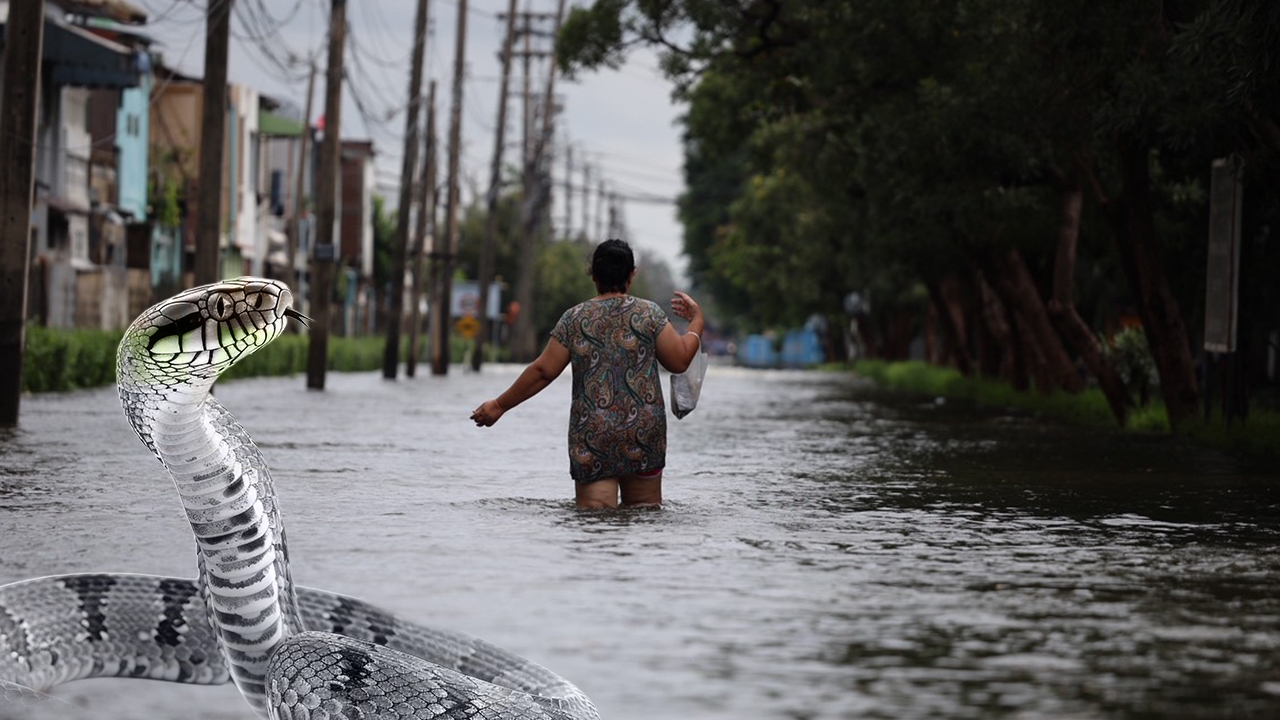
A warning to beware of snakes emerging after floods, as venomous animals flee rising waters to hide in homes. Experts reveal survival tips, identify high-risk areas to watch, and debunk the misconception that a snake's skin color indicates it is venomous.
The flood situation not only causes distress to homes and property but also brings a surge in venomous animal issues, especially snakes that flee floodwaters to seek shelter in communities and buildings in large numbers.
The Thairath Online special team interviewed Police Sergeant Major Pinyo Pukpinyo, a prevention and mitigation officer at Bangkhen Fire and Rescue Station, to get advice and proper ways to handle such situations.

Police Sergeant Major Pinyo revealed that although all venomous animals can be dangerous, during floods special caution should be taken with venomous snakes commonly found in community and suburban areas, such as cobras and green pit vipers.
These snakes usually inhabit familiar areas like drainage pipes, under houses, or raised homes with large piles of materials and debris. When floodwaters rise, snakes must surface to breathe and tend to hide in spots like floating piles of clothes or debris carried by the water.
Homeowners can preliminarily assess risk because they usually know if their house has had previous snake encounters. Houses with a history of snakes are considered high-risk and require extra caution due to the likelihood of repeat sightings.

If you see a snake from a distance, avoid it and move away immediately. If you must move items during floods, exercise great caution and thoroughly check for hidden venomous animals.
The belief that a snake’s skin color or texture can distinguish venomous from non-venomous snakes is incorrect. Instead, observe behaviors or distinctive traits, such as a cobra's hissing sound, hood spreading, and star-shaped markings on its back.
Be cautious of snakes poking their heads out, as they cannot stay underwater long and must surface to breathe. They often appear at drainage pipe openings or similar holes, and despite their size, can raise their heads through these gaps. Water jars around the house are also potential spots, so extra vigilance is needed in such areas.
Upon seeing a snake, avoid approaching, searching, or moving objects in possible hiding spots, as this may startle the snake and increase the risk of bites.
If unnecessary, avoid entering risky areas and refrain from rummaging or lifting items that might provoke snakes or other venomous creatures.

If a snake enters your home or you need help capturing venomous animals, you can contact the 24-hour emergency number 199 of the fire and rescue station or coordinate with local municipal authorities immediately.
If bitten during floods, do not waste time trying to catch the snake. Photograph it if possible to assist doctors in identification, but prioritize promptly going to the nearest hospital for treatment. For transport assistance, call 1669.
Besides snakes, other venomous animals like scorpions and centipedes also flee floods. Similar caution should be exercised to ensure maximum safety.
