

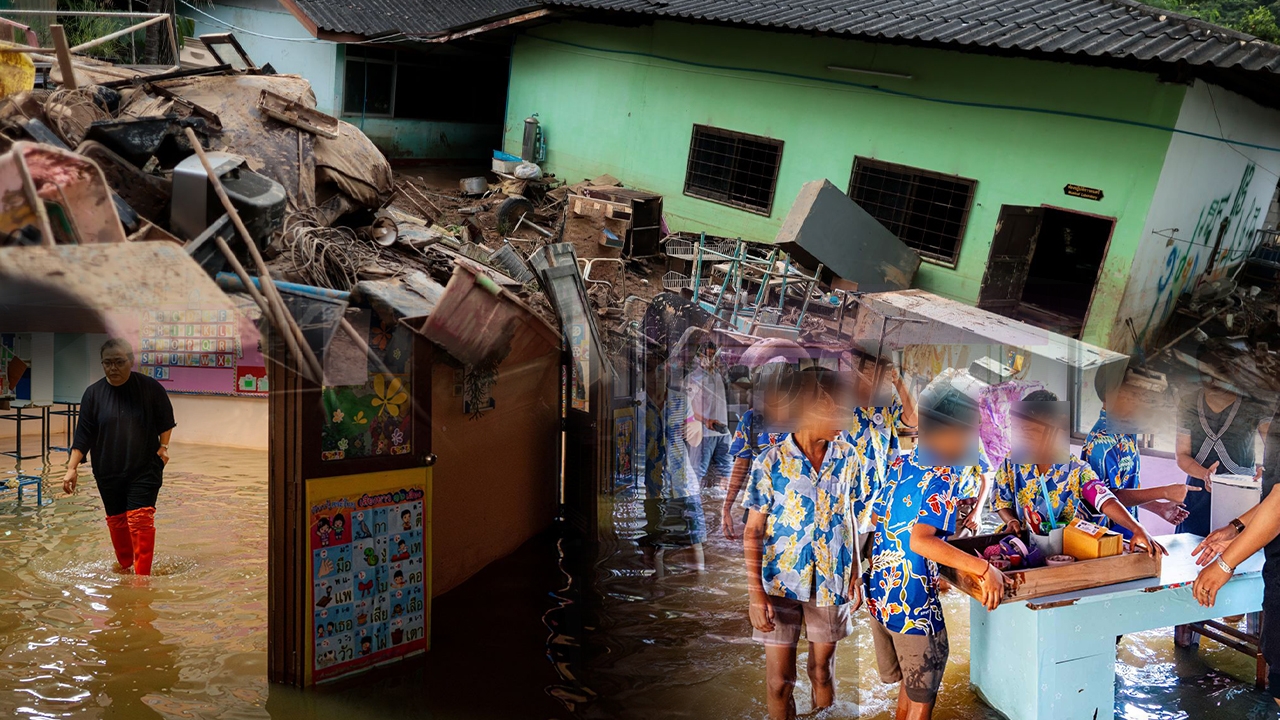
"UNICEF" has pointed out that climate hazards are disrupting Thai children's education. Data from 2025 show that 160,000 students experienced interrupted schooling due to these impacts. "Flooding" caused the most severe effects, underscoring the urgent need to prepare schools to handle crises.
The situation of flooding across many areas in Thailand is affecting children's learning, with schools in affected zones closing and some being used as temporary shelters. This situation emphasizes the urgent need to prepare schools to cope with increasingly frequent and severe climate-related hazards.
The latest data from the Department of Disaster Prevention and Mitigation indicate that since mid-September 2026, floods have impacted over 4 million people in more than 1.4 million households across 47 provinces. Meanwhile, the Ministry of Education reports that 988 schools in 29 provinces have been affected.
In Bangkok, reports show that 188 schools and educational institutions were affected, with some serving as temporary shelters. Last week, Bangkok authorities temporarily closed schools in 15 districts severely impacted by flooding.
Flood impacts may cause children to miss learning opportunities and disrupt their routines, familiar environments, and usual school support. This includes flooded classrooms, damaged buildings and facilities, or schools used as temporary shelters.

Ken Leggins, UNICEF Thailand Director, said that whenever floods force school closures, children lose not only instructional time but also familiar daily routines, time with friends and teachers, and safe, familiar spaces crucial to daily life. Such disruptions can affect both learning and children's mental health.
“As severe weather events become more frequent and intense, preparing schools to remain open and resilient will help children continue learning, maintain connections with peers and teachers, and receive necessary care and support. Early preparation is vital for building an education system that can handle climate risks.”
Thailand's situation aligns with global trends. UNICEF's recent analysis, Learning Interrupted: Global Snapshot of Climate-Related School Disruptions, published last month, compiled data from 106 countries and territories, finding that in 2025, over 171 million students worldwide faced school disruptions due to storms, floods, heatwaves, droughts, and wildfires.
In Thailand, approximately 167,106 students were affected by climate hazards causing school disruptions in 2025, with flooding being the most impactful hazard. Actual numbers may be higher, as indirect effects like air pollution and waterborne diseases were not included in the analysis.

The need for preparedness is further supported by survey results titled “Climate Change Impacts and Support Needed by Schools,” conducted by the National Institute of Development Administration (NIDA) with UNICEF support to assess schools' readiness for severe weather. The survey, conducted from July to August 2025, covered 329 public schools in 14 provinces affected by extreme weather over the past three years.
Findings show all schools experienced at least one severe weather event in the past three years, with heavy rain, storms, and flooding being the most frequent and damaging.
Impacts extended beyond teaching disruptions: 75% of schools reported damage to basic infrastructure and services such as drinking water, restrooms, safe food, and transportation. Over half (55%) noted student health problems including heat-related illnesses, dengue fever, diarrhea, respiratory diseases, malnutrition, and mental health issues. Nearly half (46%) reported damage to buildings and facilities.
Although almost all schools integrate climate change topics into their curriculum, over 80% of teachers have never received formal training on climate education or disaster preparedness, often relying on self-study. Meanwhile, students' understanding of climate change remains low to moderate.

In Thailand, UNICEF is supporting the government to strengthen disaster preparedness plans and early warning systems to better protect schools, early childhood centers, and children. UNICEF's recommendations will inform the draft 2028–2032 National Disaster Prevention and Mitigation Plan.Additionally, UNICEF proposesmeasures to help children quickly return to learning through temporary education during school closures, mental health and psychosocial support for affected children and teachers, investments in safer school infrastructure, and teacher training for disaster readiness.
Meanwhile, UNICEF continues its #CountMeIn campaign to advocate for stronger laws and policies protecting children's health, development, and future from climate change impacts, while promoting meaningful youth participation in climate policy and action.