

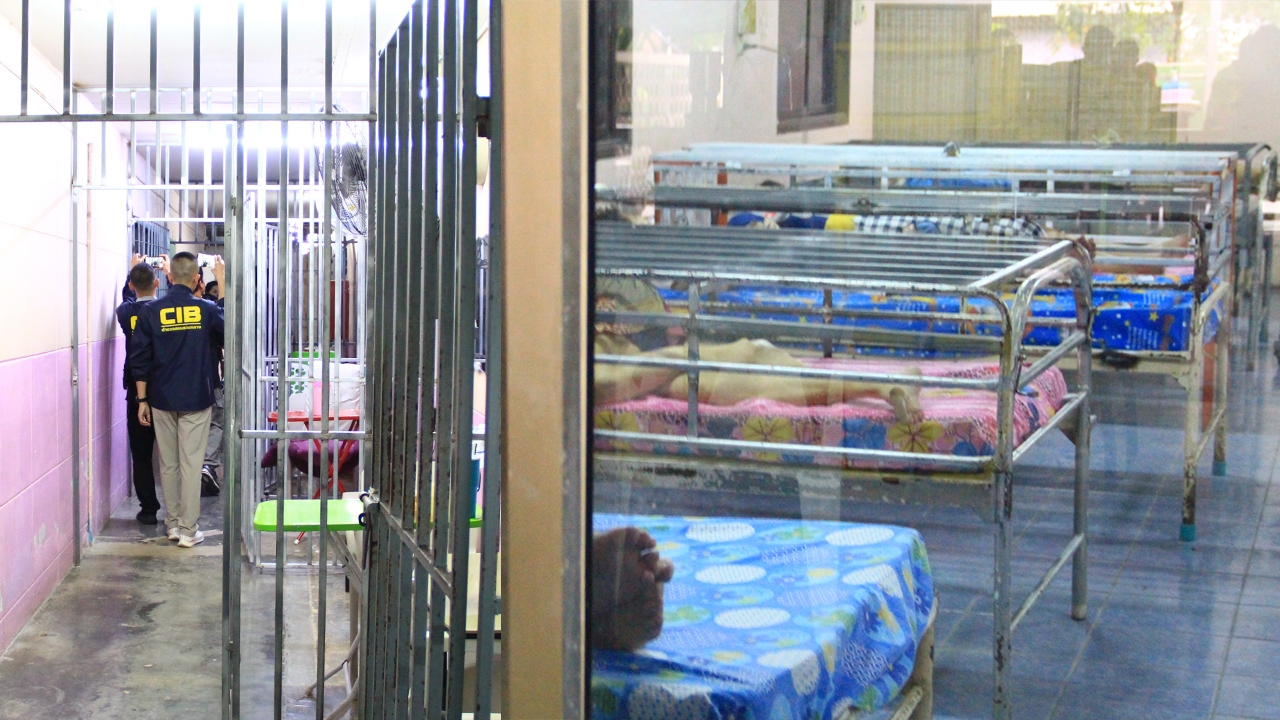
The Ministry of Social Development inspected an elderly care center in Kanchanaburi Province where iron cages locked the beds, deeming the facility inappropriate. They found 92 severe psychiatric patients (red cases) with low chances of recovery. Some relatives had sent patients and paid care fees without inspecting the facility. The ministry is preparing places to accommodate those whose families want government care and plans to upgrade oversight of elderly care centers nationwide.
Following complaints about an elderly care center in Tha Muang Subdistrict, Tha Muang District, Kanchanaburi Province, accused of physical abuse and unlawful confinement, images surfaced on 6 Oct 2026 showing high fences and beds altered into cage-like structures, sparking public criticism despite caregivers asserting safety.

During an on-site inspection, Dr. Phuwadej Surakot, Director-General of the Department of Health Service Support, reported that after the news, authorities investigated and confirmed the presence of cage-like beds. Operators said these were made for psychiatric patients unable to control their symptoms, used only temporarily during episodes. Isolation rooms resembling cells were used for patients prone to violence. Records showed 100 registered patients, 92 of whom had psychiatric conditions.
The facility was licensed as an elderly care center for dependent individuals with 50 beds authorized, but inspections found it was serving more than the permitted number.
Thairath Online's special team interviewed Ms. Chanok Chanthathong, Assistant Minister at the Ministry of Social Development and Human Security (MSDHS), who inspected the center in Tha Muang on 6 Oct 2026. She explained the ministry's role overseeing elderly and disabled care under the relevant laws. The private facility was found to be substandard and unsuitable. MSDHS will collaborate with health professionals and the Ministry of Public Health to screen and follow up with families; if families cannot care for elderly individuals, the ministry is ready to admit disabled and elderly persons classified as yellow and green cases into state care facilities.

Initially, there are 100 elderly residents at the center, including 92 psychiatric patients and 8 with normal conditions. Follow-up with families will occur because this private facility implies families can provide care, thus not qualifying for MSDHS support for vulnerable groups unless families consent or indicate inability to care. MSDHS has prepared facilities in Pathum Thani Province to accommodate them.
Most psychiatric elderly patients are classified as red cases with low chances of returning to normalcy. The Ministry of Social Development cannot currently support these severe cases but can accept yellow and green cases that have better prospects for reintegration into normal life.
Physically, the facility is unsuitable for elderly care due to its equipment and environment observed during the inspection. However, further detailed clarification will be provided by the Department of Health Service Support.

This case has raised social awareness and will prompt elderly care facilities to improve. Next steps include actions by Thailand's National Elderly Committee, overseen by Prof. Dr. Yossanan Wongsawat, Deputy Prime Minister and Minister of Higher Education, Science, Research and Innovation, responsible for social and vulnerable groups. They will upgrade standards for both private and public elderly care providers. The board's resolution will raise legal controls potentially through announcements, acts, or royal decrees, depending on appropriate processes.

It is advised that families with elderly members considering care centers thoroughly check the facility’s suitability. Paying fees does not guarantee proper care. Conversations with the facility owner revealed a misconception that payment implies no problems since relatives bring patients and pay, often without visiting or verifying care quality.
