

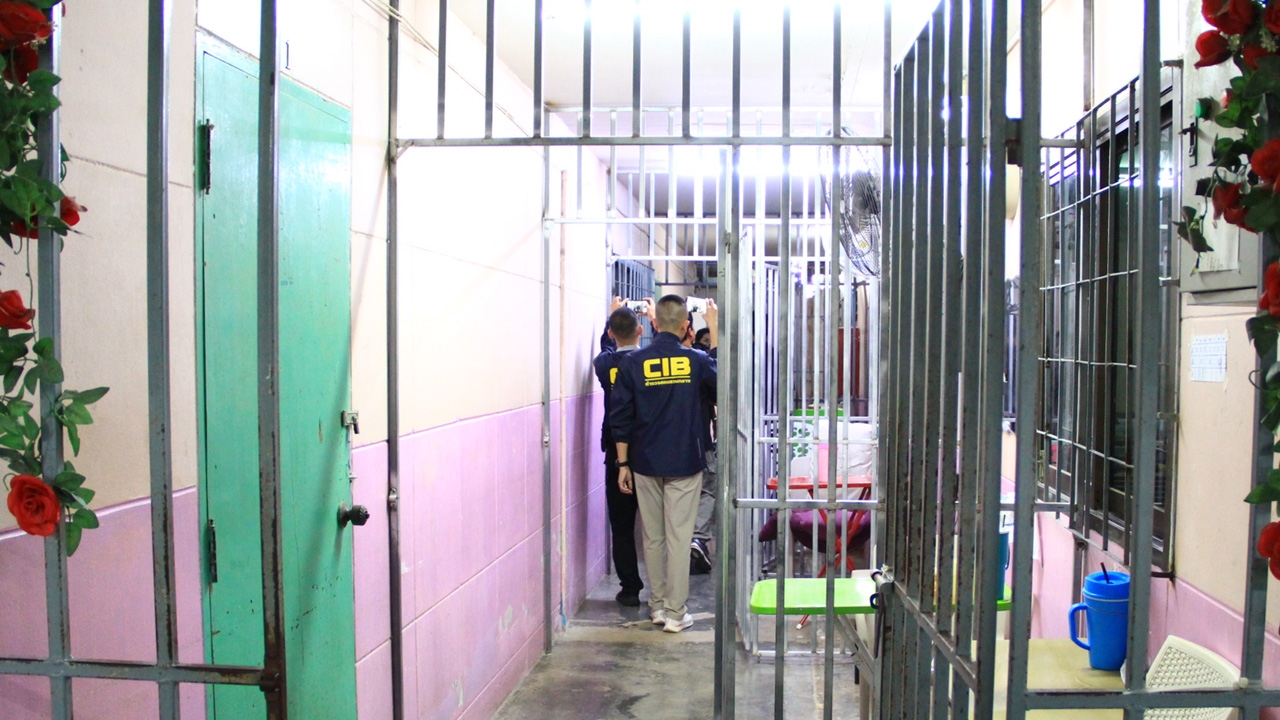
Restraint cages at an elderly care center in Kanchanaburi Province pose risks by confining patients to beds, constituting improper care that worsens patient conditions and undermines private care standards.
On 6 Oct 2016, the Central Investigation Bureau (CIB) and the Crime Suppression Division raided the elderly care center and found distressing conditions such as beds locked with metal cages and rooms padlocked from outside. The center’s owner explained that locking was necessary for safety, citing past incidents where psychiatric patients assaulted staff, and denied allegations of abuse. The Ministry of Public Health has since ordered its closure.
Regarding the installation of metal cages over elderly patients’ beds, Thairath Online’s special team spoke with Dr. Kengpong Tangarunsanti, president of the Thai Elderly Health Trade and Service Association and director of Chersery Home International Elderly Hospital. He said the center claimed the cages were for the safety of elderly patients with psychiatric conditions who wander, climb beds, or are confused and at risk of falls. Such patients should receive appropriate medication from specialists until symptoms stabilize before continuing care or rehabilitation at the center.
The center's claim that cages prevent falls may reflect an inappropriate assessment of elderly patients or cases beyond their care capacity. Medical principles require referring complex patients to medical units for proper treatment. In cases of severe confusion, doctors adjust medications to calm or treat symptoms. Without proper assessment or understanding, allowing patients to become agitated reflects inadequate care, resulting in misguided use of cages instead of proper medical referral.

Dr. Kengpong explained that initially, patients must be under medical supervision to receive treatment and medication adjustments until their condition stabilizes before transfer to care centers. Some patients may return home for ongoing rehabilitation if relatives can care for them, as assessed by doctors. Typically, elderly residents at such centers come from well-off families due to high costs, but the environment shown in the news contradicts this. As one mother told the media, her relative was "abused, coerced, threatened, and stripped of human dignity," a shocking situation raising questions about such care approaches.

1. Patients may try to get up or move, causing injuries from striking the metal cage.
2. The cages are likely heavy, making it difficult to remove them frequently for essential hygiene tasks like diaper changes and cleaning after bowel movements.
3. This can lead to pressure ulcers, infections, and serious physical and psychological harm. Stress from confinement can worsen symptoms in already agitated psychiatric patients due to restricted freedom.
Risks of mixing moderate (yellow code) cases with stable or at-risk symptoms and severe (red code) or critical cases
Dr. Kengpong said the center exceeded its licensed capacity of 50 beds, caring for over 90 patients, mostly severe (red code) cases. This likely causes insufficient care coverage. Patients previously closely monitored may develop complications like pressure ulcers and infections if care diminishes, while agitated patients may worsen, requiring attentive care.
“They keep red code patients, and the condition worsens to black code because of neglect. When confusion arises, doctors must check blood tests or administer injections to calm patients before adjusting to oral medication appropriately. But from the news images, they only restrict freedom by locking patients in cages to prevent agitation.”
The images show patients confined in cages to prevent agitation, contradicting the center owner’s claim that it is for safety. This reveals a misunderstanding of proper care for different cases.
Dr. Kengpong explained that opening an elderly care center requires Ministry of Public Health approval with three main standards: safety, facilities, and services such as bed licensing. The center was licensed for 50 beds but operated nearly 100, handling complex red code cases requiring ongoing medical care best suited for clinics or hospitals. Allowing such patients in a center beyond its capacity and licensing is inappropriate.
Center staff may lack sufficient knowledge, as confusion in patients can have many causes requiring input from medical teams, nurses, rehabilitation specialists, and psychiatrists for assessment, lab tests, and proper medication adjustment. Staff merely adjusting medications without medical oversight is extremely dangerous.

Dr. Kengpong concluded that these distressing images reveal health operations that harm patients’ morale, ethics, empathy for the elderly, and human dignity. Immediate action is needed as Thailand promotes itself as an aging society. Severe cases remaining in such centers risk no recovery and complications, though some diseases can improve with correct diagnosis and treatment. Alzheimer's cannot be cured but symptoms can improve.
On 7 Oct 2016, the Ministry of Public Health and the Department of Health Service Support conducted a second detailed inspection, clarifying that nursing homes provide care but are not psychiatric hospitals. The center’s actions constitute operating a medical facility without authorization. Closure proceedings are underway. The Department confirmed that metal cages on beds or locking rooms from outside are not elderly care standards and are prohibited. Severe psychiatric patients beyond the center’s capacity must be promptly referred to suitable hospitals, not confined or restrained.