

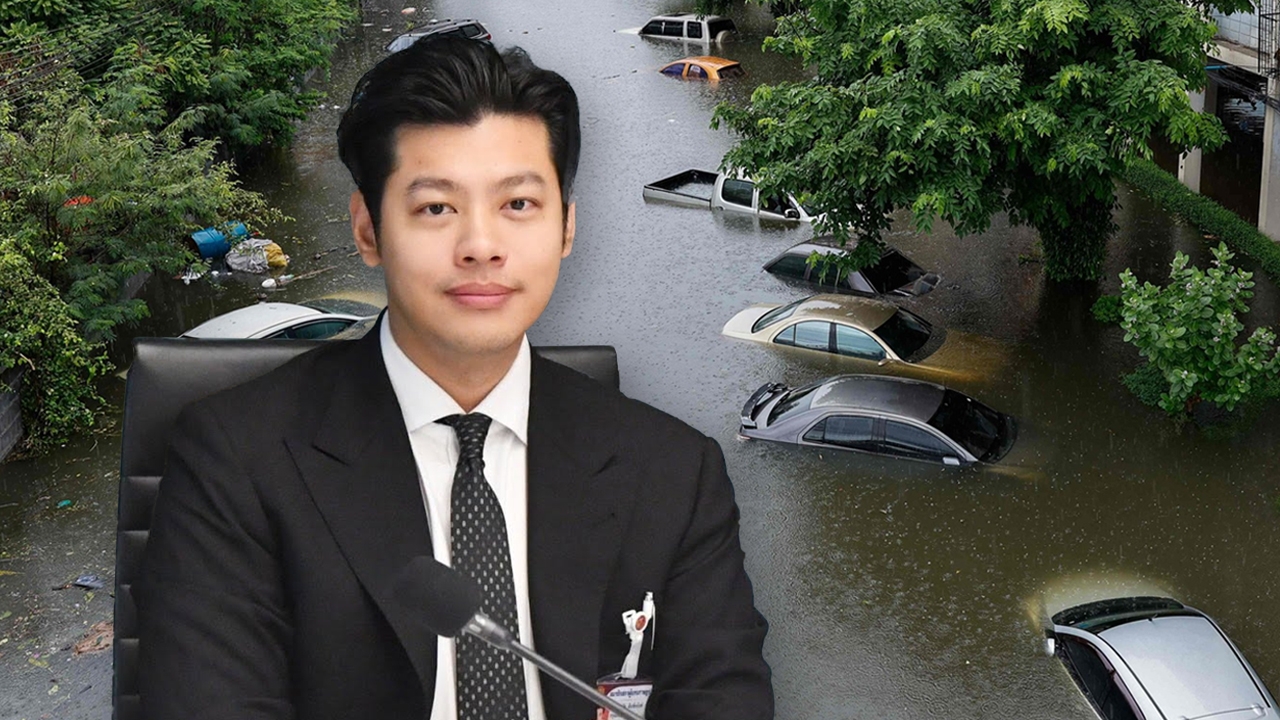
The 2026 flood relief payment process is stalled, causing delays in disbursements as approval for additional 2027 budget awaits. Suphanat Meenachainan said submitting applications via the Thang Rath app failed, resulting in slower payments than applying at district offices. The government did not prepare the budget in advance, waited until funds were exhausted before seeking new allocations.
This has become a hot issue after floodwaters receded, especially in suburban Bangkok areas, where residents face complex application procedures and problems uploading flood damage photos via the Thang Rath app, with many unable to attach image files.
Today (19 Oct 2026), Pradorn Prissanantakul, Minister attached to the Prime Minister’s Office, stated that the allocated budget of 4.7 billion baht for late 2026 has been fully used. However, some citizens have yet to receive relief payments, so the government plans to consider using the mid-year 2027 budget of about 99 billion baht to support affected people. He reassured those still waiting that the government is ready to provide assistance comprehensively.

Most relief payments in provinces have been completed. For example, Ang Thong province reports that over 90% of payments have been made, covering more than one million households overall.
Use of the mid-year budget must comply with criteria requiring urgent necessity, for projects without prior budget allocation. If the Prime Minister and Finance Minister approve, the mid-year budget can be used.
On 19 Oct 2026, Suphanat Meenachainan (Bank), Member of Parliament for Bangkok from the People’s Party, posted on his personal page that funds ran out early, causing flood relief transfers to halt for five days.
Friday 16 Oct – Transfers continued until funds depleted, with pending cases remaining.
Saturday 17 Oct – No funds available for transfers.
Sunday 18 Oct – No funds available for transfers.
Monday 19 Oct – No funds available for transfers.
Tuesday 20 Oct – No funds available for transfers; awaiting cabinet approval for additional budget.
The government’s work is inconsistent and unprepared, with poor forecasting, exhausting funds and delaying approvals, causing transfer interruptions and forcing citizens to wait longer for relief payments.

Regarding the risk of delayed flood relief payments, especially for suburban Bangkok residents, Thairath’s special team asked Suphanat Meenachainan (Bank), MP for Bangkok from the People’s Party. He said the main problem causing many citizens to queue at district offices is that the Thang Rath app lacks the function to attach photos or documents. Bangkok frontline staff require these documents to assess applications, so those who applied via the app were asked to reapply at district offices or send documents via Line OA. Consequently, people who applied two to three weeks ago via the app must now prepare new documents and reapply, while newcomers to district offices receive payments earlier than earlier app applicants, causing delays and shifting the workload back to district offices.
Although the Thang Rath app was intended to handle applications outside the offline system requiring travel to district offices, it failed to meet this goal because its design does not accommodate the needs of actual workers processing applications.
The slow application process reflects problems in complaint handling. Despite past disasters, the system design for submitting relief claims is poor, ultimately causing citizens hardship as before.
The 2026 year-end budget of 4.7 billion baht has been used up, and approval for the mid-year 2027 budget of about 99 billion baht is pending. Suphanat sees this as a government mismanagement issue in setting flood relief budget limits. The government could have acted on 6 or 14 Oct during cabinet meetings to approve additional funds, allowing continuous payments immediately.

However, the government failed to plan ahead to approve these funds, so flood relief money ran out on 16 Oct, worsening existing problems with the Thang Rath app that require reapplication and slow verification, compounded by waiting for new budget approval.
As of Friday (16 Oct 2026), staff were still busy preparing documents to request mid-year 2027 budget approval, raising concerns that incomplete or late submissions could delay approvals into the following week. Given this news, it is expected the government must approve funds within this week, as relief requires mid-year budget use and cannot draw from other budgets in advance.
“The government’s problem is waiting until funds run out before requesting new money. If they knew the high volume of applications and that the Prime Minister’s initial budget was insufficient, why didn’t they prepare budget requests earlier? Disasters like floods don’t just happen suddenly. For example, Bangkok flooded starting 25 Sept 2026, which was known in advance, and some areas are already recovering. Thus, requests exceeded the original budget. During cabinet meetings on 6 and 14 Oct, they could have requested additional budget to prevent payment interruptions, but the government did not do so.”
The government should issue a cabinet resolution to expedite budget approval so funds can be disbursed promptly. It also needs to estimate how many days after approval banks will transfer money to citizens. To reduce problems with the Thang Rath app, where many applied since 2 Oct but haven’t received payments, the app should be improved to allow attaching photos and additional documents.
