

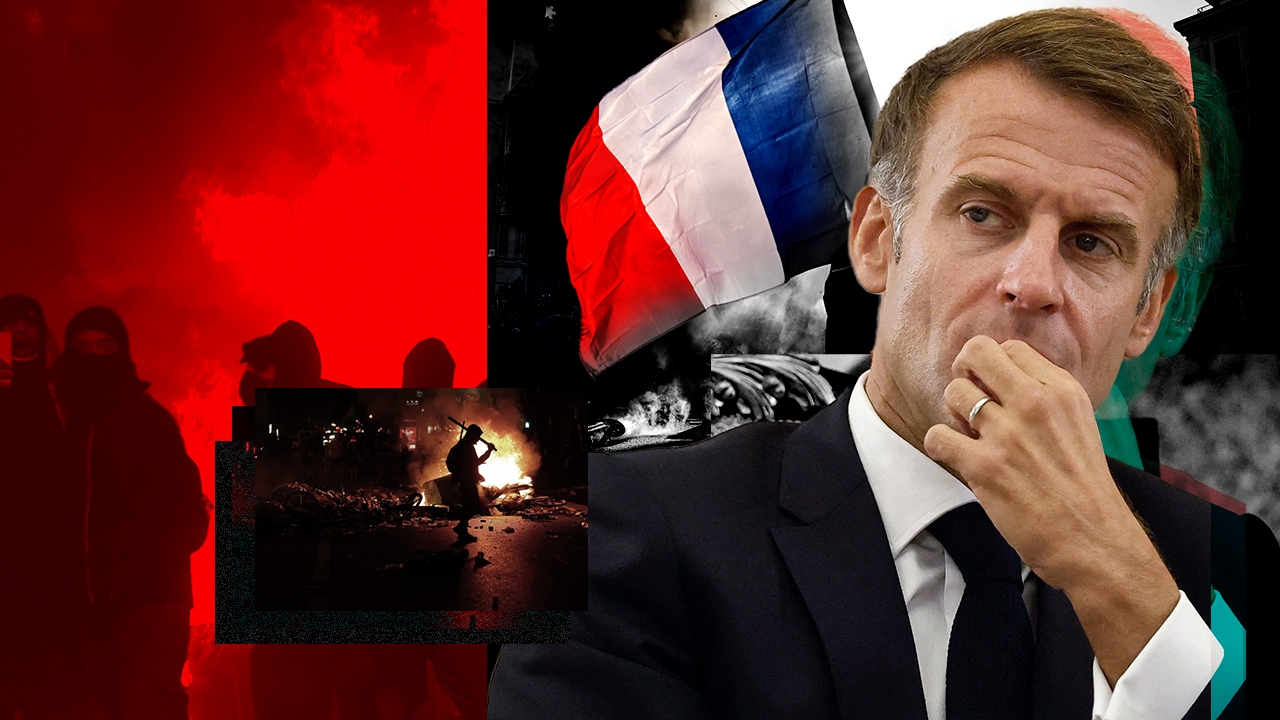
France is engulfed in riots involving arson and destruction, shaking confidence in President Emmanuel Macron's government. This domino phenomenon across Europe highlights problems in centrist politics that may not keep pace with necessary changes. Experts observe that economic hardships are affecting the world, with Europe reflecting lessons relevant to Thailand.
Tensions in France began on 17 Oct 2023 GMT+7, with over 500,000 people joining protests. The causes include crises in education, teacher shortages, rising living costs, expensive goods and energy, and government budget cuts to public welfare.
Recently, French President Emmanuel Macron took a hard stance, condemning violence and looting. He emphasized that protests are acceptable but must not involve violence, ordering the harshest punishments for offenders.
Security and order measures are prioritized. Many see this as a ticking time bomb ahead of France's presidential election next year. Meanwhile, protests continue in Belgium, Portugal, and Albania, driven by similar economic grievances.

This may be a political ripple effect concerning citizens' livelihoods across many European countries. Thairath Online's special report consulted Associate Professor Athima Chuenjit, head of the Political Science program at Rangsit University, who analyzed that the protests began with dissatisfaction over the education system, especially insufficient teachers due to management structures and budget constraints, particularly affecting schools outside Paris.
Regarding France's economic problems, the government plans to cut public welfare budgets due to high public debt, attempting to reorganize finances. This is partly a result of international tensions affecting the global economy.
These protests are not the first under President Emmanuel Macron's tenure but reflect ongoing governance issues and policy acceptance challenges.
Previously, the government faced major protests such as the 2018 fuel tax demonstrations and the 2023 pension system reforms.
Because France uses a two-round presidential election system, it typically elects centrist leaders acceptable to most and without extreme views.
The weakness of centrist policies is that while they emphasize compromise, sometimes such policies fail to address problems directly or timely, eventually causing public dissatisfaction.

The protest leaders and participants this round include a high proportion of young people and Gen Z, reflecting an interesting political dimension.
Political awareness among Gen Z in France and globally is rising. They understand that politics directly affects their lives and that change in life and society starts with political change.
Democratic values have grown alongside belief in democracy's worth and that true power belongs to the people, expressed through demonstrations and voting.

Regarding President Macron's declaration to prosecute offenders firmly, two points stand out:
1. Handling opportunistic groups requires distinguishing between genuine protesters and those exploiting unrest.
2. Restoring confidence: As the government approaches the final term before next year's major election, Macron must urgently rebuild trust, stabilize the country, and open political dialogue to solve problems collectively.
Protests in European countries like Portugal, Belgium, and Albania are also ongoing, mostly rooted in cost-of-living issues and international tensions (e.g., US-Iran). Whether the domino effect spreads depends on each government's capacity to manage and resolve problems.

The situation in France could continue up to the major election in April next year unless the government effectively manages and solves economic and living cost issues.
Lessons for Thailand: Thailand is facing similar challenges of living costs and economic impacts. The role and response of its political system are key factors in managing these pressures.