

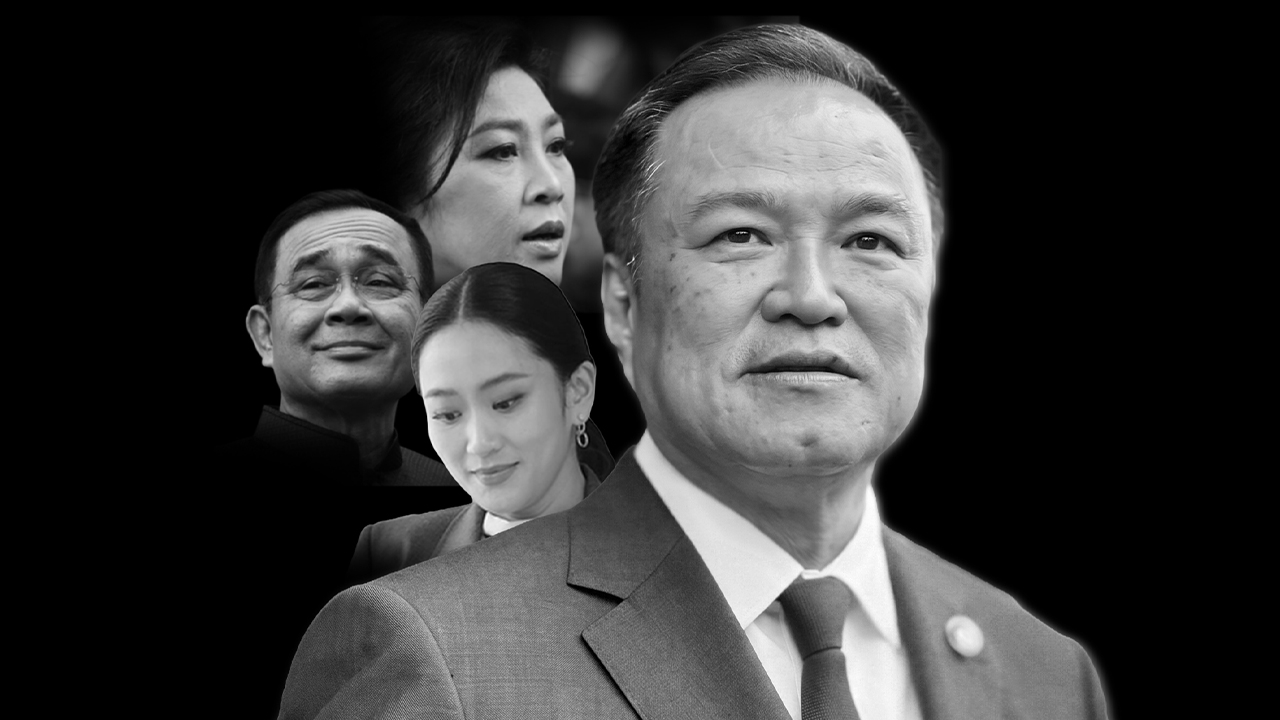
Reviewing no-confidence debate statistics of four prime ministers before Anutin and 17 ministers face debate from 7-11 December 2026. Who has been targeted and on what issues?','tags':['politics','no-confidence debate','Prime Ministers','Thai government']
Thai politics heats up again as the opposition coalition submits a no-confidence motion for debate. Prime Minister Anutin Charnvirakul. Under Constitution Article 158 and debate. Seventeen individual ministers. According to Constitution Article 159, on 28 October 2026, during a trilateral whip meeting involving the Cabinet, government whip, and opposition whip, the debate dates were set for 7-11 December 2026, from 08:00 to 03:00, with the opposition allocated 51 hours and the government 17 hours.
Thairath Online special news team looks back at interesting statistics from the last eight no-confidence debates during the terms of four prime ministers, starting with Yingluck Shinawatra before Anutin Charnvirakul's turn.

1. Yingluck 1 (Nov 2012): 4 people.
2. Yingluck 2 (Nov 2013): 2 people.
3. Prayut 1 (Feb 2020): 6 people.
4. Prayut 2 (Feb 2021): 10 people.

5. Prayut 3 (Sep 2021): 6 people.
6. Prayut 4 (July 2022): 11 people.
7. Paethongtarn (March 2025): 1 person.
8. Anutin (December 2025): 18 people.

Administrative failure, incompetence, failure to implement policies, negligence allowing corruption, mistreatment of civil servants, evading responsibility, favoritism toward self and relatives, tolerating those above the law, ignoring the public, avoiding scrutiny, and indications of corruption in office.
Administrative failure, corruption through policy, neglect of duties, allowing family members and outsiders to control and interfere with state administration, abusing power to interfere with legislative, judiciary, and independent bodies, harassing political opponents, prioritizing family interests over the nation.

Lack of faith in democracy, illegitimate rise to power through overthrowing the constitution and creating power succession mechanisms, tolerating corruption, abusing power to interfere with officials and the justice system, ignoring fiscal discipline, failing to solve economic problems, prioritizing arms purchases over people's welfare, failing to resolve unrest in the south, ignoring election promises.
Administrative failure, corruption, using institutions to divide the people, incompetence, tolerating corruption for personal and allies' wealth amid public hardship and COVID-19, careless budget spending, focusing on personal popularity, using laws to suppress dissent, blocking freedom of expression, allowing illegal gambling, lack of faith in democracy, using institutions to divide the population.
Incompetence, mismanagement causing severe political, economic, and social damage, especially during COVID-19, neglecting to control the pandemic, corrupt and insufficient vaccine and testing procurement lacking transparency, falsely claiming royal vaccines damaging the institution's credibility, borrowing large sums without direction, budget spent on arms, rising household debt, corruption benefiting allies, restricting media and civil rights, harsh crackdown on protests.
Eight years of failed governance, inability to solve national problems or stimulate economic growth, worsening issues especially corruption, tolerating allies seeking benefits, reckless budget spending ignoring fiscal discipline, incurring debt to gain political favor, unnecessary military purchases, using laws to silence the public and media.

Lack of suitability, absence of leadership qualities, deliberately avoiding problems, prioritizing personal, family, and allies' interests above the public, lacking evident honesty, failing to fulfill promised policies, acting as a proxy for anti-democracy groups, allowing corruption, family members influencing decisions, acting as a puppet prime minister.

Lack of evident honesty, favoritism toward self, associates, allies, and benefactors, election fraud for MPs and senators, misconduct in civil service and budget, interfering with the justice system and independent bodies, turning them into tools to destroy opponents while whitewashing allies, using loyalty as a political tool, governing with widespread systemic corruption, neglecting to manage 'grey capital' networks, behaving as a political puppet.

Terms appearing include: administrative failure, serious mistakes, mismanagement, failure to perform duties, etc.
Terms include: fraudulent behavior, corruption, tolerating corruption, embezzlement, era of rampant corruption, etc.
Terms include: incompetence, lack of knowledge, inefficiency, lack of wisdom, lack of expertise, mental deficiency, etc.
Terms include: abuse of power, using position for personal gain, arbitrary power, interfering with officials' duties, conflicts of interest, etc.
Terms include: lacking morality, lacking ethics, lack of evident honesty, serious violations of ethical standards, etc.
Terms include: prioritizing family wealth, benefiting self, associates and allies, benefiting business groups and allies, building power bases and networks, etc.

Terms include: destroying, intimidating, interfering with democratic institutions, opposing constitutional monarchy, destroying rule of law, destroying independent organizations and checks and balances, etc.
Terms include: lacking leadership, lack of responsibility to parliament and citizens, immaturity, etc.
Terms include: failure in economic management, inability to generate economic growth, severe recession, wealth inequality, ignoring fiscal discipline, etc.
Terms include: deliberate neglect of duty, repeated legal violations, acting against constitutional or legal provisions, etc.
Terms include: widespread violations of individual rights and freedoms, silencing dissenters, viewing dissenters as enemies, using power to destroy political opponents, intimidation, etc.
Terms include: allowing family members to control decisions, being a political puppet, submitting to others' control, dominated by outsiders, etc.
