

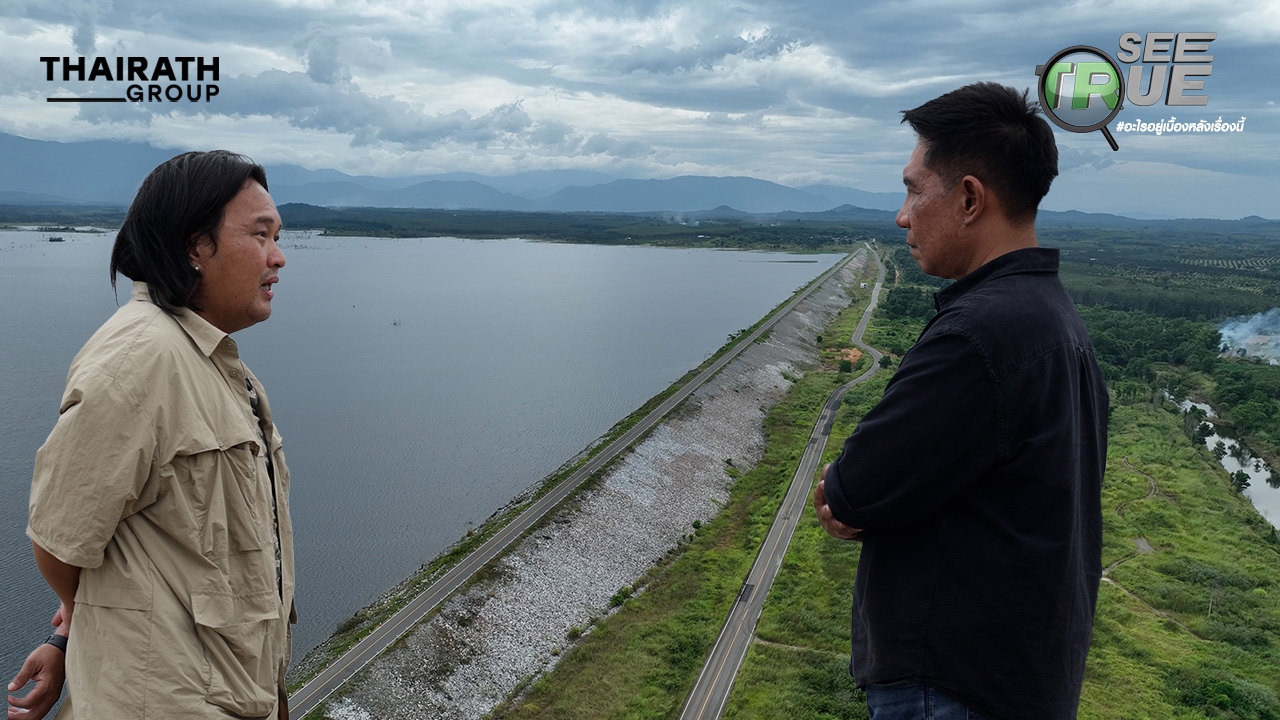
Khlong Wang Tonot Reservoir in Chanthaburi province is a "people-elephants-forest" variable—nature that must be sacrificed for development but with losses outweighing gains, as villagers suffer impacts and wild elephants emerge to feed on crops.
After the Cabinet resolution on 5 Aug approved a budget of 7.2 billion baht for the construction of the Khlong Wang Tonot Reservoir project, conservation concerns immediately arose.

The Khlong Wang Tonot Reservoir project in Khun Song Subdistrict, Kaeng Hang Maeo District, Chanthaburi, is part of a plan to divert water from Chanthaburi to Rayong as per the Cabinet resolution on 7 Apr 2009, aimed at supporting industrial expansion in the Eastern Economic Corridor (EEC) and agriculture in the area and neighboring provinces.
The plan cites that the Khlong Wang Tonot Reservoir has an estimated capacity of 99.5 million cubic meters, built to meet water demand claimed to reach 300 million cubic meters.
Previously, the Khlong Wang Tonot watershed development in Kaeng Hang Maeo District already had three completed reservoirs.

These include Khlong Prakaet Reservoir with a capacity of 60.25 million cubic meters, Khlong Phawa Yai Reservoir with 68.10 million cubic meters, and Khlong Hang Maeo Reservoir with 80.70 million cubic meters. The Khlong Wang Tonot Reservoir would be the fourth reservoir under construction.
Amid opposition from conservationists and villagers, many argue that the existing three reservoirs already supply sufficient water for agriculture and industry.
Therefore, building the Khlong Wang Tonot Reservoir is unnecessary and would cause multiple negative impacts.
To clarify these facts, the SEE TRUE news team visited Chanthaburi to inspect the issues and project details, surveying the pristine forest area in Khao Sip Ha Chan National Park that would be lost if the project proceeds. They found a rich forest habitat with diverse trees and home to wildlife, especially elephants and gaur, among other species. They also visited Khlong Yang village in Khun Song Subdistrict, Kaeng Hang Maeo District, which would become flooded, and spoke with locals who mostly agreed that compensation and relocation plans remain unclear from government agencies.
A villager told SEE TRUE that after living there for 30 years, most residents work in orchards or rubber tapping and do not wish to move. But if relocation is inevitable, they want clear compensation and farmland replacement from relevant agencies. He views the reservoir construction as not worthwhile since local people do not use the water, and building over forest paths used by elephants could cause elephants to leave the forest and harm people.
SEE TRUE also met with Mr. Kachanet Tahoon, a leader of the opposition network against the Khlong Wang Tonot Reservoir. He explained that their opposition stems from losses outweighing benefits, damaging ecosystems, wildlife, and natural vegetation. Importantly, he urged maximizing water management and distribution from the existing three reservoirs before considering another. He is confident that Kaeng Hang Maeo District does not need four reservoirs.

"The government should review the Water Resources Act to prevent unchecked water management power, unfair water distribution, and importantly, the reservoir construction would destroy a critical wildlife corridor in the eastern forest and escalate human-elephant conflicts," Mr. Kachanet said.
Mr. Somphop Sirisawang, chairman of the Thai Environment Fund Foundation and representative of the opposition network, stated the project has been flawed from the start, citing that the EHIA report contains inaccurate data on elephant and gaur populations and the richness of Khao Sip Ha Chan National Park forest.
"If the project proceeds, it would destroy pristine forest that serves as migration routes and feeding grounds for hundreds of wild elephants. The construction area is a lowland main corridor for elephants. Building the reservoir would block their path, forcing elephants into communities and causing conflicts," Mr. Somphop said.
He added that wild elephants have been increasingly foraging in villagers' farmland in Kaeng Hang Maeo District, with elephants previously reaching Chanthaburi town itself. Villagers now form nightly patrols to prevent elephants from entering and causing harm. Injuries and deaths occur every year. They want to avoid such incidents. Regarding compensation for Khlong Yang villagers, the Royal Irrigation Department has yet to clarify details. Moreover, national park areas should be national assets for shared benefit.
"On 29 Oct, I and villagers along with representatives from the Seub Nakhasathien Foundation filed a lawsuit at the Administrative Court to revoke the EHIA report for the Khlong Wang Tonot Reservoir project, citing flaws and inaccuracies concerning the forest area that could severely impact the ecosystem and protected forest in Khao Sip Ha Chan National Park."
"Notably, the Cabinet approved the project on 5 Aug just days before the EHIA report expired, suggesting the approval was timed to favor construction," Mr. Somphop said. He added that villagers and conservation groups will continue opposing the reservoir project.

On Saturday, 14 Nov, the opposition group will hold an event titled "Hear the Voices of People and Forests, Embrace Khao Sip Ha Chan" to protest the Khlong Wang Tonot Reservoir project. They will gather at Kaeng Hang Maeo District Office in Chanthaburi at 1 p.m., visit the flooded Khlong Yang village, then travel to Khao Sip Ha Chan National Park for activities listening to the forest and people’s voices, followed by tent registrations for an overnight stay inside the park.
