

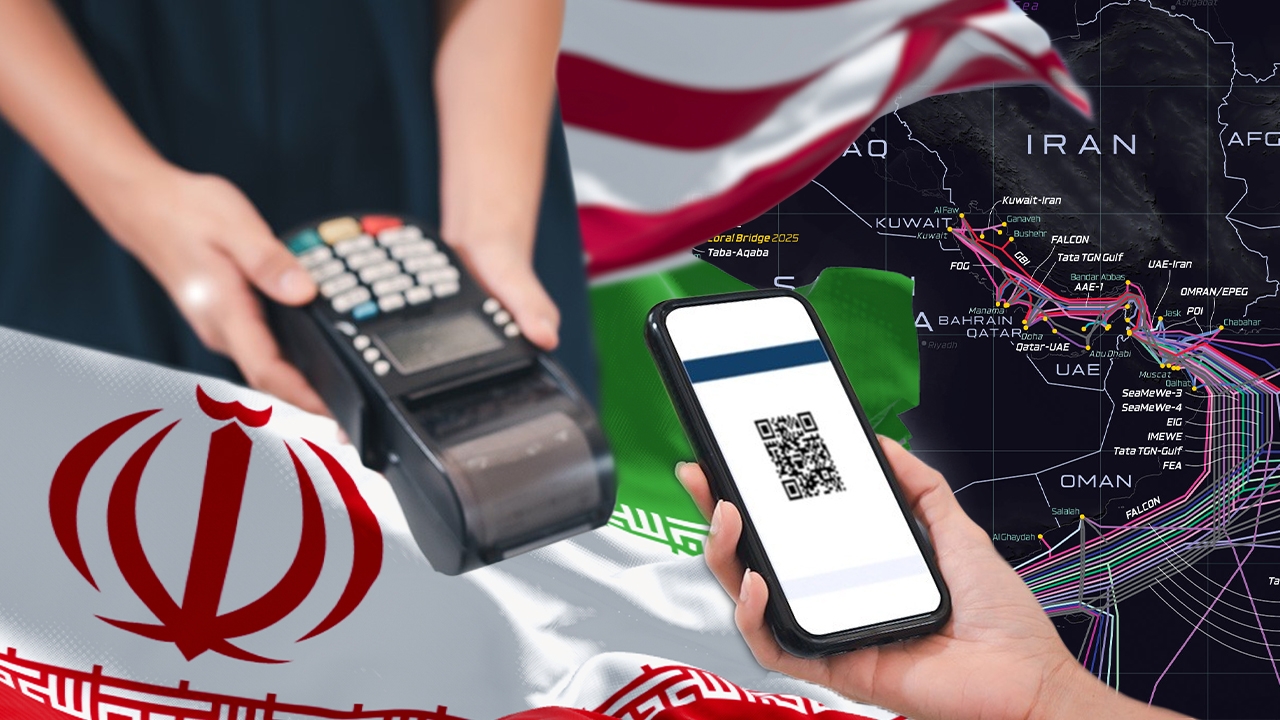
Exploring the impact if Iran cuts undersea cables in the Strait of Hormuz—how much could Thailand's internet signals and financial transactions be affected?
Amid ongoing unresolved Middle East conflicts with potential renewed clashes, recent reports have emerged that “Iran” may attack “undersea cables” in the Strait of Hormuz if the US and Israel launch another attack on Iran. Such an event could disrupt global internet systems, communications, and financial transactions.
Threats to attack cables under the Strait of Hormuz are not new; Iran has consistently used this as a response to military pressures. The latest case occurred on 21 Oct 2026, when Yadollah Javani, Deputy Head of Political Affairs of Iran's Islamic Revolutionary Guard Corps (IRGC), revealed that Iran might target seven undersea cables running beneath the Strait of Hormuz if the country's infrastructure is attacked.
Furthermore, Iranian officials claim they have full access to these undersea cables and the capability to easily destroy them, intending to hinder repair efforts post-attack to prolong communication disruptions.
Mohsen Rezaei, a senior Iranian security official, additionally warned that US-linked digital infrastructure across the Persian Gulf region, such as data centers and AI facilities, could also be targeted.
Previously, during the peak of the war in March, Iran directly targeted two Amazon Web Services (AWS) centers in the UAE and attacked infrastructure near another AWS center in Bahrain. The IRGC also named US tech companies including Microsoft, Google, Apple, and Nvidia as legitimate targets.
Meanwhile, Alex Vatanka from the Middle East Institute in Washington stated that these threats aim to deter renewed conflict and pressure the US, causing concern among Gulf governments and American private companies about their regional investments.
“Tehran wants Gulf states and top executives to pressure President Trump regarding risks that US policies might affect their investment plans,” he said.

According to the United Nations' International Telecommunication Union (ITU), “undersea cables” carry about 99% of all internet traffic.
However, these cables are globally distributed and not concentrated solely in the Strait of Hormuz. The worldwide internet system does not rely on a single network; if some links are attacked or fail, users will not be completely disconnected as providers can reroute some traffic through other networks.
Such rerouting could cause reduced signal speeds, increased latency, or service disruption, which may affect financial transactions, e-commerce, and cloud systems to some extent. The severity depends on how many routes are disrupted and the remaining capacity of backup connections.
Alan Mauldin, Research Director at telecom research firm TeleGeography, said that if Iran attacks these cables, the global internet impact might be limited because the international bandwidth through the Strait of Hormuz accounts for less than 1% of the total.

Regional impact more than global
TeleGeography data shows that the three main cable systems serving this route—Asia Africa Europe-1 (AAE-1), FALCON, and Gulf Bridge International (GBI)—are located in Omani waters due to Iran's political considerations.
These cables primarily serve Gulf countries, so an attack would mainly affect regional connectivity, disrupting links between Bahrain, Qatar, Kuwait, and the UAE, even though these countries have some land-based backup routes.
Saudi Arabia relies less on Arabian Gulf cables, as most of its international bandwidth is carried through systems landing on its Red Sea coast.
Mehdi Saremi Far, a Canadian technology expert interviewed by Iran International, believes IRGC's threat considers global undersea cable traffic, not just that passing through the Strait of Hormuz.
An attack could affect data traffic in the mentioned areas but not entirely, as land-based backup networks and routes via Saudi Arabia and Egypt can handle some rerouted data. Continuous threats by Iran have also prompted stakeholders to plan alternative routes.
If Iran gains support from allies like Yemen’s Houthi group and attacks cables in the “Red Sea,” the impact could be more severe than in the Strait of Hormuz. However, Iran has not indicated any plans to target cables in that area.
Mauldin noted that the Red Sea route carries data between Europe, East Africa, and Asia, accounting for about 3% of global international internet demand and around 10% of inter-regional traffic.
Previously, Red Sea undersea cables were damaged but only caused partial disruptions rather than regional internet shutdowns. For example, in Feb 2024, three Red Sea cables were damaged by the anchor of the cargo ship Rubymar, which was missile-attacked by the Houthi group. In Sep 2025, four cables were damaged, affecting connectivity only partially in the Middle East and Asia.

If undersea cables in the Strait of Hormuz are attacked, the effect on Thailand is expected to be limited. It would not cause internet outages or financial transaction failures as some fear, because most of Thailand’s undersea cable network connects via Singapore. National Telecom Public Company Limited (NT) has said only 5% of Thailand’s international connections to Europe pass through the Middle East, not the Strait of Hormuz. Thailand uses four undersea cable systems: two direct connections (SMW4 and AAE1) and two routed through Singapore to Europe (PEACE and SMW5), with backup plans in place.
Thailand’s main financial transaction system, PromptPay, operated by National ITMX Company Limited (NITMX), and most commercial banks’ servers primarily use domestic networks and data centers, so they are expected to be largely unaffected. However, international transfers or transactions involving Middle Eastern servers may experience some delays or disruptions.
On 20 Mar, NT clarified that Thailand’s internet services remain stable and unaffected by potential undersea cable attacks in the Strait of Hormuz, and it has prepared measures as follows:
1. Strong backup networks managing traffic across six undersea cable systems covering both land and sea routes. In case of disruption in any route, traffic can be immediately rerouted. Capacity on diverse international routes is pre-provisioned to distribute traffic, minimize single points of failure, and maintain service continuity efficiently.
2. Limited impact scope. Currently, only two cable systems pass through the risky area, representing less than 10% of Thailand’s internet traffic to Europe. Thus, any impact would be limited and manageable with backup plans.
3. Proactive response plans to address indirect effects such as latency delays at some destinations by adjusting routing and network management to provide users with continuous service experience.