

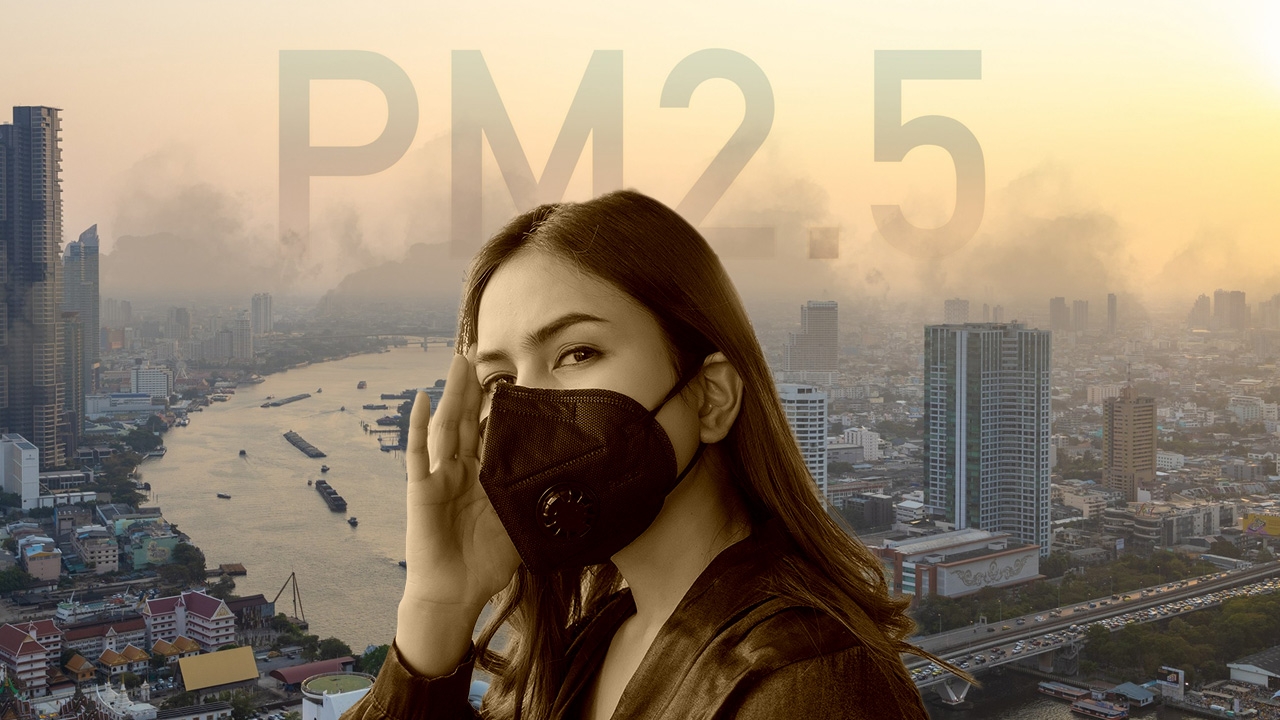
Attention is focused on the “Super El Niño” phenomenon, which is causing toxic PM 2.5 dust to arrive earlier, more intensely, and persist longer. Authorities are urged to strictly control hotspots and promote work-from-home policies to protect vulnerable groups.
PM 2.5 levels in Bangkok and its vicinity are rising faster than expected, already impacting health. Environmental experts identify the accelerating factor as the “Super El Niño” phenomenon, which drives hotter and drier conditions, lowers humidity, facilitates dust accumulation, and is expected to continue until next May. They recommend the government use historical data to identify hotspots and promote work-from-home routines to protect young children.
PM 2.5 pollution in Bangkok is trending toward an earlier and longer season than previous years. As of today (16 Nov 2026), the average PM 2.5 at 11:00 a.m. is 35.4 micrograms per cubic meter (µg/m³), which is moderate overall, but some areas exceed the 37.5 µg/m³ standard, reaching orange levels that begin to affect health. Traditionally, Bangkok’s PM 2.5 rises and peaks from December to March during the cold season, when stagnant air and poor ventilation trap pollutants.

The early signs of severe PM 2.5 pollution signal the need for preparedness against faster-onset air pollution than in previous years. Thairath Online interviewed Professor Dr. Pisuth Pianmongkol from Chulalongkorn University’s Environmental Engineering Department, an expert on PM 2.5 phenomena. He explained that this pollution crisis is driven by global climate shifts toward El Niño, which is intensifying toward a “Super El Niño,” according to assessments from the Meteorological Department and global climate agencies.
This phenomenon will directly impact Thailand in two main ways: extremely hot and dry weather combined with decreased air moisture and humidity. This contrasts with last year’s La Niña influence, which brought heavy rains and lower temperatures. This year’s dryness is a key factor that allows PM 2.5 particles to accumulate more severely in the atmosphere than in previous years.

Professor Dr. Pisuth notes that the earlier-than-usual PM 2.5 rise this year aligns with forecasts from the U.S. National Oceanic and Atmospheric Administration (NOAA) and the Thai Meteorological Department, which state that Super El Niño conditions will begin forming around mid-November and persist until approximately May next year.
With such a prolonged period, traditionally vulnerable areas including Bangkok, Chiang Mai, and Chiang Rai, as well as neighboring provinces, face the risk of experiencing more severe and longer-lasting toxic dust conditions than last year’s pollution season.
"This year, due to Super El Niño, the weather will be hot and dry, with large amounts of dry leaves accumulating. Even minor incidents, such as discarded cigarette butts or lighting fires in forest areas, can easily escalate into wildfires and create hotspots much more readily than usual," he said.

Professor Dr. Pisuth emphasized that when natural conditions favor a pollution crisis, proactive management is key to minimizing health impacts. He proposed three main strategies for response:
For the public and farmers (to prevent sources): Those involved in forest areas, agriculture, and communities with recurring hotspots must exercise extreme caution and strictly avoid burning. They should also vigilantly monitor accidental sparks in daily life to prevent them from spreading into wildfires.
For the government (proactive monitoring using data): State agencies should analyze historical statistics to identify hotspots that repeatedly occur each year. This allows for strict supervision, monitoring, and enforcement of preventative measures before incidents happen.
For urban adaptation (reducing dust exposure): With advances in sensor technology and accurate pollution forecasting, government bodies, private sectors, and Bangkok’s governor should use this data to declare work-from-home or work-from-anywhere policies as routine during pollution crises—especially to protect young children, the most vulnerable group, from air pollution.