

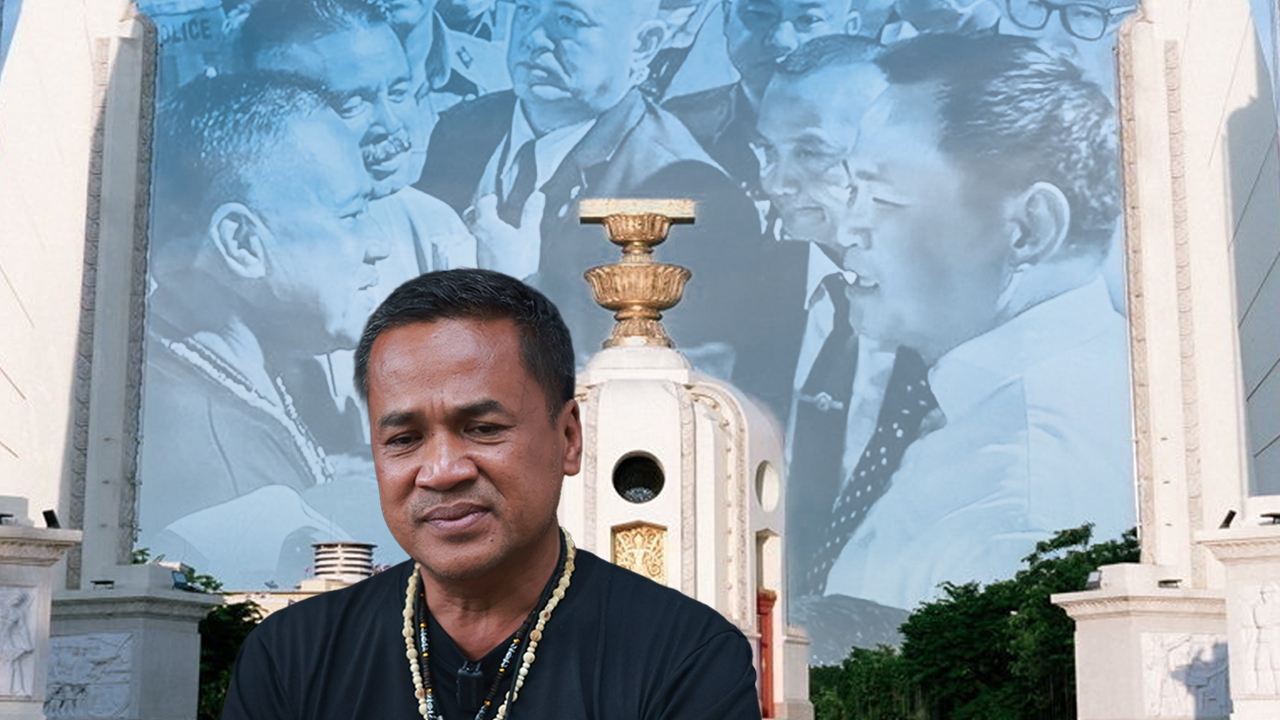
Checking whether the "Village Headman Mano" and "Gen Z" protests will ignite momentum. Comparing the tone of protests during the "Anutin" era with the past, when the "working-age" population is a key variable.
Political activity on the streets has returned to the spotlight as opposing and cross-generational groups, including the "Village Headman Mano" protest demanding lower energy prices and the "Gen Z" protest planned at Democracy Monument on 20 Nov 2026, prepare to demonstrate. The key question is how much these various protests can generate momentum to pressure the government led by Anutin.
Thairath Online's special team spoke with Asst. Prof. Lt. Chattapol Duangjit, lecturer at the College of Leadership and Social Innovation, Rangsit University, who analyzed that historically, political protests have often involved the same actors and networks, leading to public fatigue and apathy, causing many to remain indifferent.

The emergence of "Village Headman Mano" represents a "new player" in public spaces with a certain supporter base and mobilization power. Although previously active on a limited scale, stepping onto a larger stage combined with new communication methods has allowed rapid attraction of like-minded supporters.
"Although the actors and media communication methods appear newer, some of the content and demands still return to old points or issues difficult to implement practically. If this movement does not focus sharply on a single issue but disperses its demands, igniting broad public support remains a challenge."
Issues seen as having real potential to spark momentum are those directly affecting society, such as energy and livelihood concerns. If these can be combined with targeted communication, they may create greater impact than traditional structural demands.

On the other hand, the "new generation or Gen Z" group planning simultaneous movement is, according to Asst. Prof. Lt. Chattapol, unlikely to gain significant momentum at this time.
The main reason lies in the mindset and life goals of today's youth, who prioritize economic issues, income, livelihoods, and personal survival over alignment with broader political structures. Their political experience and engagement are not as intense as in past eras. Thus, their gatherings are mostly symbolic expressions occurring occasionally within limited groups.
In the digital era where all actions leave a digital footprint, backing or mobilization behind the scenes by political parties or financial groups is more difficult. Consequently, the formation of large-scale social movements remains incomplete, and currents remain fragmented without strong unity.

Comparing current protest contexts with Thailand's political history—such as the 14 Oct 1973, 6 Oct 1976, or NCPO eras—it is clear that the tone of movements under Anutin's government differs significantly.
Comparative dimensions. | Past protests (NCPO era / historical context). | Protests in Anutin's government era (present). |
Main mass movement leaders. | Students, youth, new generation. | Working-age population. |
Primary motivation. | Democratic ideology and power structure. | Economic and political expectations and disappointments. |
Nature of gatherings. | Centralized, large unified groups. | Dispersed, divided by issues. |
The group making the loudest voices today is not youths or students as in the past but the "working-age" population who have endured political challenges and now carry expectations and disappointments regarding governance and the economy.
Regarding the stability of the government led by Anutin, experts believe that from late 2026 through early 2027, the chance of a "large protest" toppling the government remains low, as protest groups operate at different awareness levels and lack strong common ground to unify.
However, the government cannot be complacent due to "three dangerous conditions" that could trigger a sudden alliance among opposing and generational protests, resulting in a crisis of trust. These are:
Failure in economic and livelihood issues, especially if clear evidence emerges of business favoritism, such as energy or oil prices directly impacting people's cost of living.
Excessive protection of allies, such as shielding ministers amid severe accusations, damaging the government's image and credibility.
Restrictions on freedoms and media, where government use of power to intimidate, block communication channels, or violently arrest dissenters would cross a critical line for youth valuing fundamental freedoms.
The gatherings of "Village Headman Mano" and "Gen Z" protests serve as early warning signals to the government house. As long as the government manages to avoid errors in these three key areas, it can continue to hold steady. But once livelihood issues and freedom restrictions ignite, the political dynamics on the streets could change dramatically.