

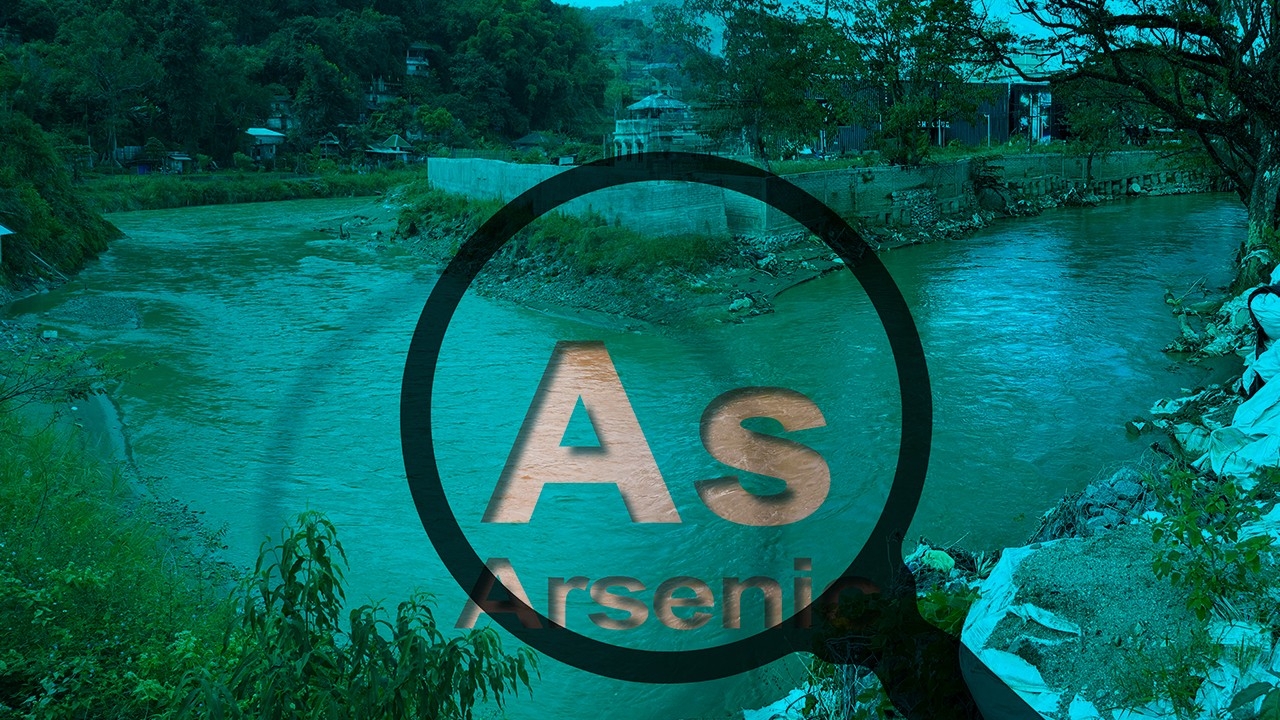
Uncovering the "chemical trade and ore purchase" network sustaining Myanmar mines, the source of arsenic flooding northern rivers! The government is preparing strong measures to block activity at border checkpoints.
The transboundary pollution crisis in northern river basins, especially the Sai and Kok rivers in Chiang Rai province, has revealed arsenic contamination far exceeding standards. This is not merely an environmental tragedy transmitted from neighboring country mines; a deeper investigation into cross-border trade routes exposes a shocking reality: key players sustaining these illegal, untreated mines have direct links to companies within Thailand.
Reports reveal a gray market business across the Chiang Rai border areas—Mae Sai, Tachileik, and Chiang Saen port—showing over 50 private Thai companies involved in the supply chain for rare earth and lead mining in Myanmar’s Shan and Kayah states in a "back-and-forth" manner.
Outbound Exporting chemicals for rare earth and metal mining in Myanmar, mostly leased or controlled by Chinese investors or local armed groups, involves injecting concentrated chemicals directly into soil and mountains to leach and extract ores without containment ponds or wastewater treatment. Thailand exports mining chemical products to Myanmar worth over 3.3 billion baht (more than 100 million U.S. dollars annually), especially sodium cyanide, which accounts for 70% of total export volume to Myanmar.
This also includes concentrated acids, ammonium sulfate, mineral additives, and ammonium nitrate.
Return Raw ore influx: After chemicals leach the rock layers releasing arsenic and lead into headwater streams flowing into Thailand, the extracted raw ore is sent back and sold through brokers and importers in Thailand. In the first nine months of 2026 alone, Thailand imported important ores from Myanmar valued over 13.9 billion baht, before transporting them via Laem Chabang port to China.

A major question raised by society is why hazardous chemicals like sodium cyanide and concentrated acids can so easily cross border checkpoints?
Government mechanism reviews have identified two major loopholes.
Lack of traceability system: Although some chemicals are classified as hazardous substances category 3, upon export or transit permission, there is no verification of end-user accounts to confirm if chemicals are used in legally authorized mines or illegal polluting mines.
Transit goods legal gap: Some chemicals are imported from third countries using Thailand as a "transit" route to Myanmar, reducing the effectiveness of normal export control laws.

Following the escalating public outcry from Chiang Rai and Chiang Mai residents, with 94 at-risk people found to have arsenic accumulation beyond reference levels, the government under Prime Minister Anutin Charnvirakul has elevated the issue to an urgent agenda. Deputy Prime Minister Prof. Dr. Yossanan Wongsawat was assigned to lead an integrated team alongside the National Security Council (NSC) and Ministry of Natural Resources and Environment.
The "strong measures" the government plans to apply to curb chemical exporters and control this cycle consist of four main actions.
Control measures | Lead agencies | Enforcement details |
1. Ban export and transit of precursor chemicals | NSC / Ministry of Defense / Ministry of Commerce | Compile a list of chemicals and mining precursor substances (e.g., rare earth extractants, cyanide) to present at Defense and NSC meetings to immediately ban export and cross-border transit to Myanmar. |
2. Screen exporter company list | Ministry of Commerce / Customs Department | Review data of companies exporting precursor chemicals to neighboring countries. If a company’s chemicals are found supporting polluting cross-border mines, its export license will be suspended immediately. |
3. Close legal loopholes on transit goods | Ministry of Commerce / Ministry of Industry | Review regulations on transport of transit goods from third countries, and tighten import controls on ores from Myanmar, requiring traceability to prove they do not originate from illegal mines. |
4. Declare pollution control zone & trilateral negotiations | Ministry of Natural Resources / Ministry of Foreign Affairs | Prepare to declare a 150 km stretch along the Kok River as a pollution control zone, and open trilateral talks among Thailand, Myanmar, and China (24–26 Nov) to pressure closure or regulation of source mines. |
