

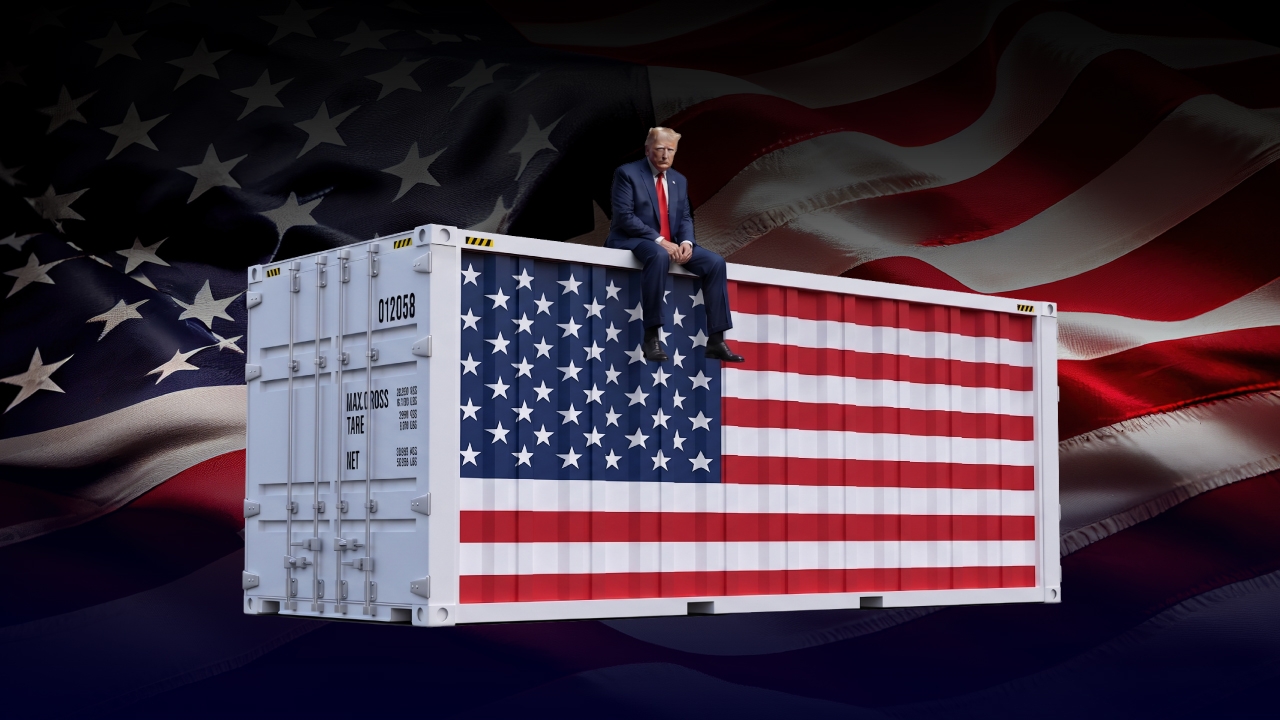
A significant shockwave has impacted the global trade economy as the Donald Trump administration moves forward with new tariff measures aimed at curbing market oversupply and reclaiming U.S. manufacturing bases amid a trade war spreading to ASEAN, including "Thailand," which has been assigned a top tariff rate of 18%.","tags":["trade war","tariffs","Thailand","ASEAN","global economy"]},{
On 25 Nov 2026, the U.S. Trade Representative (USTR) announced the results of an investigation under Section 301 of the 1974 Trade Act after collecting data for eight months to establish a new set of tariff barriers replacing those the U.S. Supreme Court annulled in February earlier this year."tags":["USTR","Section 301","tariff investigation","trade law","USA"]},{
The main justification cited by the U.S. is "Structural Excess Capacity," accusing 14 economic zones—China, the European Union, Singapore, Switzerland, Indonesia, Malaysia, Cambodia, Thailand, South Korea, Vietnam, Taiwan, Bangladesh, Japan, and India—of market-distorting tactics, including government subsidies, wage suppression, and serving as export bases to circumvent tariffs for non-market economy (NME) countries like China."tags":["structural excess capacity","trade distortion","NME countries","tariff avoidance"]},{

An economic development plan overly focused on manufacturing and exports.","tags":["economic policy","manufacturing","exports"]},{
Persistent barriers to market access for U.S. products.","tags":["market access","trade barriers","U.S. exports"]},{
The government provides special-condition loans and supports the industrial sector.","tags":["government support","industrial loans","industry"]},{
Insufficient labor protection.","tags":["labor protection","worker rights"]},{
Failure to address global excess production issues and allowing excessive investment from NME countries.","tags":["overproduction","foreign investment","NME countries"]},{

The U.S. views these behaviors as disadvantaging American exporters, causing domestic job losses, and increasing supply chain security risks in electronics, automotive, and machinery sectors, leading to an initial tariff ceiling proposal divided into three major groups.","tags":["U.S. exporters","job loss","supply chain","tariff groups"]},{
Country / Economic Zone Groups","tags":["trade groups","economic zones"]},{ | Maximum Tariff Ceiling Proposed by USTR","tags":["tariff ceiling","USTR proposal"]},{ | Additional Conditions","tags":["trade conditions"]},{ |
Vietnam","tags":["Vietnam"]},{ | 35%","tags":["tariff rate"]},{ | May be reduced to 20% if ART agreement is reached","tags":["tariff reduction","ART agreement"]},{ |
India","tags":["India"]},{ | 25%","tags":["tariff rate"]},{ | May be reduced to 17% if ART agreement is reached","tags":["tariff reduction","ART agreement"]},{ |
China / Singapore","tags":["China","Singapore"]},{ | 20%","tags":["tariff rate"]},{ | Singapore’s rate may be reduced to 10% if negotiations succeed","tags":["tariff reduction","Singapore"]},{ |
Thailand / Malaysia / Indonesia / Cambodia / Bangladesh","tags":["Thailand","Malaysia","Indonesia","Cambodia","Bangladesh"]},{ | 18%","tags":["tariff rate"]},{ | Considering ART framework (some product exceptions apply)"tags":["ART agreement","tariff exceptions"]},{ |
European Union / Japan / South Korea / Taiwan / Switzerland","tags":["EU","Japan","South Korea","Taiwan","Switzerland"]},{ | 15%","tags":["tariff rate"]},{ | Main allies and trade partners","tags":["trade partners","alliances"]},{ |
"Thailand’s Perspective" – Commerce Ministry Views 18% as a "Advantage" to Avoid a Harsh 25% Rate","tags":["Thailand","Commerce Ministry","tariff advantage"]},{
Amid exporter concerns, Ms. Supachai Sutthampan, Deputy Prime Minister and Minister of Commerce, revealed that the 18% figure "is as expected" and represents a strategic success for Team Thailand.","tags":["Supachai Sutthampan","Thailand government","tariff strategy"]},{
No increase from the previous rate: The 18% ceiling includes the previous Section 301 tariffs related to forced labor cases; it is not an additional rate imposed on top of existing tariffs.","tags":["tariff ceiling","Section 301","forced labor"]},{
Result of ART signing: The Thai Prime Minister’s decision to sign the Joint Statement on the Agreement on Reciprocal Trade (ART) with the U.S. on 17 Nov 2026 during the ASEAN Summit in the Philippines placed Thailand in a group with Malaysia, Indonesia, and Cambodia, all facing the same 18% ceiling.","tags":["ART agreement","Thailand-U.S. relations","trade summit"]},{
Avoiding a 25% punitive rate: The draft investigation results clearly state that if Thailand fails to conclude negotiations or meet obligations, it could face tariffs as high as 25%, putting it at a 7% disadvantage compared to ASEAN neighbors. Compared to key competitor Vietnam, which has yet to close an ART deal and faces a 35% ceiling, Thai products maintain a clear competitive edge.","tags":["punitive tariff","ASEAN trade","competitive advantage"]},{
A 3 trillion baht stake in Thailand’s top export market: The 18% figure is highly significant for Thailand’s economic lifeline, as the U.S. is the country’s number one export market valued at 2.37 trillion baht in 2025 (25% of total exports), expected to reach 3 trillion baht in 2026. It also protects agricultural exports worth over 170 billion baht (excluding rubber products valued at over 160 billion baht) and supports over 1.25 million domestic jobs.","tags":["export market","U.S. trade","agriculture exports","employment"]},{
The 18% tariff ceiling is not immediately enforced; Thai exporters continue paying the existing 12.5% tariff until the final investigation results are announced. Key upcoming dates include:","tags":["tariff enforcement","trade timeline"]},{
5 Jan 2027: Deadline for USTR to receive written public comments","tags":["public consultation","USTR timeline"]},{
25 Jan 2027: Public Hearing before final results are announced","tags":["public hearing","trade investigation"]},{
Thailand’s plan moving forward: Team Thailand intends to use these forums to clarify that the country has no market-distorting subsidy policies and complies with WTO rules, aiming to negotiate the actual tariff rate below the 18% ceiling as much as possible. This will include legal refinements, cabinet approval, public consultations, and parliamentary ratification of the ART agreement for enforcement.","tags":["trade negotiations","WTO compliance","Thailand strategy"]}]}]}]}]}]}