

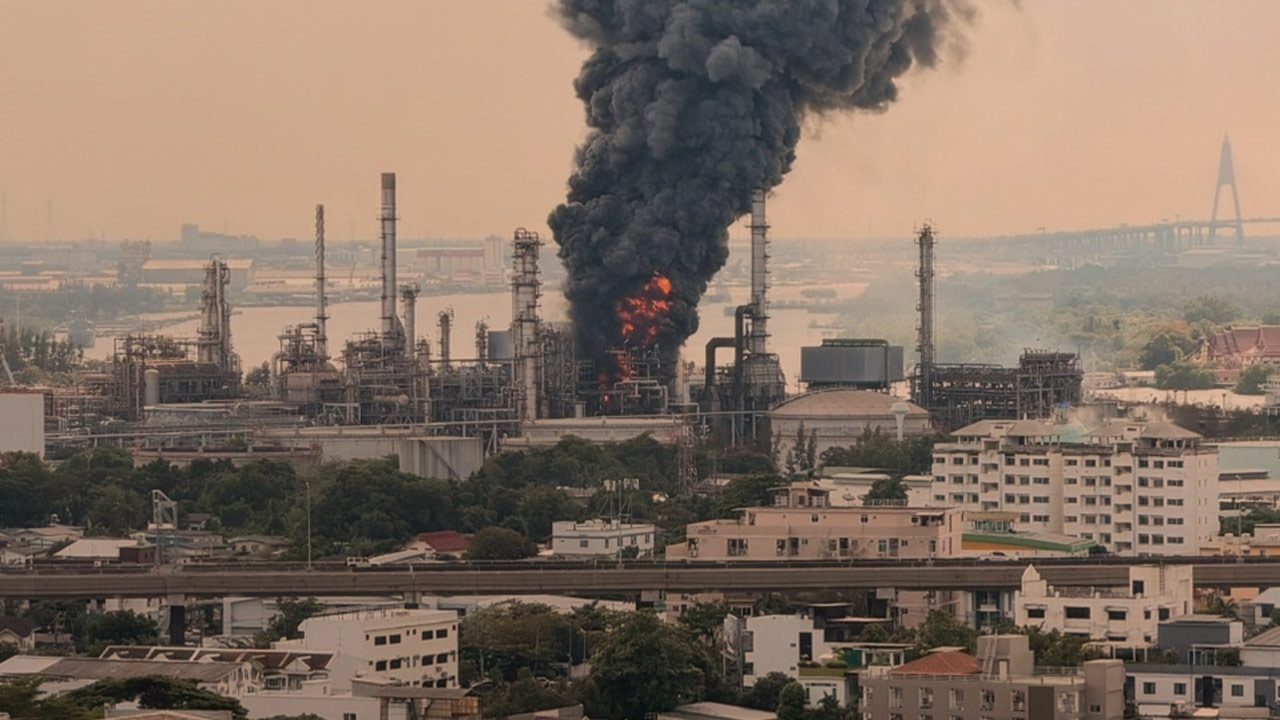
Monitoring residual dust and smoke from refinery fire; authorities warn residents within 1 km downwind to tightly seal homes and watch for abnormal symptoms.
A fire occurred at a Sukhumvit 62 oil refinery. The company confirmed the situation is now under control and air quality around the area is normal. However, experts warn of silent dangers from carcinogens and toxic gases, urging residents within 1 km to take urgent protective measures.
The alarming fire at an oil refinery in Phra Khanong on the afternoon of 26 Nov 2026 caused concern among nearby residents and condominium occupants. The company issued a second statement confirming the fire is under control. Meanwhile, environmental experts revealed detailed information about the fire’s origin and hidden pollution risks that nearby residents must closely monitor.

At 15:45 on 26 Nov 2026, the Corporate Image and Communications Department of Bangchak Corporation Public Company Limited released a second progress report on the fire at Bangchak Oil Refinery in Phra Khanong. It stated the situation is now fully controlled. The refinery has temporarily halted all production units to ensure maximum safety. Air quality tests around the refinery showed normal levels. The company promised to promptly inform the public of any updates.
Although the fire situation has eased, Dr. Sonthi Kotchawat, an environmental and health scholar from the Thai Environmental Scholars Association, said the fire did not occur in the "oil storage" area but in the auxiliary equipment of the oil distillation tower, which includes pumps, heat exchangers, reflux boilers, sensors, and various pipes.
Combustion of this equipment causes more severe and complex air pollution than typical fires, including:
Particulate matter and soot, including hazardous PM 2.5 dust from incomplete hydrocarbon combustion, which directly affects visibility and respiratory health.
Toxic gases such as sulfur dioxide from sulfur in crude oil, nitrogen oxides, carbon dioxide, carbon monoxide, and hydrogen sulfide gas released alongside crude oil vapors.
Volatile organic compounds and carcinogens like benzene, toluene, xylene, and polycyclic aromatic hydrocarbons (PAHs), which are highly hazardous to health and long-term cancer-causing substances.
Water impacts: Wastewater and firefighting foam, which decompose slowly, may wash hydrocarbons and heavy metals into nearby water sources, posing contamination risks.

Experts estimate the smoke and toxic substances will spread and affect an area roughly 1 km in radius, mainly downwind. In calm weather, these toxins settle near the ground and accumulate to levels easily inhaled by residents.
Urgent recommendations for residents in the surrounding area include the following:
Evacuate or avoid the area: Those within 1 km downwind should temporarily leave the area if possible.
Seal buildings tightly: Residents in nearby houses and condominiums should close all doors and windows firmly to prevent toxic gases and chemical vapors from entering indoors.

Wear protective masks: If going outside is necessary, wear N95 masks to filter toxic dust and reduce inhalation of chemicals. If unavailable, use medical masks as a temporary substitute.
Watch for warning signs: If symptoms such as dizziness occur—caused by carbon monoxide displacing oxygen in red blood cells and reducing oxygen to the brain—nasal congestion, chest tightness, or breathing difficulty arise, leave the area immediately and seek medical attention, as these indicate the body is absorbing toxins.