

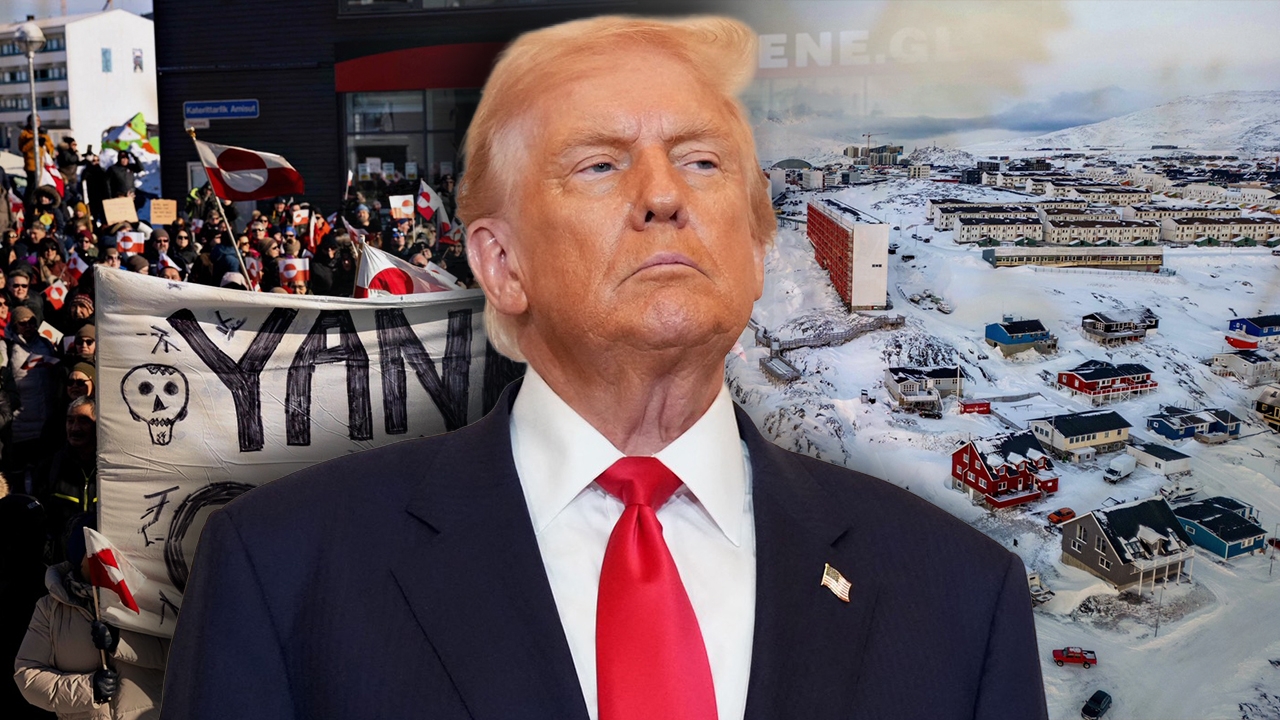
Trump's multi-year pursuit to acquire Greenland has strained ties with NATO allies, including threats to raise tariffs by 10-25% to pressure eight opposing countries. Meanwhile, the European Union is preparing retaliatory measures, which may include the Anti-Coercion Instrument (ACI).
Relations between the United States and several European nations have grown highly strained following President Donald Trump announcing his intent to acquire Greenland, a self-governing territory under Denmark. This announcement met widespread opposition from the international community, particularly Denmark and the European Union, long-standing close U.S. allies. The move risks destabilizing Western Hemisphere relations and affecting broader geopolitical dynamics.

This is not the first time President Donald Trump has expressed a desire to incorporate Greenland into the United States; he has mentioned the idea multiple times over several years.
In 2019, during his first presidential term, Trump publicly proposed buying Greenland. However, both the Danish and Greenlandic governments firmly rejected the proposal, stating "Greenland is not for sale."
Interest resurfaced after Trump's return to the White House in January 2025. The U.S. government's stance became clearer when Vice President JD Vance visited Greenland in March and criticized Denmark for insufficient investment in protecting and defending the territory.
Later in 2025, Trump appointed Jeff Landry as special envoy for Greenland, signaling a concrete political agenda to integrate Greenland into the U.S. This appointment underscored that the issue was more than symbolic rhetoric, elevating it to an official policy priority.
On 3 January 2025, following U.S. operations in Venezuela and the capture of Venezuelan leader Nicolás Maduro and his wife for drug-related terrorism charges, international concern grew over whether the U.S. might undertake similar operations elsewhere, especially in Greenland, as signaled by Trump.
These concerns materialized when, on 6 January 2026, the White House released a statement confirming that President Donald Trump had discussed various options for seizing Greenland, including military force. The statement emphasized that acquiring Greenland was a top priority for national security, prompting global backlash, particularly from the European Union.

On 17 January 2026, President Trump threatened to raise import tariffs on goods from eight countries opposing the Greenland acquisition, all NATO members. These countries belong to the North Atlantic Treaty Organization (NATO). They are Denmark, Norway, Sweden, France, Germany, the United Kingdom, the Netherlands, and Finland. The tariff increases would occur in two phases: a 10% tariff starting 1 February, rising to 25% on 1 June if no agreement on Greenland is reached.
Most recently, on 19 January 2026, EU leaders scheduled an emergency meeting in Brussels on Thursday (22 January) to discuss responses. One option under consideration is reinstating retaliatory tariffs on U.S. imports worth €93 billion (about 3.4 trillion baht), potentially automatically effective from 6 February after a six-month suspension.
Another option being evaluated is the use of the "Anti-Coercion Instrument" (ACI), a tool never before deployed, designed to counter economic coercion against the EU. It covers restrictions on public procurement, investment, banking activities, and service trade—particularly significant as the U.S. holds a trade surplus with the EU in services, especially digital services.
The eight countries threatened with import tariffs issued a joint statement affirming support for Denmark and the people of Greenland. They emphasized that, as NATO members, all are committed to strengthening security in the Arctic region, a shared interest across the transatlantic alliance.
The statement also warned that tariff threats undermine transatlantic relations and risk rapidly escalating into an uncontrollable conflict.

Greenland is the world's largest island, located in the Arctic region, spanning about 2.2 million square kilometers. Positioned between North America and the Arctic, Greenland holds immense strategic value as a site for early-warning systems against missile attacks and for monitoring maritime and military activities in the Arctic.
Beyond security, Greenland is closely watched as a source of vital natural resources. In recent years, interest in the island's rare minerals, uranium, iron ore, and potential large reserves of oil and natural gas has grown steadily.
These strategic resource considerations align with Trump's geopolitical and economic security focus on global resource areas, such as Ukraine. However, Trump has repeatedly emphasized "We want Greenland for national security, not because of minerals."
He has also frequently warned of threats from rival powers, cautioning that if the U.S. does not take a role in Greenland, Russia or China might fill the void, affecting the Arctic's balance of power and long-term global security.
