

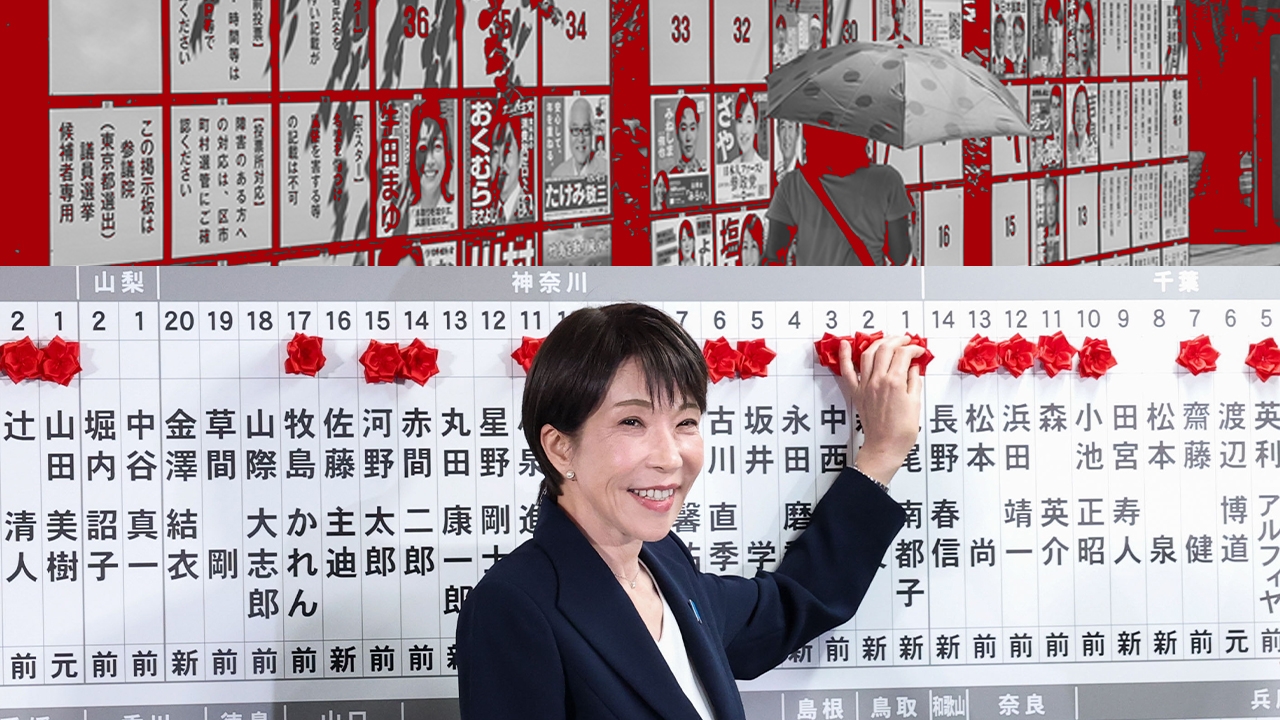
Examining the timeline after Japan's 2026 election, which was held on the same day as Thailand's. Official results have been declared, and preparations are set for a parliamentary session to elect the prime minister on 18 February.
Following Thailand's general election for the House of Representatives on 8 February, four days later on 12 February, although preliminary results indicating which parties won in which areas and how many seats each secured are known, the Election Commission has yet to officially certify the results. Meanwhile, it faces several challenges, including requests for recounts in multiple districts, public protests preventing ballot box movements, and allegations of "ballot discrepancies." "Ballot discrepancies." The vote counts displayed on the Election Commission's website or official notices do not match in number.
Meanwhile, if we turn to another country that held its general election on the same day as Thailand, "Japan," the new government has taken shape and preparations are underway to convene parliament to elect the prime minister. What is the timeline following Japan's election? Thairath Online outlines


Prime Minister Sanae Takaichi's sudden decision to dissolve parliament proved a highly effective political move, resulting in a landslide victory in the 8 February 2026 general election.
Data from NHK television indicates the coalition led by the LDP won 352 of 465 seats in the House of Representatives. The LDP alone secured 316 seats, an increase of 198 seats from before, holding more than two-thirds of the chamber—an unprecedented achievement for any party since World War II. This is the highest number since the party's founding in 1955 and breaks the previous record of 300 seats set by former Prime Minister Yasuhiro Nakasone in 1986.
Together with the Japan Innovation Party's 36 seats, the coalition holds a solid 352 seats. The opposition collectively has 113 seats, resulting in strong legislative stability and smoothing the path for important legislation.
This victory is especially notable because Takaichi, as Japan's first female prime minister, dissolved parliament only four months after becoming party leader to seek direct public endorsement. She declared she would resign if unable to maintain a majority, making this election a high-stakes gamble.
This success contrasts with her two predecessors, whose parties lost majorities due to scandals and cost-of-living pressures. In 2024, the LDP lost its majority in both houses, ending its long-standing alliance with the Komeito party. The overwhelming return to majority power signals a clear political revival.

With a strong new mandate, Takaichi pledges to accelerate policies she calls "responsible and proactive fiscal policy." She invites opposition cooperation on issues where consensus can be reached. A key policy is a proposed two-year exemption of consumption tax on food items, which she wants parliament to consider swiftly, aiming to report progress before this summer.
When asked about cabinet reshuffles, Takaichi confirmed that the current cabinet remains effective. "It has been just over three months, but everyone has worked hard and produced results, so there are no plans to change." However, she left open the possibility of considering positions for coalition partners such as JIP if proposed.
She also announced her intention to push for constitutional revisions, which have never been amended since taking effect in 1947. She plans to compile key issues and past debates to propose amendments and create conditions for a referendum soon. Although the government holds over two-thirds in the House of Representatives, it does not meet that threshold in the House of Councillors, requiring further political negotiation.
The government's victory contrasts sharply with the main opposition, the Centrist Reform Alliance, which lost over 100 seats from its previous 172. This party was recently formed by merging two parties before the election. Its leader has announced intentions to resign amid a review of the party's political direction.
Overall, the election results not only reinforce Takaichi's power but also open a new chapter in Japanese politics, with the government having strong leverage to advance structural reforms and economic measures directly affecting people's lives.

Following her election victory, Sanae Takaichi acknowledged congratulatory messages from several world leaders on platform X on 9 February 2026, expressing gratitude. To U.S. President Donald Trump, for his "warm and encouraging congratulations," stating she looks forward to working closely with Trump to promote peace, strength, and prosperity for both countries.
Besides the U.S., Takaichi also received congratulations from key leaders including Indian Prime Minister Narendra Modi and Australian Prime Minister Anthony Albanese, reflecting Japan's role as a central actor in regional and global cooperation under the new government.
Meanwhile, China issued a stern response, with its Ministry of Foreign Affairs urging Takaichi to retract statements regarding Taiwan and emphasizing that Beijing's policy toward Tokyo will not change because of the election results.
"We call on Japan's authorities to seriously consider the concerns of the international community rather than ignore them, and to choose a path of peaceful development instead of repeating militaristic mistakes," said spokesperson Lin Jian of the Chinese Ministry of Foreign Affairs.