

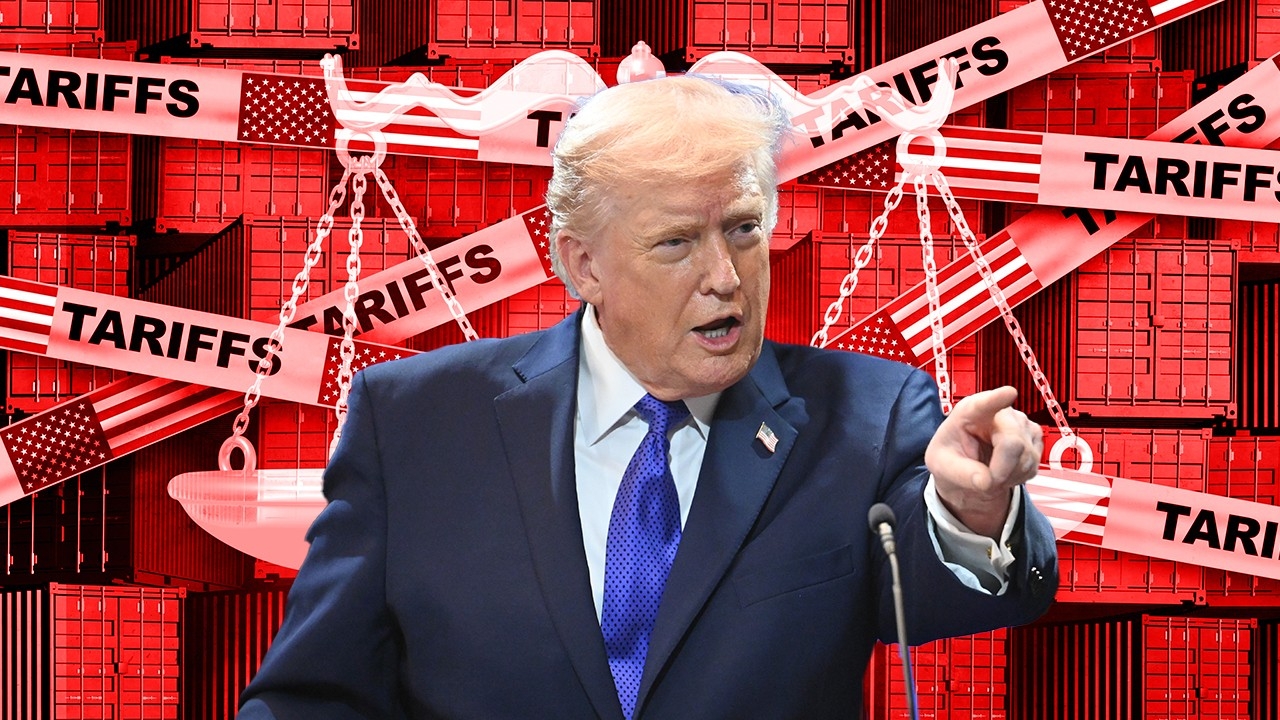
Examining the impact and future path of the "Trump tariffs" after the U.S. Supreme Court's annulment, highlighting that Trump exceeded his authority and responded by invoking Section 122 to impose a new 15% tariff rate. What should Thailand do next?
On 20 Feb 2026 at approximately 10:00 a.m. local time, the U.S. Supreme Court issued a 6-to-3 ruling that the "Trump tariffs" or reciprocal tariffs imposed by President Donald Trump at varying rates on different countries, which caused global disruption, were "unlawful." The Supreme Court ruled that President Trump’s use of authority under the International Emergency Economic Powers Act (IEEPA) to set tariff rates on various countries exceeded his powers, as the law does not grant the president direct authority to impose import tariffs but rather the power to
"control imports," such as conducting investigations or blocking imports pending investigation. The terms "Tariffs" or "Duties" do not appear in the statute. According to the U.S. Constitution, the power to levy taxes rests with Congress. This ruling means that tariff measures or orders issued under IEEPA lack immediate enforceability, affecting prior trade agreements the U.S. made with other countries and allowing importers or affected consumers to
claim refunds for tariffs paid since April 2025, totaling over $130 billion (approximately 4.1 trillion baht). However, the Supreme Court did not order automatic refunds but referred the matter to the
U.S. Court of International Trade (CIT) for remedial consideration. This process is expected to take several years. Meanwhile, hundreds of companies have reportedly begun filing lawsuits seeking refunds. From IEEPA to Section 122

Section 122 of the Trade Act of 1974, which temporarily addresses severe international payment imbalances or trade deficits. Following the Supreme Court ruling, the White House announced a 10% import tariff on all products from all countries worldwide, effective from midnight 24 Feb. Under the law, Section 122 tariffs may be set up to a maximum of 15%, with enforcement limited to 150 days (about 5 months) unless extended by Congressional approval. Subsequently, on 21 Feb, President Trump announced via Truth Social that he would raise the tariff
to the maximum ceiling of 15%. Certain goods are exempt from tariffs under Section 122, including energy, energy products, pharmaceuticals and their components, semiconductors, some electronics and aerospace products, metals used in coinage and gold bars, among others.
Additionally, products already subject to tariffs underSection 232(of the Trade Expansion Act of 1962, allowing the president to impose trade measures on certain products affecting national security without a fixed time frame but requiring investigation before enforcement), such as steel and aluminum, will not be doubly taxed under Section 122.
However, some products like semiconductors and pharmaceuticals may face additional Section 232 tariffs, so it remains to be seen whether, after the 150-day period, Trump will adopt further measures or substitute other tariff policies for reciprocal tariffs. Impacts arising 1. Effects on existing tariff rates and bilateral agreements
Because of the Supreme Court ruling, trade agreements, privileges, or tariff reductions the U.S. previously negotiated with partner countries under IEEPA

Many countries that negotiated reciprocal tariff reductions with Trump and secured rates below the 15% Section 122 ceiling, such as the UK and Australia at 10%, or ASEAN neighbors like Singapore who obtained a 10% rate from the start, may suffer negative effects due to increased tariffs. However, Thailand, still negotiating with an original rate of 19%, may benefit.
Nevertheless, the White House has stated it "will continue to honor legally binding reciprocal trade agreements." It remains unclear whether the U.S. expects trading partners to pay higher tariffs under Section 122 while preserving some previous agreement terms; no further clarity has emerged.
Paul Ashworth, Chief North America Economist at Capital Economics, noted that Section 122 clearly requires tariffs to be "applied without discrimination," implying previous agreements are likely to be affected.
2. Increased global trade turmoil due to uncertainty William Bain, Head of Trade Policy at the British Chambers of Commerce (BCC), said there are many questions about what comes next. Businesses are concerned and fatigued by changes and uncertainty over tariff rates, impacting product pricing for the U.S. market. Allie Renison, former UK government trade advisor, described the situation as making trade
"messier,"
with businesses facing inconsistent tariff measures under the Trump administration.
3. Potential use of other tariff measures It remains uncertain whether President Trump will invoke other legal powers to impose tariffs beyond Section 122. Bernard Yaros, a U.S. economist, pointed out that Trump previously used Section 232 to impose industry-specific import tariffs, such as 25% on steel and 10% on aluminum, affecting many countries during his first term. Reports indicate the Commerce Department is investigating tariffs on pharmaceuticals, semiconductors, key minerals, and aircraft, which could play a significant role in 2026.
4. Confusion in U.S. customs systems
On 23 Feb, reports indicated that U.S. Customs and Border Protection (CBP) has not yet updated the Cargo Systems Messaging Service (CSMS) to remove the reciprocal tariffs imposed by President Trump, stating it is coordinating with other government agencies to thoroughly assess the court ruling’s impact and will announce updates promptly. Consequently, some importers continue to declare IEEPA tariff codes initially to avoid shipment disruptions.
5. Impact on U.S. consumers

U.S. consumers bear higher prices on some goods due to increased import costs from tariff policies. The Budget Lab research center at Yale University estimated that tariffs initiated by President Trump last year shifted 31-63% of tariff costs onto consumers through higher prices.
This aligns with data from the New York Federal Reserve released earlier this month, showing that U.S. businesses and consumers absorb nearly 90% of increased tariff costs.
Policy uncertainty in U.S. tariffs also leads manufacturers to diversify sales to markets with more stable policies, such as expanding to Europe or the growing Indo-Pacific region, potentially causing long-term effects by reducing U.S. consumer product choices.
What should Thailand do next? Senior researcher Dr. Salilathorn Thongmeensuk from TDRI stated that, practically, Thai businesses need to take the following steps: 1. Carefully verify product classifications at the 10-digit HS code level to assess which items fall under Section 122 exemptions and whether other applicable tariffs remain in effect.
2. Develop detailed cost models reflecting the impact of measures during the 150-day period, as these affect pricing and contract management with partners. 3. Check import dates since Section 122 applies to goods "entered for consumption" in the U.S. after the effective date, not based on departure from Thailand or contract signing. Goods in transit may be subject to tariffs if the CBP entry date falls within the 150-day enforcement period. 4. Companies should coordinate with U.S. importers on objections and refund claims, preparing complete sourcing and production data, correct product classifications, and transparent cost documentation to support litigation at both CBP and court levels.
Dr. Salilathorn emphasized that while the Supreme Court ruling ends the previous use of IEEPA, it does not eliminate the possibility of future tariffs. The U.S. tax system operates under increasingly complex legal instruments, with political approval processes likely playing a larger role, so policy uncertainty remains.

"Thailand, still negotiating with a prior rate of 19%, appears to have escaped, now facing only 10% like other countries." He further noted that although the law allows a maximum rate of 15%, Trump chose 10%, suggesting his announcement was more about saving face than serious tariff collection. Extending beyond 150 days requires Congressional approval, which is difficult due to legal interpretation issues. Mr. Korn added that Thai exports might improve, especially since Trump exempted many products such as foods that cannot be produced domestically, some electronics, and certain pickup trucks. However, Thailand’s economic problems relate more to weak domestic purchasing power, low credit availability, and debt repayment risks in households and businesses.
Regarding foreign affairs, he warned that Trump might try to save face through decisions escalating tensions with Iran, which could be positive if resolved by negotiation but disastrous if military force is used.
Sources: TDRI, BBC, Kasikorn Research, Al Jazeera
