

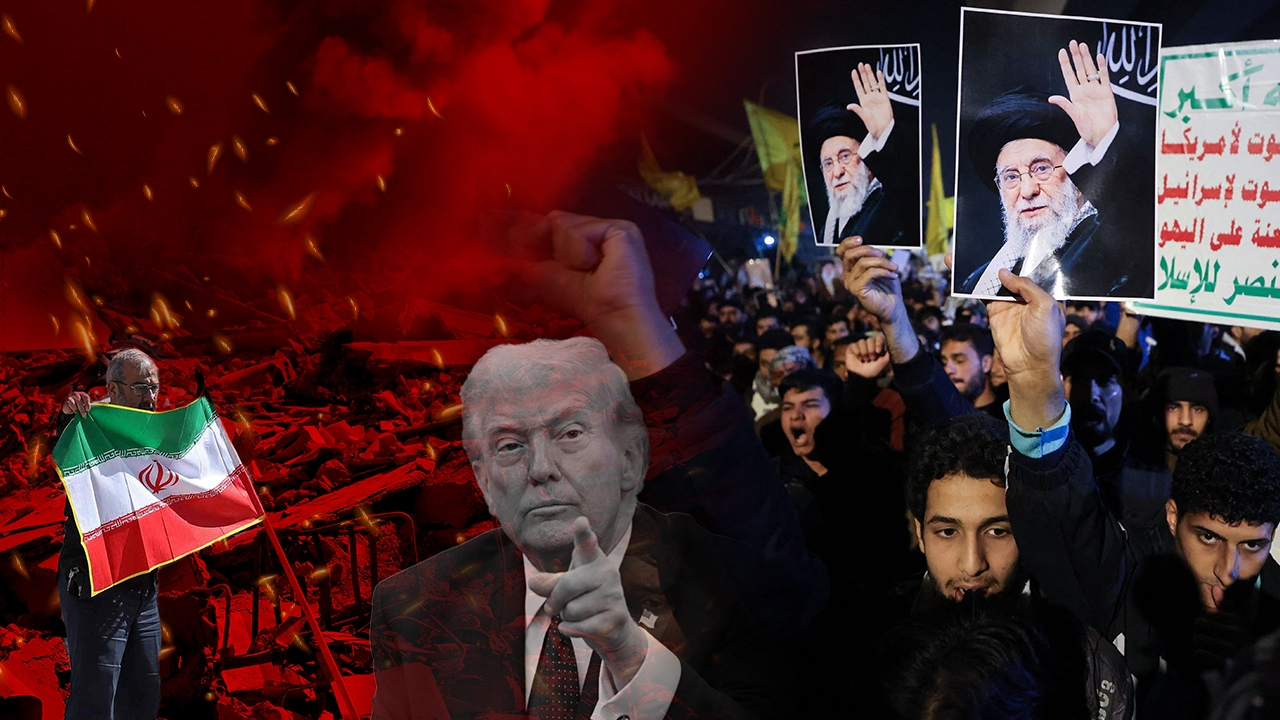
Analyzing why regime change in Iran is more complicated than expected, experts observe that efforts to mobilize Kurdish groups and popular resistance have proven ineffective. If the war drags on, the U.S. risks significant setbacks.
: The United States and Israel launched attacks on Iran starting February 28, killing Ayatollah Khamenei, the Supreme Leader of Iran, along with over 40 senior military and political figures. The attacks were justified as measures to eliminate nuclear threats after off-the-record negotiations failed, triggering ongoing retaliations and escalating clashes.
It is believed that the U.S. and Israel's ultimate objective might be to topple the Iranian regime to prevent Iran from posing future threats. This is reinforced by reports that the CIA has supported arming Kurdish groups to incite internal uprisings within Iran. Most recently, on March 5, President Trump emphatically stated that the U.S. must have a role in selecting Iran's Supreme Leader.

However, overthrowing Iran's regime may not be as straightforward as previous U.S. operations to remove leaders in other countries, such as Venezuela. Ultimately, regime change in Iran might not occur at all. The Thairath Online special reporting team discussed this issue with Dr. Sarawut Aree from the Institute of Asian Studies at Chulalongkorn University.
Dr. Sarawut observes that the conflict is still in its early stages, marked by escalating operations. The situation is expected to intensify. If the war extends beyond the 4-5 weeks previously forecast by the U.S., even though Iran will suffer physical damage, the U.S. will endure greater losses politically and economically.
"The U.S. has made a high-stakes bet because Iran did not initiate this war. The U.S. faces heavy international scrutiny, and ultimately this opens the door for China and Russia to gain advantage and expand their influence in other regions," he said.
Dr. Sarawut assesses that the U.S. does not want a prolonged war and may seek an exit strategy, such as declaring that it has successfully eliminated Iran's Supreme Leader, neutralized nuclear threats, and degraded Iran’s military and missile capabilities—thus achieving its objectives and ending operations.

He believes if the U.S. and Israel truly intend to end the conflict by toppling Iran’s regime or regime change through ground forces or by arming minority groups—as reports suggest the CIA plans to supply weapons to Kurdish factions—this could prolong the conflict. Attention should also be paid to how China and Russia might become involved, and how Europe positions itself regarding the U.S.' role. If the conflict drags on, the likelihood of U.S. setbacks increases, potentially mirroring the costly and prolonged wars in Afghanistan and Iraq, with heavy expenditures, military losses, and political and economic costs, ultimately ending in defeat.
Dr. Sarawut notes that key U.S. politicians currently seem less focused on regime change and more on degrading Iran’s military strength and dismantling the Islamic Revolutionary Guard Corps (IRGC) to weaken the country.
"Since the 12-day war in mid-2025, it’s clear Iran’s weakness lies in air defense. U.S. air operations will likely inflict severe damage. Nevertheless, Iran remains a formidable adversary capable of striking back against U.S. forces in the Middle East within a week, demonstrating a destructive capacity that, while insufficient to win the war, can significantly harm U.S. and Israeli interests," he said. Predictions that Iran’s regime will be toppled are unlikely. At this stage, it appears the U.S. cannot successfully incite or force regime change through this war. Dr. Sarawut points to key factors: although some Iranians dislike the current regime, they reject Western intervention.
Furthermore, recent attacks that destroyed elementary schools and killed many children have strengthened public perception that cooperating with Western powers threatens their children’s future. The Iranian (Persian) people have a strong sense of nationalism and pride in their ancient civilization, making them resistant to foreign domination.
At the same time, arming
Iranian Kurdish movements
is problematic because this is a minority group with limited numbers and power, currently based in northern Iraq with no ability to operate effectively inside Iran. Fighting against Iran’s large military and IRGC is highly challenging.

Similarly, many Iranians still support the current regime, partly due to religion, which binds the state and people together. Many Iranians view the
"Ayatollah" or "Supreme Leader" as a sacred religious figure governing on behalf of the awaited "Al-Mahdi" or "the final Imam," believed in Islam to bring justice to the world. Consequently, with such beliefs widespread, uprisings to overthrow the Supreme Leader are difficult, maintaining the regime's strength and resilience against internal movements. "I believe the U.S. goal of regime change will definitely not be achieved. The IRGC and Iran’s military remain united, and the population does not support it. What will happen is the U.S. striving to weaken Iran as much as possible, stripping its potential to become a dominant regional player again," he concluded. Challenges to resuming negotiations.
Dr. Sarawut explains that the current period involves the transition of leadership from Ayatollah Khamenei to a new Supreme Leader, likely a
"conservative figure,"

Additionally, Iran’s allied armed groups—such as Hezbollah in Lebanon, the Houthis in Yemen, and Shiite militias in Iraq—hold strong respect for Iran’s Supreme Leader and are enraged by the assassination events. They are expected to mobilize alongside Iran in retaliation, raising concerns about the conflict expanding into a regional war. "The conflict between Israel and Iran has lasted over 40 years, involving both proxy wars
and covert wars," with assassinations and attacks undermining each side's interests. Proxy wars occur mainly in the Middle East, while covert wars can happen globally and require close attention, as attacks on embassies, assassinations, and bombings may intensify beyond past levels.