

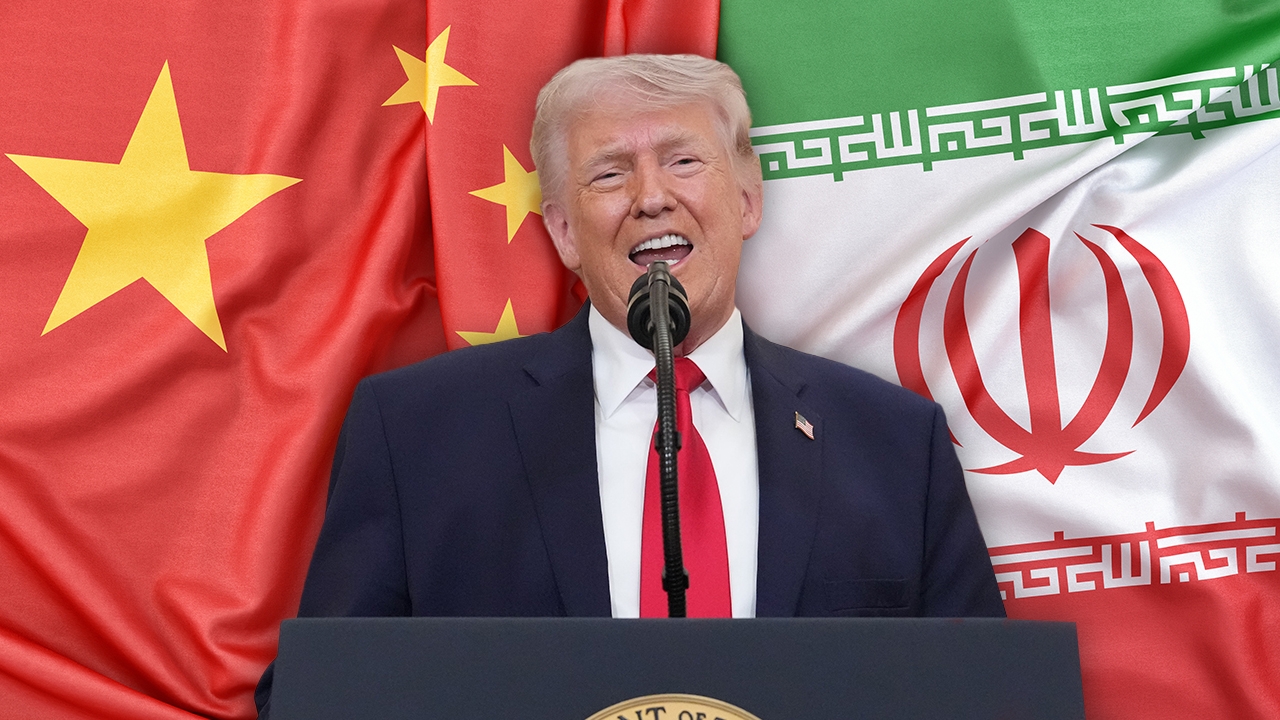
Behind China's role as mediator in the Iran-US ceasefire, attention focuses on the changing face of global powers. It highlights the covert players balancing Trump's influence, assesses Israel as a key variable obstructing negotiations, and suggests that Thailand must create strategic advantages to navigate this landscape.
Iran reached a two-week ceasefire agreement with the United States on the morning of 8 Apr 2025 GMT+7, with reports identifying China as the key intermediary. China, a major power and important trading partner of Iran, played this role, whereas previously Pakistan had been the primary intermediary that the US continuously contacted but failed to secure an agreement through.
Although Iran claimed victory amid the US ceasefire, the crucial middleman was China—an influential, behind-the-scenes actor closely connected with many Middle Eastern nations, especially major oil exporters. Meanwhile, China's role in the Middle East appears poised to grow increasingly prominent.

Opening the Strait of Hormuz ceasefire for two weeks between Iran and the US, Thairath Online's special task force interviewed Dr. Sarawut Aree, a Middle East scholar and director of the Muslim Studies Center at the Institute of Asian Studies, Chulalongkorn University. He analyzed that China’s ability to persuade Iran carries more weight than Pakistan’s, as Pakistan failed to sway Iran.
This is because Iran primarily sells oil to China, making China a major customer, and they also exchange technology, especially in military weaponry. China has provided substantial support to Iran, which has led Iran to feel indebted to China. Moreover, China has implemented the Belt and Road Initiative there, constructing ports and investing heavily in Iran.
When asked if the two-week ceasefire between Iran and the US might lead to renewed conflict, Dr. Sarawut said that long-term peace depends on Israel not obstructing US-Iran negotiations. Israel has long blocked talks between America and Iran, interfering approximately four to five times since 2024. If the US can manage Israel to avoid disrupting the process, an agreement is likely. However, if Israel refuses and provokes confrontation between the parties, achieving peace will remain difficult.

China seeks to portray itself as a peacebuilder in the Middle East, gaining both image and influence. For example, China promoted an agreement between Iran and Saudi Arabia in 2023, and subsequently has tried to push Palestinian-Israeli talks forward, although these efforts have not yet succeeded.
Geopolitically, after this war, many Middle Eastern countries will increasingly turn to China, which emphasizes development, trade, and infrastructure economic projects, in contrast to the US, which focuses on security issues, conflicts, and dividing factions in the region. Consequently, China is likely to be more accepted, and Middle Eastern countries will seek more diverse alliances rather than relying solely on the US as in the past. This trend is expected to emerge following this war.

Regarding Thailand’s stance, since China appears to be strengthening its position in the Middle East, it is important for Thailand to increase its focus on Iran. It is now clear that Iran has become a major power and plays a significant military role in the Middle East region.
Iran remains a land rich in oil and natural gas. If negotiations lead to lifting sanctions on Iran, it could become a treasure trove. Therefore, Thailand should prioritize Iran as much as it does other Middle Eastern countries amid the US-China rivalry.