

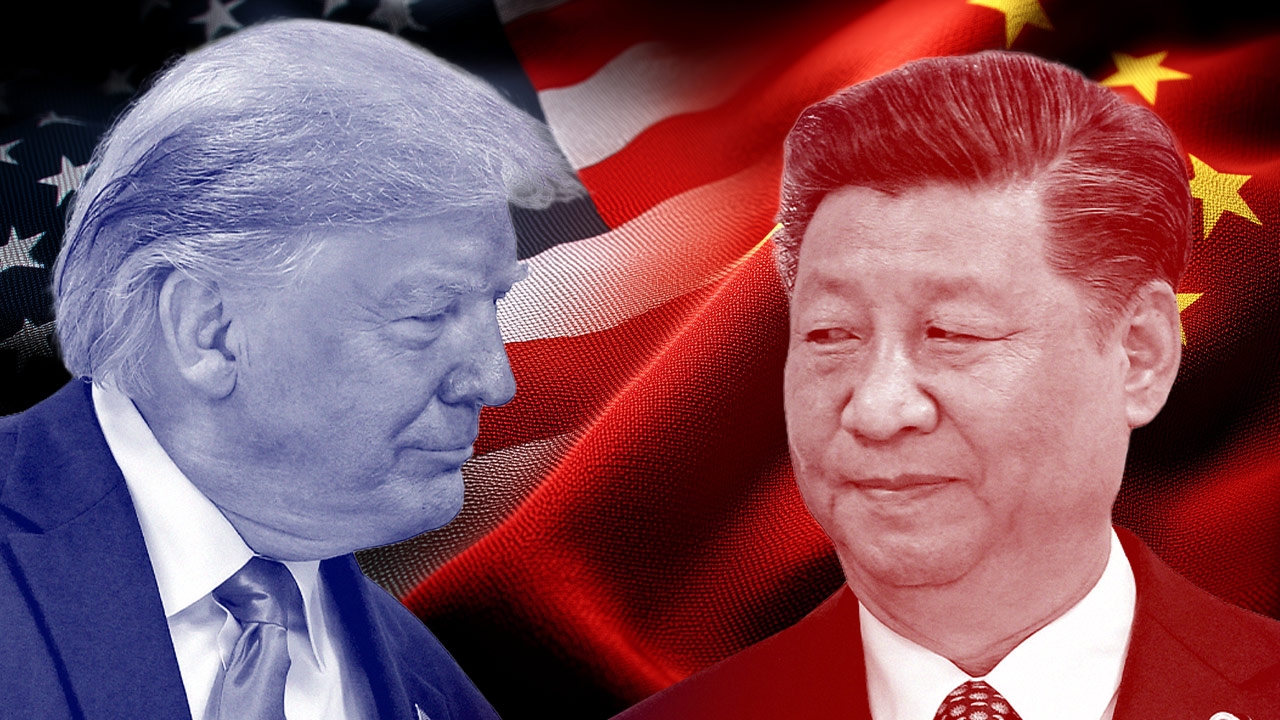
Examining China’s role in the Iran war, scholars view it not as a main decisive player but as a consistent presence that seizes opportunities to underscore the failure of the old world order and hasten the end of the U.S. as the sole superpower.
Regarding the conflict in the Middle East between the U.S., Israel, and Iran, which has lasted over six weeks and impacted the entire world, especially the “energy crisis,” with volatile oil prices due to major Middle Eastern oil producers unable to produce and export normally, many countries have tried to mediate negotiations but have yet to reach an agreement.
Recent developments show that the U.S. began a blockade of the Strait of Hormuz to prevent shipping access to Iranian ports starting 13 Apr. Meanwhile, on 16 Apr., Iran and Pakistan scheduled talks in Tehran after Pakistan proposed acting as a mediator between the U.S. and Iran amid efforts to revive negotiations.
Besides the main actors, the U.S., Israel, and Iran, and key mediator Pakistan, another closely watched party is the U.S.'s rival superpower, China, a major buyer of Iranian oil. President Trump is believed to have played a key role in persuading Iran to agree to a ceasefire on 8 Apr., but China is also accused of secretly providing military support.

China is directly affected by the war as a major buyer of 80-90% of Iranian oil. Additionally, 38% of crude oil and 23% of liquefied natural gas (LNG) from the Middle East passing through the Strait of Hormuz are destined for Chinese ports.
However, the European Council on Foreign Relations (ECFR) believes China has maintained “immunity” against the energy crisis, possessing strategic oil reserves covering 120 days and leading in clean technology and electric vehicles (EVs), reducing its oil dependence compared to other nations.
On another note, China has significant economic cooperation in the region. AidData research at William & Mary University in Virginia, U.S., analyzed infrastructure in the Middle East—including ports, power plants, and oil refineries—valued over $6.5 billion (around 234 billion baht) that have been attacked or are at risk.
China has generally followed traditional diplomatic policies, emphasizing peaceful resolutions based on international principles but responding strongly when its interests are directly affected or criticized.
A notable move is China-Pakistan’s "Five-Point Plan to End the Middle East War," announced on 31 March, calling for an immediate ceasefire, initiation of peace talks, cessation of attacks on non-military targets, safe passage of ships through the Strait of Hormuz, and respect for the United Nations Charter.
Then on 14 April, President Xi Jinping proposed “Four Principles for Peace in the Middle East” during a meeting with Abu Dhabi’s Crown Prince in Beijing, which include:
1. Uphold peaceful coexistence in the Middle East, urging countries to restore good relations for sustainable regional security.
2. Respect national sovereignty without violation, emphasizing security and territorial integrity.
3. Firmly adhere to international principles centered on the United Nations to prevent a return to global chaos.
4. All countries should integrate development with security. China is ready to share its modernization efforts to promote regional progress.

Currently, the White House is closely watching whether China provides military support to Iran. Last week, CNN reported, citing sources, that U.S. intelligence detected China planning to supply a new air defense system to Iran. This prompted President Trump to threaten a 50% increase in U.S. tariffs on Chinese imports, but China denied the claim and warned of decisive retaliatory measures if the U.S. uses this as a pretext for additional tariffs.
Jonathan Fulton, a Middle East scholar at the Atlantic Council in the U.S. and associate professor of political science at Zayed University in Abu Dhabi, analyzed the issue on theAtlantic Council’s website,arguing that because the U.S. and China are global powers, many expect China to be involved in this war, but he disagrees.
Fulton believes China is not a decisive player in the war and does not seek to be. The power to drive the war remains with U.S. decisions, Israel’s strategic calculations, and Iran’s responses. However, this does not mean China is uninvolved; rather, it appears “consistently, in a limited and mostly predictable manner.”
China’s past stance follows traditional diplomacy by maintaining relations with nearly all regional parties and issuing cautious statements. Despite some viewing China as having “influence” in persuading Iran to join peace talks in Pakistan, this has not softened Iran’s hardline negotiation strategy.
Fulton notes that China’s proposed plans or demands are not concrete problem-solving measures but reaffirm principles and the world order China upholds: emphasizing sovereignty, non-interference, resolving issues politically rather than militarily, and avoiding binding China to "take direct action."
The Beijing government typically avoids stances that risk political costs or alienate allies, a consistent approach that also projects China as a “constructive and principled” actor, contrasting with what China calls the
“Western interventionist doctrine.”

“China’s diplomacy is visible but its impact limited, as regional analysts noted in a report I co-published with the Atlantic Council last year, describing China as ‘present but lacking impact,’” Fulton said. He also interprets China’s stance as underscoring two points: first, China emphasizes security due to sensitive economic ties with Middle Eastern countries vulnerable to disruption. Chinese analysts portray the conflict as dangerously escalating, driven by U.S. strategic miscalculations and reckless behavior. The war is described as chaotic, endless, and risking unintended consequences—something Beijing wants to avoid.
Second, China clearly identifies responsibility by blaming U.S. and Israeli actions for escalating violence, while portraying Iran as defensive and retaliatory. This narrative aligns with China’s criticism of U.S. behavior and resonates with many countries bearing economic costs of a seemingly aimless war.
Most importantly, the war is seen as proof of the price to pay for “American hegemony.” Chinese analysts often describe U.S. actions as reckless, legally questionable, and strategically misguided. This conflict is not merely a regional crisis but a chronic problem of the “unipolar world order” in decline.

From this perspective, the war is not an isolated event but a continuation of repeated mistakes, overreach, and miscalculations, reinforcing China’s long-standing claim that “the current U.S.-dominated international system is unstable and unsustainable.”
The ongoing war also accelerates the global shift toward the concept of “multipolarity,” where multiple power centers balance each other—an idea China has consistently promoted.
“This does not mean China orchestrates the events or directly benefits tactically. China’s influence on the conflict remains limited, and its desired outcome of security and de-escalation is far from reality. Strategically, however, the war reinforces the ‘narrative’ China has pushed for years,”
Source:Atlantic Council,CNN