

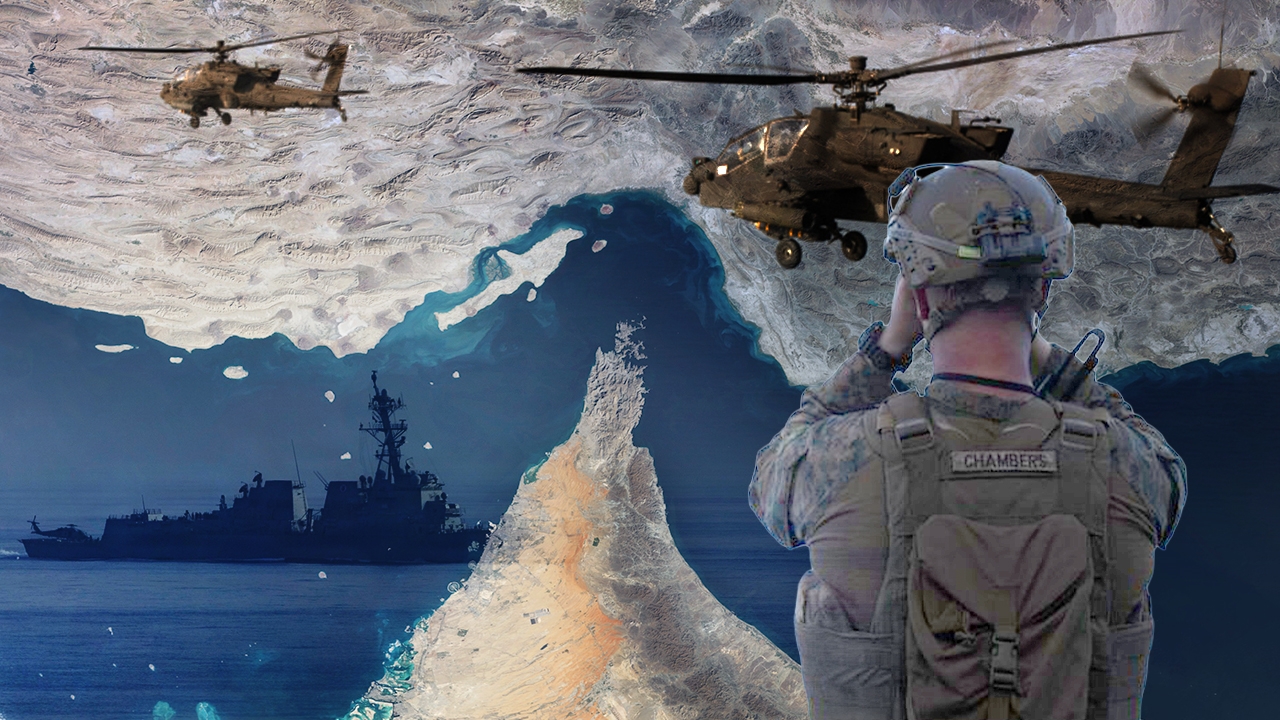
Summary of the latest developments over the opening and closing of the Hormuz Strait amid severe tensions. The United States fired upon and seized an Iranian-flagged cargo ship, causing Iran to declare readiness to retaliate and refuse to participate in new negotiation rounds, pushing oil prices up again.
The situation at the Hormuz Strait is the world's most critical oil chokepoint, a passageway for 20% of global oil trade, which has become a bargaining chip in the conflict between the United States, Israel, and Iran. Clashes have been ongoing since 28 February, disrupting oil supply chains and causing extreme oil price volatility worldwide. This pressure has forced governments to release emergency oil reserves, seek new oil import sources, and implement energy-saving measures, including Thailand, which imports over one-third of its oil through this strait.
Iran, as the country bordering the strait to the north, immediately announced its closure in response to attacks by the U.S. and Israel. Subsequent negotiations and attacks aimed at pressuring Iran to reopen the strait have kept the Hormuz Strait in a state of intense tension continuously.

Significant events over the past week, based on U.S. time, are as follows:
13 April: The United States began operations to impose a naval blockade (Naval Blockade) starting at 10:00 a.m.local U.S. time,deploying U.S. Navy fleets stationed in the area to intercept all ships entering or leaving Iranian ports, while not obstructing navigation to other countries.
14–16 April: Transport of oil and goods was disrupted. On 15 April, General Ali Abdullahi, commander of Iran's IRGC Central Command Kataam Al-Anbiya, condemned the blockade as a violation of the ceasefire agreement.
17 April: Iran announced the reopening of the Hormuz Strait for commercial vessels, claiming it was to demonstrate a commitment to peace aligned with the ceasefire in Lebanon and to show that the U.S. was solely obstructing freedom of navigation.
18 April: Iran declared the closure of the Hormuz Strait again after U.S. President Donald Trump confirmed the U.S. blockade would continue fully until Iran agreed to a new comprehensive deal, including on nuclear issues. Reports indicated IRGC naval forces fired warning shots at an oil tanker and that an unidentified weapon attacked a cargo ship near Oman's coast.

19 April: Tensions escalated as the U.S. military seized an Iranian-flagged cargo ship. President Donald Trump posted on Truth Social:
"Today, an Iranian-flagged cargo ship named Touska (TOUSKA), nearly 900 feet long and almost as heavy as an aircraft carrier, attempted to breach our maritime blockade. The outcome was unfavorable for them.
The guided-missile destroyer USS SPRUANCE intercepted the Touska in the Gulf of Oman, issuing proper warnings to stop. The Iranian crew refused, so our navy disabled the engine room by firing, causing holes. U.S. Marines have now taken control of the vessel."
The U.S. Central Command (CENTCOM) also revealed that USS Spruance intercepted the Touska as it headed toward an Iranian port, violating the blockade. Since the operation began on 13 April, at least 23 commercial vessels have been ordered to reroute or return to Iranian ports.

Meanwhile, the Iranian military announced it would retaliate, posting on the Iranian government's IRIB television Telegram channel that the U.S. aggressor violated the ceasefire and committed maritime piracy by attacking Iranian commercial vessels in Omani waters. It added the U.S. damaged navigation equipment and deployed troops aboard the ship, calling it "a clear hostile act against the vessel."
The post concluded, "We warn that the Iranian military will retaliate and avenge this armed piracy by the United States soon."
Regarding negotiations, President Trump revealed that the U.S. negotiating team was traveling to Pakistan to meet with Iran and would arrive by the evening of 20 April. NBC News, citing two senior government officials, reported that Vice President JD Vance, special envoy Steve Witkoff, and Jared Kushner, Trump's son-in-law, would represent the U.S. in talks with Iran.
Meanwhile, Al Jazeera reported that Esmail Baqaei, spokesperson for Iran's Foreign Ministry, said the Iranian delegation would not attend planned talks in Islamabad, citing U.S. violations of the ceasefire since its inception.
The two-week ceasefire agreement between Washington and Tehran is set to expire on 22 April if no extension is agreed upon.

The seizure and attacks on vessels in the Hormuz Strait and uncertainty over U.S.-Iran peace talks have caused oil prices to surge sharply.
Today (20 April), Brent crude oil, the global oil price benchmark, jumped over 6.3% to surpass $96 per barrel, about 3,080 baht, after closing at its lowest since 10 March on Friday, 17 April, below $90 per barrel, or around 2,889 baht.
Meanwhile, WTI crude oil, the main U.S. price benchmark, rose 7% to $88.3 per barrel, roughly 2,834 baht.
CNN reported that tracking data showed no oil tankers passed through the Hormuz Strait on Sunday, 19 April, marking one of the calmest days in the strait since the conflict began.
Sources:CNN,,Al Jazeera