

Why has Japan, a nation renowned for precision, still made several mistakes in organizing the 2026 Asian Games?
Why is Japan, known for its meticulousness and discipline in hosting world-class sporting events, facing multiple overlapping problems at the 2026 Asian Games in Aichi-Nagoya, even before the opening ceremony on 19 September? Issues with accommodation, transportation, and management systems have led many international media outlets to question what went wrong in a country that previously ran the Tokyo Olympics so smoothly.
Problem 1: Insufficient accommodation due to "canceling the construction of an athletes' village".
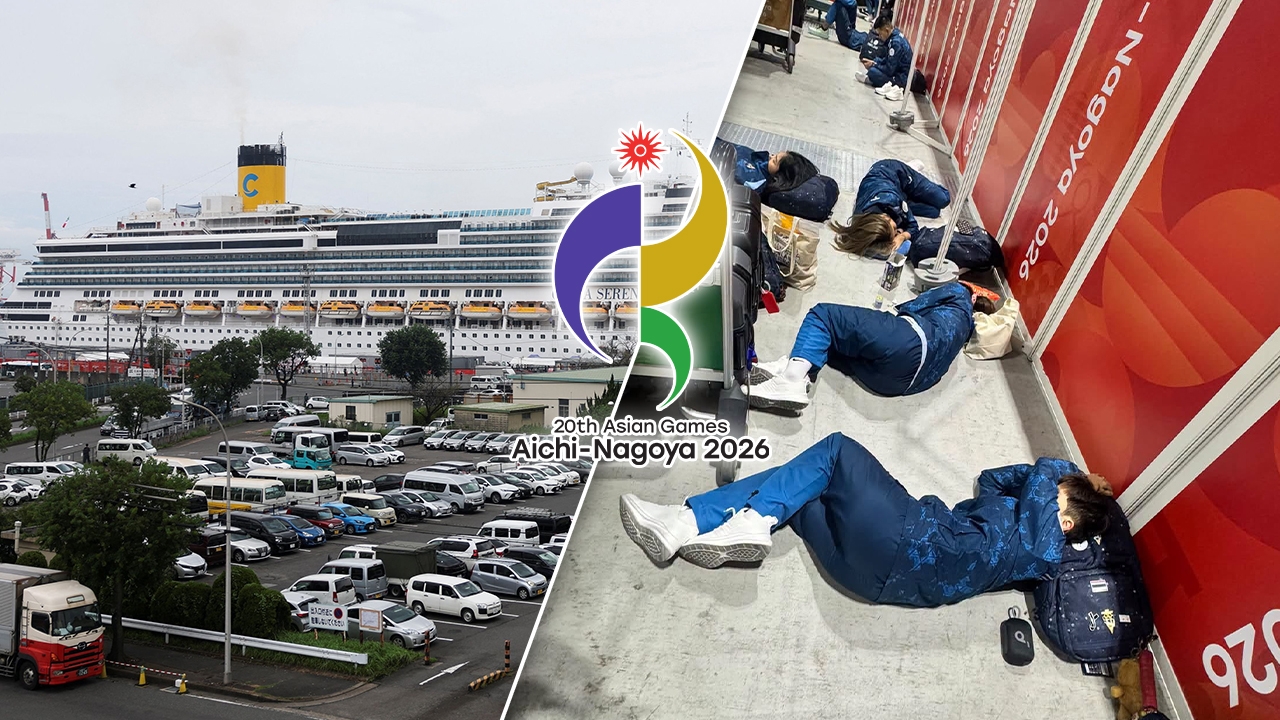
The root of all problems began with the organizing committee's decision not to build a permanent athletes' village as traditionally done, citing budget savings and environmental friendliness. Instead, they planned to house around 9,000 participants in existing hotels, about 4,000 on the Costa Serena cruise ship, and roughly 2,000 in a temporary container village.
The issue arose because the actual number of participants far exceeded initial plans. Both the Japanese organizers and the Olympic Council of Asia (OCA) acknowledged that the number of athletes and officials registered by the July deadline was much higher than the expected 15,000. The organizing committee chairman, Hideaki Omura, openly admitted they "lacked both manpower and budget" to handle the increase, partly due to OCA adding teqball and padel to the sports program in March.
As a result, the container village became the weakest point. The vice president of the South Korean Basketball Association stated from his experience that this was the worst accommodation he had ever seen, noting that athletes over two meters tall couldn't fully stretch on the beds. Photos of hundreds of container units lined up tightly on the asphalt at Garden Pier sparked heavy criticism, undermining claims by organizers that this method was environmentally friendly and cost-effective. To make matters worse, unprecedented heavy rain in Nagoya forced hundreds of athletes to evacuate their accommodations abruptly.
Problem 2: Repeated failures of the transportation system.
Beyond lodging issues, transportation chaos caused equal disruption. The clearest example was airport confusion, where many delegations arriving had to wait hours for transport to their accommodations because the local system couldn't locate many athletes' information. This prevented them from boarding prearranged buses. The Chinese delegation, arriving at noon, found some data missing, forcing their badminton team to buy public airport bus tickets—though not enough for everyone. Eventually, the Chinese consulate had to arrange transport independently. Some teams took nearly six hours to leave the airport after arrival. A Sri Lankan delegate reported that total travel and waiting time since leaving home reached 24 hours.
Problems didn't end upon arrival. During competitions, incidents recurred—for example, the South Korean football team was driven to the wrong venue, arriving at a baseball field instead of a rugby stadium. The following day, that same team had no transport to scheduled recovery training, forcing officials to find replacement vehicles urgently. The Indian athletics team faced delayed check-ins, missed breakfasts, and no transport for training as scheduled. South Korean media summarized the situation as difficult access to venues and continuous transport failures.
Problem 3: Management systems failing to keep up with reality.
Overall, these issues reflect systemic weaknesses rather than isolated incidents. In fact, OCA had issued warnings well in advance. Late in 2024, reports indicated OCA was dissatisfied with preparations in Nagoya and Aichi, accusing organizers of not fulfilling hosting commitments and demanding improvements in accommodation and athlete transportation. However, the governor of Aichi Prefecture, then chairing the organizing committee, insisted everything was proceeding according to plan.
When the time came, unresolved structural problems erupted simultaneously. The South Korean committee reported that representatives from 45 OCA member nations raised numerous concerns at the chef de mission meeting with organizers, covering lodging, transport, and food. This indicated the issues were systemic, affecting nearly every delegation. Moreover, South Korean officials noted the organizers had yet to provide explanations, causing anxiety and prompting intense discussions on how to respond.
What is the true root cause of these problems?
Based on international media reports, Japan's setbacks in hosting the event stem not from lacking general infrastructure capacity but from policy decisions and flawed risk assessments in at least three areas: (1) deciding early on not to build a permanent athletes' village to save costs and be environmentally friendly without accounting for potential increases in participants; (2) adding new sports late without adjusting accommodation plans or budgets accordingly; and (3) failing to respond to OCA's warnings from late 2024. As these issues converged just before the opening, existing support systems—such as athlete information at airports, transportation arrangements, and the quality of temporary lodging—were overwhelmed. This situation highlights that even a country famed for management excellence like Japan cannot escape the consequences of overly tight budgeting and planning.