

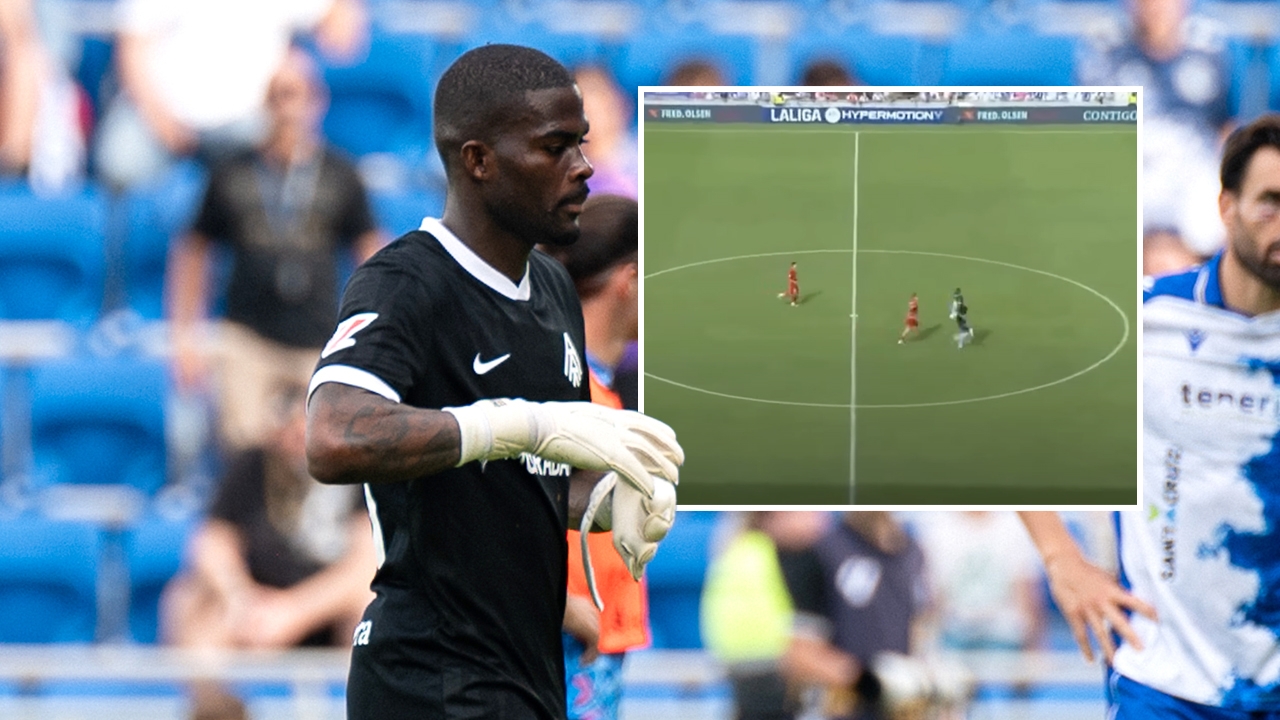
Spanish prosecutors have confirmed that the chances of criminally charging Ovono in the fatal collision with Jesús de Miguel are slim.
On 4 Nov 2026 GMT+7, developments emerged in the tragic case shaking Spanish football after Jesús de Miguel, the 30-year-old forward for Tenerife, died from cardiac arrest following a severe collision with Jesús Ovono, goalkeeper of FC Andorra, during a Segunda División match. Spanish prosecutors recently indicated that pursuing criminal charges against Ovono might be difficult. The National Police have opened an investigation into the footballer's death, now under court supervision.
José Luis Sánchez-Haregui, chief prosecutor of Santa Cruz de Tenerife, told EFE news agency that the likelihood of initiating criminal proceedings against Ovono is very low because the collision occurred during normal football play, not an assault during a game stoppage.
The prosecutor explained that according to long-standing Spanish Supreme Court legal principles and rulings, injuries sustained during sports competitions generally do not constitute criminal offenses unless there is intentional harm inflicted on an opponent during a game stoppage.
However, the prosecutor noted that the referee's report and disciplinary committee's ruling must be awaited. The key issue is whether the incident qualifies as dangerous or excessively violent play, and whether Ovono intended to harm his opponent or if it was simply a competitive collision.
If Jesús de Miguel’s family disagrees with the outcome of the sports disciplinary process, they can file a petition requesting a criminal investigation for assault causing death. But the chief prosecutor believes that if the case proceeds legally, it is more likely to be treated as negligent homicide rather than intentional murder.
Sánchez-Haregui gave an example comparing the case to someone pushing another person who falls, hits their head fatally, without intent to kill, but due to negligence.
The prosecutor emphasized that football permits physical contact but does not allow excessively violent collisions. He cited an example where a player intentionally elbows an opponent to cause a broken tooth during a stoppage as a clear case of criminal behavior.
Meanwhile, authorities await findings from relevant bodies to determine whether the collision between Ovono and de Miguel was a competitive accident or reckless, dangerous play.